Crypto Times Logo Black
Google News Follow Banner
  • News
    • Market
    • Bitcoin
    • Ethereum
    • Altcoins
    • Regulations & Policies
    • DeFi News
    • Blockchain News
    • Industry
  • Exclusive
  • Opinion
  • Learn
    • Explained
    • How To
    • Insights
  • Podcasts
  • More
    • About Us
    • Our Authors
    • Contact Us
    • Editorial Policy
The Crypto TimesThe Crypto Times
  • All News
  • Market
  • Bitcoin
  • Ethereum
  • Altcoins
  • Regulations & Policies
  • Blockchain
  • DeFi
  • Industry
  • Exclusive
  • Opinion
Search
  • News
    • Market
    • Bitcoin
    • Ethereum
    • Altcoins
    • Regulations & Policies
    • Blockchain
    • DeFi
    • Industry
    • Exclusive
    • Opinion
  • Learn
    • Explained
    • How To
    • Insights
  • Quick Links
    • About Us
    • Our Authors
    • Contact Us
    • Editorial Policy
    • AI Policy
    • Sponsored & Advertorial Policy
  • Podcasts
Follow US
© 2026 By Crypto Times. All Rights Reserved.
Bitcoin News

Project Eleven CEO Warns Bitcoin Quantum Upgrade Won’t Be Easy at Consensus Miami

Pruden warned the migration will be far harder than Taproot because every user, wallet, exchange, and institution must participate to stay secure.

Written By:
Dhara Chavda

Last updated: 48 minutes ago
Published 53 minutes ago
Share
Last updated: 48 minutes ago
Published 53 minutes ago
Project Eleven CEO Warns Bitcoin Quantum Upgrade Won’t Be Easy at Consensus Miami
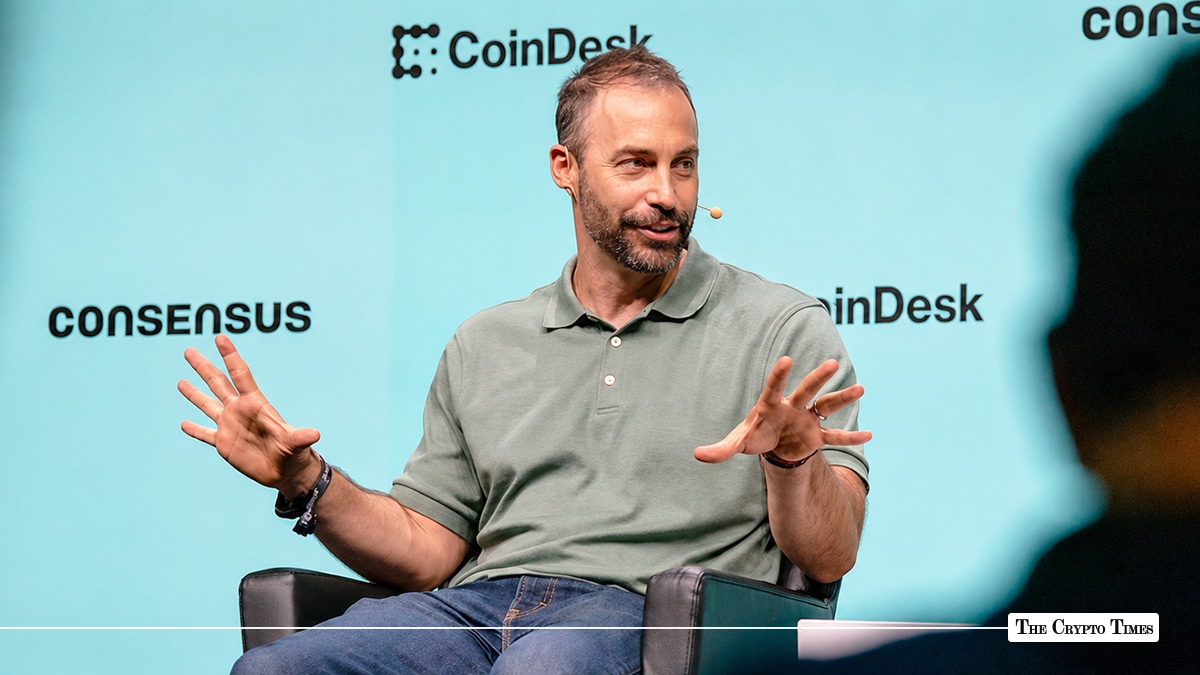
Alex Pruden, CEO of Project Eleven, speaks at Consensus Miami 2026.
Show AI Summary
Bitcoin’s shift to post-quantum cryptography is crucial to protect its $2.3 trillion asset class from potential quantum computer threats.
The industry is making progress with standardized post-quantum schemes and proposed upgrades like BIP-360, but execution is now the main priority.
A post-quantum upgrade poses a significantly larger challenge than Bitcoin’s last major upgrade, Taproot, due to its non-optional nature and vast scale.

Bitcoin’s developer community needs to stop debating quantum timelines and start writing production code for a post-quantum signature scheme, Project Eleven CEO Alex Pruden said at CoinDesk’s Consensus Miami conference on Wednesday.

Speaking on stage, Pruden framed the decision as a straightforward risk calculation. The worst case of acting early, he argued, is that Bitcoin gains an optional new cryptographic tool it doesn’t immediately need. The worst case of waiting is that a quantum computer breaks the elliptic-curve cryptography protecting an asset class he valued at roughly $2.3 trillion.

A sufficiently powerful quantum machine running Shor’s algorithm — a technique first proposed in 1994 — could theoretically derive private keys from any publicly exposed key on the Bitcoin blockchain. Project Eleven estimates that roughly 6.9 million BTC sit in addresses with exposed public keys, approximately one-third of the total supply.

“Let’s Focus on the D of R&D”

Pruden pointed to concrete progress already in the pipeline. NIST has standardized post-quantum schemes based on hash functions and lattices, and he noted that Bitcoin community discussion has trended toward the hash-based option. BIP-360, proposed last year, laid the groundwork for adding a quantum-resistant Taproot output type, and Blockstream has already deployed a hash-based signature scheme on its Liquid Network.

But Pruden argued the community needs to shift its posture from research to execution. “Moving stuff out of just research into production is, I think, actually what we need to focus on,” he said. “Let’s focus on the D of R&D.”

Why This Is Harder Than Taproot

The scale of the challenge dwarfs Bitcoin’s last major upgrade. Taproot took roughly five years from proposal to activation, but even then, adoption was optional — and most users never bothered migrating. A post-quantum upgrade carries no such luxury.

“Taproot took five years, but that’s not even really the entire challenge that this will take,” Pruden warned. Every bitcoin holder, every wallet provider, every exchange, and every institution that touches the asset will need to participate for the migration to succeed.

The timing pressure is also acute. Pruden noted that an attacker with a sufficiently advanced quantum computer could potentially front-run pending transactions within a single block by deriving private keys from exposed public keys and submitting a competing transaction with a higher fee — all before the original transaction confirms.

The Satoshi Coin Dilemma

Pruden addressed the most politically charged question in the post-quantum debate: what happens to dormant coins in quantum-vulnerable addresses, including those linked to Satoshi Nakamoto’s estimated ~1.1 million BTC.

He acknowledged the tension between Bitcoin’s fixed-supply ethos and its commitment to digital property rights. Asked directly for his personal position, Pruden said the dormant coins could potentially be recycled back into the end of Bitcoin’s supply curve to extend the mining-incentive runway after block subsidies run out.

“If you put me on the hot seat, that’s probably what I would say. So I guess overall would be the confiscation side,” Pruden conceded. “But again, I think ultimately, the community is going to decide. The institutions and the market are going to decide.”

Mixed Signals From Bitcoin Core

On whether the developer community is treating the threat with appropriate urgency, Pruden offered a measured assessment. “Core is not a monolithic entity,” he said, noting that some contributors are taking the threat seriously while others remain skeptical that quantum computers will become practically relevant.

Pruden argued that the broader scientific community increasingly expects the technology to arrive, with some researchers suggesting timelines are accelerating. Google Quantum AI’s March 2026 paper estimated that breaking 256-bit elliptic-curve cryptography could require roughly 20 times fewer qubits than earlier projections — a finding that prompted Google itself to set a 2029 internal deadline for its own post-quantum migration.

Just two weeks ago, an independent researcher won Project Eleven’s Q-Day Prize by breaking a 15-bit elliptic-curve key on publicly accessible quantum hardware — a 512x jump from the previous public demonstration. While far from threatening Bitcoin’s 256-bit security, the result underscored that practical quantum attacks on real cryptographic systems are advancing rapidly.

Bitcoin is currently trading around $80,966, with the broader crypto market rallying on geopolitical tailwinds.

Also Read: NEAR Plans Post-Quantum-Safe Signing for Q2 2026 Testnet

Disclaimer: The information researched and reported by The Crypto Times is for informational purposes only and is not a substitute for professional financial advice. Investing in crypto assets involves significant risk due to market volatility. Always Do Your Own Research (DYOR) and consult with a qualified Financial Advisor before making any investment decisions.

Follow The Crypto Times on Google News to Stay Updated!      Google News
Google News Banner

TAGGED:Quantum Crypto
Share This Article
Whatsapp Whatsapp LinkedIn Telegram Copy Link
Dhara Chavda- Crypto Research Analyst at The Crypto Times
By Dhara Chavda
Follow:
Dhara Chavda is a Content Strategist and Research Analyst with 5 years of experience in the crypto industry. She holds a Bachelor’s degree in Computer Engineering and brings a strong technical perspective to her work. Dhara specializes in DeFi, price analysis, and the core mechanics of cryptocurrencies. She also works on crypto news, including research, analysis, and assigning stories, ensuring accurate and timely coverage of key developments in the space.

Latest News

TON Hits Record 0.6s Finality Why Toncoin Exploded 120% This Week
TON Hits Record 0.6s Finality: Why Toncoin Exploded 120% This Week
Aave Escalates Recovery Push After rsETH Exploit Liquidations
Today in Crypto: Tokenization Breakthrough, Clarity Act Deadline Set, Miners Pivot to AI Power Plays
‘GothFerrari’ Sentenced to 78 Months in Prison Over $250M Crypto Theft Scheme
NEAR Plans Post-Quantum-Safe Signing for Q2 2026 Testnet

Find Us on Socials

You may also like

Eric Trump-Backed Bitcoin Miner Posts $81.8M Loss Amid Growing Scrutiny

Eric Trump-Backed Bitcoin Miner Posts $81.8M Loss Amid Growing Scrutiny

Bitcoin Core Reveals Vulnerability That Could Crash Nodes Remotely

Bitcoin Core Reveals Vulnerability That Could Crash Nodes Remotely

Bitcoin Meets Income 21Shares Rolls Out STRC on London Stock Exchange

Bitcoin Meets Income: 21Shares Rolls Out STRC on London Stock Exchange

Warning Signal: Bitcoin Leverage on Binance Soars to Yearly High

Warning Signal: Bitcoin Leverage on Binance Soars to Yearly High

The Crypto Times Logo PNG

Providing real-time, accurate Crypto reporting. Your trusted source for Crypto News and Research.

Stay Updated

All News
Exclusive
Opinions
Learn
Podcasts

Company

About Us
Our Authors
Editorial Policy
AI Policy
Advertorial Policy

Get In Touch

Contact Us
Career

Find Us on Socials

X-twitter Linkedin Telegram Youtube Instagram

© 2026 The Crypto Times | A BITROCK TECHNOLOGIES L.L.C. Company.

DMCA.com Protection Status
  • Terms and Conditions
  • Disclaimer
  • Privacy Policy
  • Cookie policy
Do Not Sell or Share My Personal Information