The crypto market paused for breath on May 7 after a decent rally, with Bitcoin consolidating above $81,000 as geopolitical relief from Iran ceasefire optimism continued to support risk assets.
Beside, institutional infrastructure stories dominated the headlines, underscoring how traditional finance is quietly wiring itself into blockchain rails while U.S. policymakers set concrete timelines for long-awaited rules.
Market overview
Bitcoin opened the session hovering around $80,900–$81,100 after touching multi-month highs above $82,759 in the prior 24 hours. The total crypto market cap held steady near $2.7 trillion with modest daily fluctuations—as per CoinMarketCap data.
Among altcoins, Ethereum traded around $2,320–$2,330, Solana near $88–$89, and XRP climbed slightly on tokenization news, hovering near $1.41. Short liquidations cooled off after yesterday’s squeeze, but on-chain signals and ETF flows kept sentiment constructive.
Bitcoin dominance stayed elevated near 60%, while selective altcoin moves—particularly in infrastructure and RWA-related tokens—hinted at rotation rather than broad euphoria. Its trading volumes remained healthy but not explosive, reflecting a market digesting recent gains.
Key highlights of the day
Here are the major developments of the past 24 hours (As of 12:30 PM IST – May 7, 2026):
Ripple, JPMorgan, Mastercard, and Ondo Complete First Cross-Border Tokenized Treasury Redemption
In a significant step for real-world asset adoption, Ondo Finance, Ripple, JPMorgan (via Kinexys), and Mastercard (via Multi-Token Network) executed the first near real-time cross-border redemption of tokenized U.S. Treasuries on the XRP Ledger.
Ripple redeemed a portion of its OUSG (Ondo’s short-term U.S. Treasury token) on-chain. Ondo processed the redemption, Mastercard routed instructions across networks, and JPMorgan’s Kinexys handled settlement, delivering fiat USD directly to Ripple’s Singapore account—all in under five seconds, outside traditional banking hours.
BNY Mellon expands to Abu Dhabi
Separately, BNY Mellon—the world’s largest custody bank with $59 trillion in assets—expanded its crypto services in Abu Dhabi through new partnerships aimed at building digital asset infrastructure in the region.
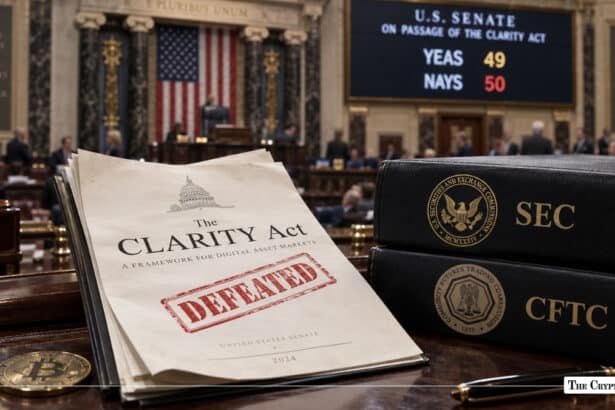
White House Targets July 4 for Clarity Act Passage
U.S. regulatory clarity took another step forward as the White House set July 4 as a target deadline for passage of the Digital Asset Market Clarity Act (Clarity Act), which addresses stablecoins and broader market structure.
Crypto adviser Patrick Witt highlighted ongoing Senate Banking Committee activity and a more pro-crypto stance at the SEC. Coinbase Chief Legal Officer Paul Grewal added that the bill “will pass this summer” and called on banks to support the stablecoin compromise.
However, Sen. Kirsten Gillibrand stressed that no bill will advance without an ethics provision addressing President Trump’s crypto ties.
The timeline injects fresh urgency into Washington’s crypto agenda, with industry participants watching closely for a potential markup this month.
Miners Double Down on AI, New Trading Products Launch
Bitcoin miners continued their pivot toward high-performance computing. Hut 8 shares jumped roughly 30% pre-market after securing a $9.8 billion AI data center deal built to NVIDIA specifications.
Meanwhile, Core Scientific agreed to acquire miner Polaris in a $421 million deal to expand its Oklahoma AI data center campus.
On Trading Front:
- Morgan Stanley piloted crypto trading on E*Trade with aggressive 50-basis-point fees, undercutting rivals and opening access for millions of retail users.
- Kraken launched regulated crypto spot margin trading in the U.S. following its Bitnomial partnership.
- OpenTrade raised $17 million to scale its stablecoin yield infrastructure after surpassing $200 million in TVL.
- 21Shares also listed a new Strategy-linked ETN (STRC) on the London Stock Exchange.
Other Notable Updates:
- Bitcoin Core developers quietly patched a high-severity memory bug months ago; operators were urged to update as many nodes may still run vulnerable versions.
- Project Eleven warned of a potential quantum “Q-Day” as early as 2030, urging early preparation for post-quantum cryptography in blockchain systems.
- Solana and the Jito Foundation pushed institutional staking expansion across Asia.
- VanEck reiterated its long-term bullish call, forecasting Bitcoin could reach $1 million within five years by drawing parallels to video game adoption curves.
Sentiment Check and What’s Next
The 24-hour period closed on a note of measured optimism. After the recent surge, the market is consolidating gains rather than chasing new highs, with institutional product launches and real-world pilots providing fundamental support beneath the price action.
The Fear & Greed Index remains in neutral-to-greedy territory, reflecting rotation into infrastructure plays rather than outright speculation.
Traders will watch whether Bitcoin can hold above $81,000 or if macro releases and any shifts in Iran negotiations introduce volatility.
For now, the narrative centers on deepening integration between TradFi and blockchain. External catalysts can still swing sentiment quickly, but today’s developments tilted toward infrastructure maturity over hype.
Also read: $41.5 Million Frozen: Inside the Takedown of the DSJ Exchange Ponzi Scheme