Key Highlights
- Ondo and Broadridge enable onchain voting for 250+ tokenized stocks, linking wallets to traditional shareholder governance systems.
- Tokenized equities hit $1.15B in value as activity grows, with Tesla and NVIDIA leading demand across blockchain markets.
- Ondo holds ~70% market share and expands via partnerships while regulators push clearer rules for tokenized securities.
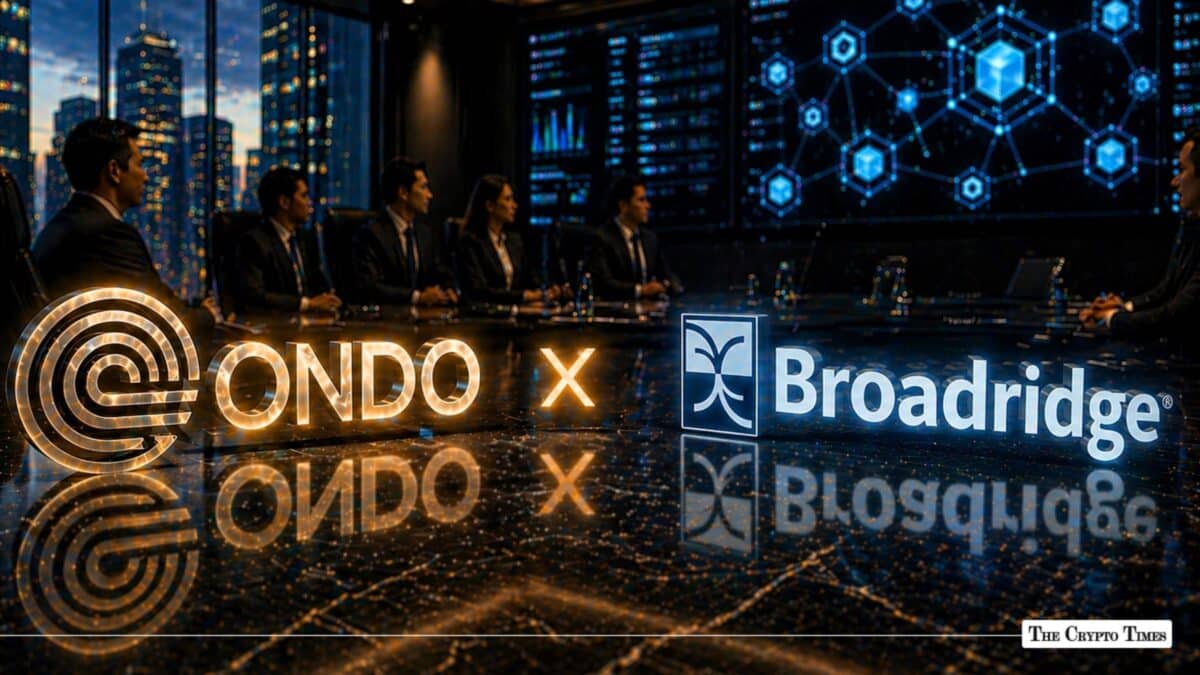
Ondo Finance and Broadridge Financial Solutions have introduced an onchain voting system for tokenized stocks and ETFs. The setup allows holders of more than 250 tokenized assets to take part in shareholder votes using blockchain wallets. The aim is to connect token-based investing with standard corporate governance processes.
As per the announcement, the system links Ondo’s tokenized securities with Broadridge’s ProxyVote platform. Investors check company documents, submit their voting choices, and confirm them through their wallets.
Broadridge then passes those instructions into existing stock voting systems. The structure keeps traditional custody in place while moving the voting process onto blockchain rails.
Onchain voting brings corporate governance to tokens
This novel development by Ondo Finance lets holders of tokenized stocks and ETFs take part in shareholder voting. The same interface also gives access to company filings and regulatory documents. The company said the setup is meant to support participation while keeping standard financial controls in place.
Broadridge Financial Solutions, on the other hand, built a system that connects crypto wallets to its ProxyVote platform. Voting actions get recorded onchain, while the actual execution still runs through existing market infrastructure. The approach links token-based assets with traditional compliance and shareholder communication systems.
Ondo said the design follows familiar market processes but adds blockchain access on top. Tokens can also move across networks like Ethereum, Solana, and BNB Chain.
This setup allows trading around the clock while keeping voting rights tied to the underlying securities.
Tokenization growth expands market infrastructure
Tokenized stocks have grown into a $1.15 billion market, with activity accelerating as blockchain-based equities gain traction. The sector’s monthly transfer volumes reached $2.27 billion, while the number of holders climbed above 217,000, according to RWA.xyz data.
All the products (tokenized stocks) tied to Tesla, NVIDIA and the S&P 500 account for a large share of activity across platforms. These stocks remain among the most represented underlying assets, reflecting demand for familiar equities in tokenized form.
Ondo Finance is currently dominating the industry, with a market share of around 70%, where the company’s total value locked amounts to over $700 million.
One of the ways that the company has increased its footprint is through partnering with Franklin Templeton in an effort to bring tokenized ETF exposures to blockchain.
Tokenized equities expand under stricter rules
Regulatory compliance continues to be a key aspect of tokenized equity development. The team from Ondo Finance held meetings with the U.S. Securities and Exchange Commission in order to clarify the way for tokenizing stocks by tracking the underlying equity while avoiding further obligations to issue new securities.
Under this setup, the actual assets remain held at the Depository Trust Company. Ownership claims are then recorded onchain through regulated intermediaries.
At the same time, companies are expanding tokenization beyond simple trading. Tokenized assets are now starting to include governance features, allowing holders to take part in certain decision-making processes linked to the underlying securities.
Also Read: BlackRock’s $2.5B BUIDL Lands on OKX as Yield-Bearing Collateral