Key Highlights
- CZ reveals in his memoir that Binance Labs invested $3 million in Terra in 2018, receiving ~15 million LUNA tokens. The stake soared to $1.6 billion at the 2021 peak but collapsed to under $3,000 after the 2022 crash—a vivid example of crypto’s extreme volatility.
- In May 2022, Terra’s UST lost its peg, sparking a death spiral that erased over $40 billion in value. LUNA plunged from $100+ to near zero as the algorithm flooded the market with trillions of tokens. Founder Do Kwon was sentenced to 15 years in prison in December 2025 for fraud.
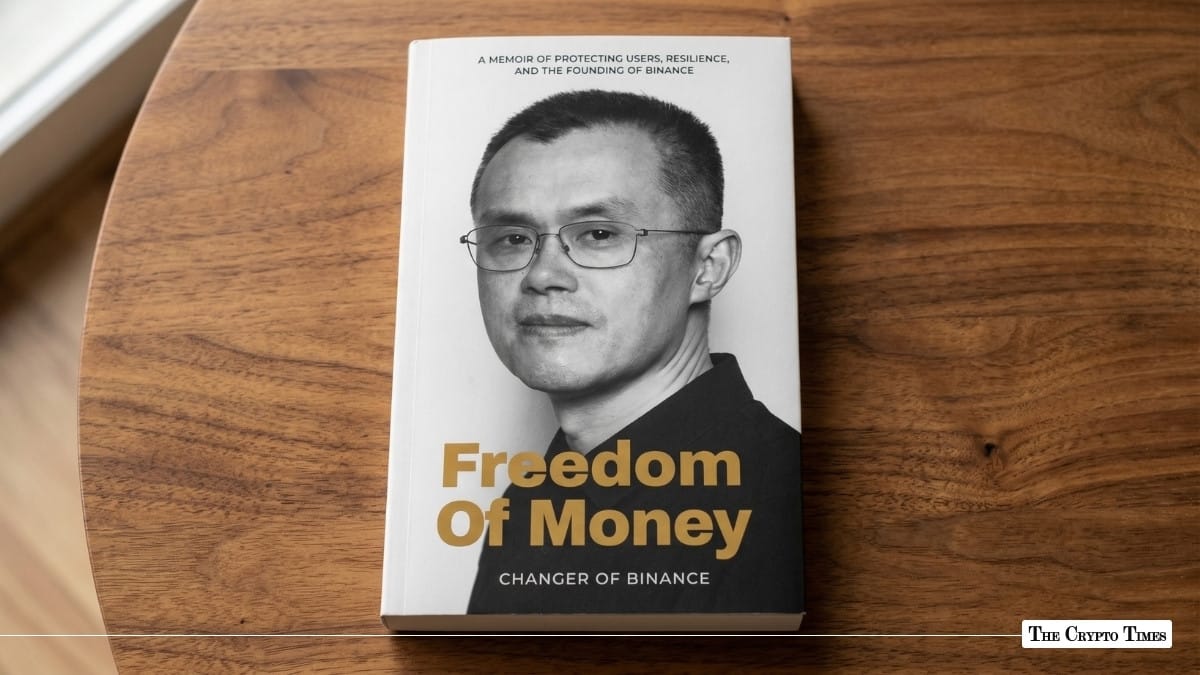
- Released April 8, 2026, CZ’s 457-page autobiography ‘Freedom of Money’ traces his journey from a rural Chinese childhood to founding Binance. Blending memoir and manifesto, the book covers scaling the exchange, market volatility, and regulatory battles.
In his newly released memoir, Binance Co-Founder Changpeng Zhao (CZ), revisits the collapse of the Terra ecosystem and its LUNA token, which was crypto’s most spectacular flameouts of the 2022.
As highlighted by Wu Blockchain in a recent X post, CZ has mentioned in the autobiography that Binance Labs made a modest $3 million investment in Terra back in 2018 as part of an early-stage bet on the project’s Layer-1 blockchain. In return, the firm received roughly 15 million LUNA tokens. At the height of the bull market in April 2021, those holdings had ballooned in value to approximately $1.6 billion on paper.
CZ recounts that Binance never sold or transferred the tokens during the meteoric rise. The position was left untouched, reflecting the exchange’s long-term approach to many early investments.
Then came the crash. In May 2022, Terra’s algorithmic stablecoin UST lost its dollar peg, triggering a death spiral that wiped out more than $40 billion in market value virtually overnight.
LUNA’s price plunged from triple digits to fractions of a cent, rendering Binance’s once-massive stake essentially worthless. It went down to just a few thousand dollars at the lowest point—even less below $3,000—as reported by Fortune at the time.
The episode underscores the brutal volatility of early-stage crypto bets. What began as a small venture allocation by Binance Labs turned into a headline-grabbing windfall before evaporating in one of the industry’s darkest chapters.
CZ has repeatedly emphasized that the original investment targeted the underlying Terra blockchain, not the later UST stablecoin mechanism, and that Binance did not participate in subsequent funding rounds.
The Terra-LUNA collapse of 2022
In May 2022, Terra’s algorithmic stablecoin UST dramatically lost its dollar peg, triggering a catastrophic death spiral. What began as heavy withdrawals from the Anchor Protocol quickly snowballed into UST plunged from its $1 peg to mere cents within days.
The price of LUNA, the project’s native token which was used to mint UST stablecoin, collapsed from over $100 to fractions of a cent. The mechanism designed to maintain the peg—minting and burning LUNA—backfired as panic selling flooded the market with trillions of new LUNA tokens.
The meltdown erased more than $40 billion in combined market value almost overnight, with ripple effects felt across the broader crypto industry. Major lending platforms froze withdrawals, hedge funds suffered heavy losses, and countless retail investors saw life savings wiped out.
Do Kwon, founder of Terraform Labs (the developer firm behind Tarra), was sentenced to 15 years in prison in December 2025 by a U.S. federal court after pleading guilty to fraud charges related to this collapse.
This episode remains one of the largest and fastest value destructions in financial history, prompting renewed scrutiny over DeFi risks, governance, and the need for stronger safeguards in the sector.
CZ’s memoir: Freedom of Money
In his newly released autobiography ‘Freedom of Money: A Memoir of Protecting Users, Resilience, and the Founding of Binance,’ CZ offers a candid, first-person account of his remarkable journey.
Released on April 8, 2026, the book blends personal memoir with industry manifesto, chronicling his path from a childhood in rural China to immigrating to Canada as a teenager and eventually founding Binance in 2017.
Spanning roughly 457 pages, the memoir details the explosive growth of Binance into the world’s largest cryptocurrency exchange, serving hundreds of millions of users.
CZ reflects on the challenges of scaling the platform, navigating extreme market volatility, attracting top talent, and facing intense regulatory pressure, including secret negotiations and his own prison experience.
Also read: First of Its Kind: Coinbase Gets ASIC Approval for Retail Crypto Derivatives