Key Highlights
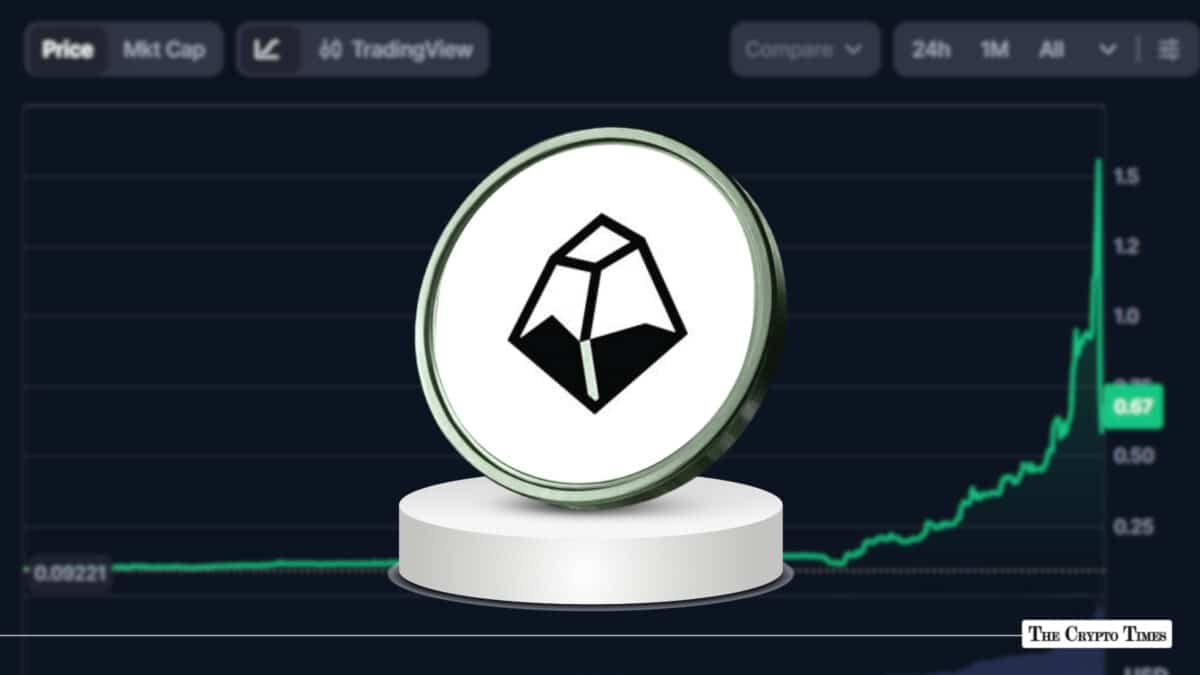
- STO surged over 600-700% in roughly 72 hours, hitting an all-time high of $1.74 after a whale withdrew 25.5M tokens (11% of supply) from Binance.
- The token plummeted more than 60% from its peak within hours, dropping to around $0.67–$0.82 as heavy profit-taking erased massive gains for late buyers.
- 24h volume hit $1.63B (nearly 10x market cap), fueled by FOMO around omnichain yield, but the vertical move lacked sustainable fundamentals.
StakeStone (STO), the governance token for an omnichain liquidity and yield protocol, delivered one of the most explosive short-term rallies in recent crypto memory before slamming into a brutal reversal on April 2, 2026.
Over roughly 72 hours, the token rocketed from levels near $0.11–$0.25 into uncharted territory, peaking at an all-time high of $1.74. That represented gains exceeding 900%+ from the start of the window, with the bulk of the move crammed into less than 48 hours.
By late morning UTC, however, STO had collapsed to around $0.67, shedding more than 60% from its daily high of $1.74 and trading roughly 59% below the fresh peak—as per CoinMarketCap data.
The spark in the STO price began with a fresh wallet pulling approximately 25.5 million tokens— roughly 11% of the circulating supply—out of Binance in one transaction worth millions at the time.
The move, executed by what appeared to be a new address, instantly tightened available liquidity and triggered aggressive buying. Token’s volume exploded to $1.63 billion in 24 hours, nearly 10 times the roughly $182 million market cap. On some exchanges, the token’s 24-hour range stretched from a low of $0.257 to that $1.74 summit.
Anatomy of a classic supply-shock pump and dump
Crypto traders piled in amid renewed buzz around liquid staking and DeFi yield plays. StakeStone’s infrastructure, which offers products like yield-bearing STONE for ETH and SBTC for BTC, suddenly found itself at the center of a narrative about omnichain liquidity upgrades.
Social feeds lit up with screenshots of parabolic charts and claims of “2x in hours.” For a brief window, it looked like a textbook breakout fueled by genuine whale conviction and FOMO.
Yet the reversal arrived just as quickly. Within an hour of the all-time high, heavy profit-taking set in. The same extreme volume that powered the ascent allowed large holders to exit without total illiquidity, but the speed of the drop—over 60% in a single session—left late buyers underwater.

At current levels near $0.82, STO still sits up massively on the week, but the move now carries the familiar scars of low-to-mid-cap altcoin mania.
For now, the episode serves as a raw reminder of crypto’s short-term mechanics. Supply shocks can ignite ferocious rallies, but vertical price action rarely sustains without deeper fundamental backing or broader market tailwinds.
Echoing the SIREN token rally
SIREN token, the BNB Chain AI-meme coin blending hype with Greek mythology vibes, delivered a strikingly similar short-term frenzy last week. It rocketed from lows near $0.026 to an all-time high around $3.83, posting gains exceeding 11,000–14,000% in roughly a month.
The token had multiple explosive legs, including 109% surges in single 24-hour periods fueled by massive volume spikes over $200 million and heavy FOMO around its AI agent narrative.
However, just like STO, the reversal in SIREN was brutal too as the token crashed up to 95% from its peak within days, as per CoinMarketCap data. It shed hundreds of millions in market cap amid heavy profit-taking, on-chain selling pressure from concentrated wallets, and classic pump-and-dump mechanics that left late buyers deep underwater.
Also Read: SIREN Crashes 77% Again, Three Times in a Row Now: Classic Pump-n-Dump