Key Highlights
- Solana Foundation President Lily Liu says crypto games won’t make a comeback.
- Surviving tokens are mostly FLOKI and SAND, while former hits like Axie Infinity have fallen sharply.
- Some games remain active, with easier tools and low fees, but the sector struggles to attract large-scale players.
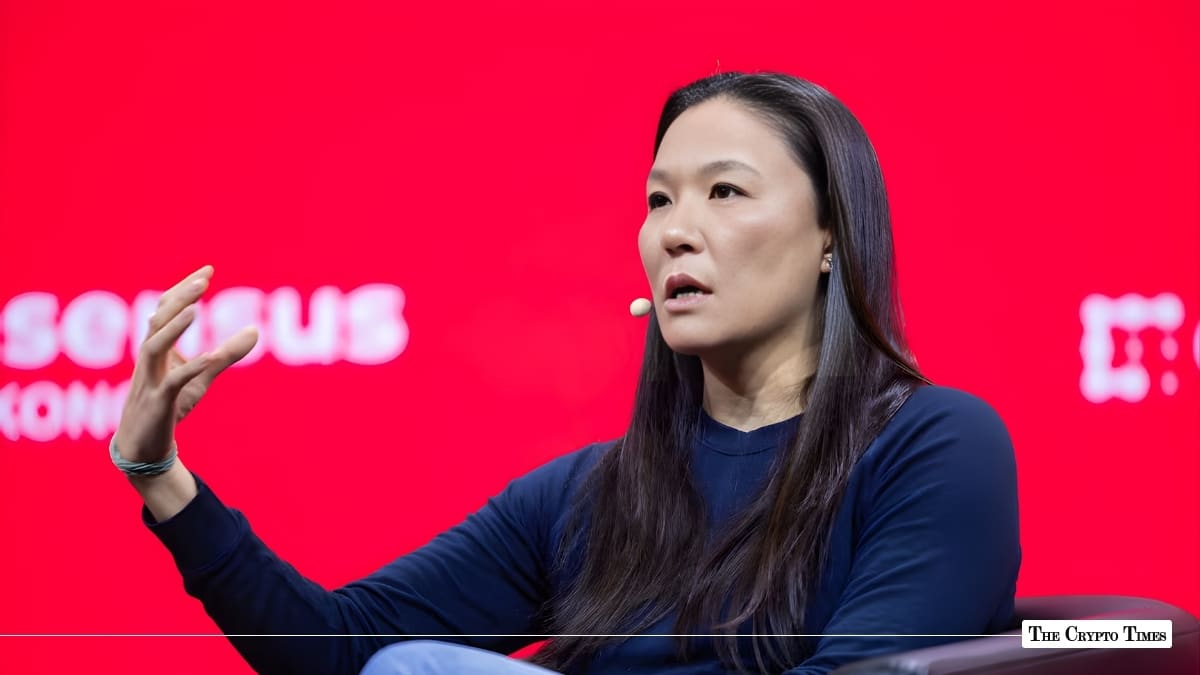
Lily Liu, President of the Solana Foundation, delivered a blunt message today, saying blockchain gaming is not returning as the hype around it has faded.
This statement came after Meta admitted that its multibillion-dollar metaverse project failed to attract users. “Gaming on a blockchain is not coming back,” Liu wrote on X, comparing crypto games to the frozen metaverse built by Meta.
Games on Solana are still active, but adoption remains weak
Even so, some parts of the Solana community are still optimistic. Developers are still building on the network, which currently hosts 88 live games.
Solana also provides tools to manage game assets and create new titles. But while the technology is still there, the gaming sector has lost much of its value since its peak.
The rise and fall of play-to-earn games
Blockchain gaming first gained popularity in 2021 through play-to-earn games. These games allowed players to earn cryptocurrency while playing. At the time, they attracted billions of dollars and widespread attention. But most of the tokens later lost value.
Today, surviving gaming tokens are worth about $2.12 billion. Most of that comes from FLOKI and SAND, which have market caps of around $282 million and $239 million, respectively, according to CoinMarketCap. Once-famous tokens like Axie Infinity (AXS) have dropped by 64% in a year. Some projects tried changing their focus to decentralized finance (DeFi), but they did not succeed.
Meanwhile, some blockchain games also built virtual worlds, such as Sandbox and Decentraland. These worlds included NFTs like land plots for users to buy. Many of these projects lost millions of dollars in value.
Additionally, some games sold expensive NFT collections while promising big returns, but most of those promises did not materialize. One major problem was that many games gave rewards by creating new tokens, which made the tokens lose value quickly. Even so, blockchain gaming helped more people learn about crypto and set up tools for Web3 apps.
Gaming today and the road ahead
Solana remains a strong platform for gaming because it is fast and has low transaction costs. Some games are still active and continue to maintain their communities, though some players stay away from projects that might promise a lot but never release real games.
At the same time, other networks like TON also host different games. Gamee, a free-to-play arcade where users earn real money via PayPal, was recently purchased by Nasdaq-listed AlphaTON (ATON) to scale up its gaming offers.
In addition, Solana-based projects like Star Atlas and Stepn saw early adoption from users. But still, the sector struggles to attract a large number of players.
In short, Liu’s remarks reflect a broader reality. Billions of dollars were poured into blockchain gaming and play-to-earn models, but they mostly failed to deliver. Meta’s roughly $80 billion metaverse effort and the collapse of gaming tokens show that even big money can’t fix hype when the games themselves don’t work.
Also Read: ARK Invest Withdraws Registration for Crypto Active ETF