


Key Highlights
- Historic SEC–CFTC MOU ends years of jurisdictional conflict and creates a coordinated framework for regulating digital assets.
- Joint Harmonization Initiative launched to align policymaking, enforcement, and market oversight across both agencies.
- Agreement comes ahead of the stalled CLARITY Act, signaling regulators won’t wait for Congress to coordinate crypto rules.
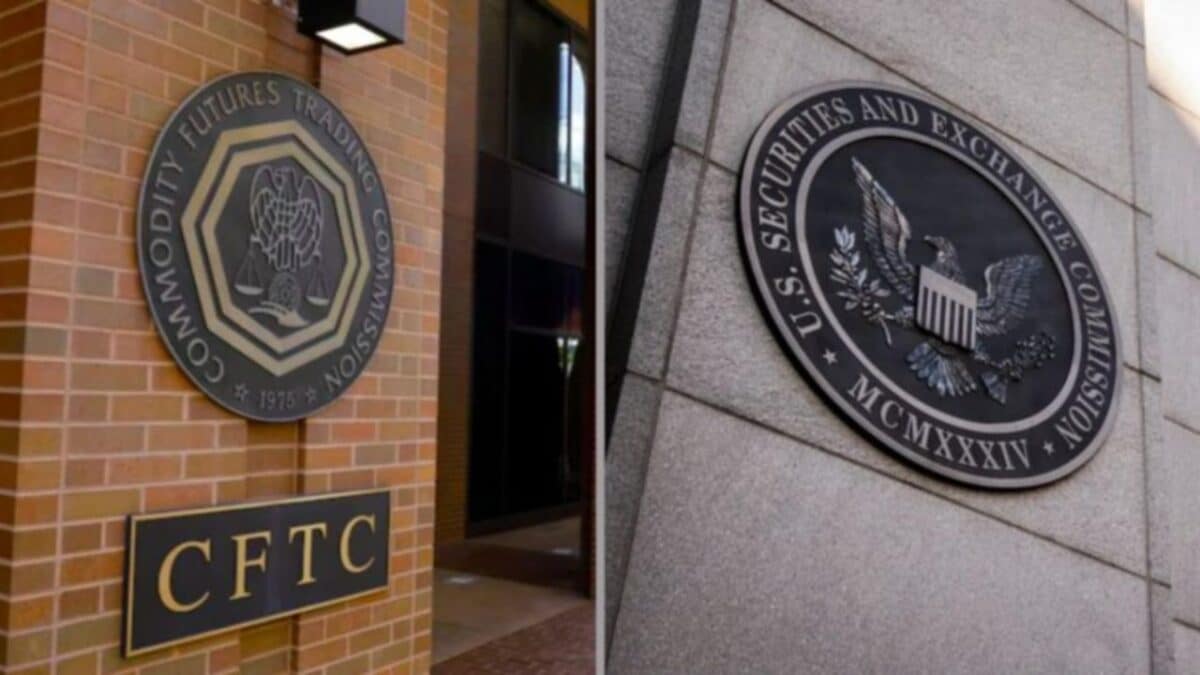
The U.S. Securities and Exchange Commission (SEC) and the Commodity Futures Trading Commission (CFTC) have signed a historic Memorandum of Understanding (MOU) that formally ends years of jurisdictional friction between the two agencies.
The agreement, announced on March 11, establishes a coordinated framework for regulating digital assets, overseeing financial markets, and protecting investors across both agencies’ jurisdictions.
This is the most significant step the two regulators have taken toward unified crypto oversight since the launch of Project Crypto in January 2026. Unlike prior informal coordination efforts, the MOU is a binding inter-agency agreement that covers policymaking, enforcement, examinations, and data sharing.
What does the MOU cover?
According to the official press release from the SEC, the MOU is designed to support “lawful innovation, uphold market integrity, and ensure investor and customer protection.” It commits both agencies to provide fair notice to market participants, respect individual liberty, and apply what the agencies describe as the “minimum effective dose of regulation” to strengthen U.S. competitiveness in finance.
In practical terms, the MOU establishes a framework for the SEC and CFTC to work together on six priority areas: clarifying product definitions through joint interpretations and rulemakings, modernizing clearing, margin, and collateral frameworks, reducing frictions for dually registered exchanges, trading venues, and intermediaries, providing a fit-for-purpose regulatory framework for crypto assets and other emerging technologies, streamlining regulatory reporting for trade data, funds, and intermediaries, and coordinating cross-market examinations, economic analyses, risk monitoring, surveillance, and enforcement.
A new joint harmonization initiative
Alongside the MOU, both agencies have created a Joint Harmonization Initiative to operationalize these goals. The initiative will be co-led by Robert Teply from the SEC and Meghan Tente from the CFTC. It will support coordination across policymaking, examination, and enforcement functions, particularly for joint applications and shared policy efforts.
This is a structural move, not a symbolic one. For the first time, the two regulators are embedding cross-agency coordination directly into their operational workflow. This means crypto companies that are currently registered with both agencies, or those that fall into jurisdictional gray areas, should begin to see more consistent and predictable oversight.
What the SEC and CFTC Chairmen are saying
SEC Chairman Paul S. Atkins directly acknowledged the damage caused by past regulatory fragmentation. He stated that regulatory turf wars and duplicative registrations between the agencies have stifled innovation and pushed companies to other countries.
Atkins described the updated MOU as a roadmap for harmonization, one that aligns regulatory definitions, coordinates oversight, and enables data sharing to give market participants the clarity they need.
CFTC Chairman Michael S. Selig echoed the sentiment, calling the MOU a commitment to harmonize regulatory frameworks for comprehensive financial market oversight. He said both agencies will work to eliminate duplicative and burdensome rules and close regulatory gaps. Selig went further, framing the agreement as part of a broader effort to usher in what he called a “Golden Age of American finance.”
Why this matters for the crypto industry
The SEC and CFTC have been at odds over crypto jurisdiction for years. Under the Biden administration, former SEC Chair Gary Gensler maintained that nearly all tokens except Bitcoin were securities, while former CFTC Chair Rostin Behnam argued most digital assets were commodities. That disagreement led to overlapping enforcement actions, inconsistent guidance, and widespread confusion for the industry.
The shift gained momentum during President Trump’s second term. In September 2025, the SEC and CFTC issued a joint statement declaring the jurisdictional turf war over. By January 2026, they jointly launched Project Crypto, a formal initiative to develop a shared regulatory framework for digital assets.
Since then, both agencies have been moving in lockstep, with recent developments including discussions about sharing the same office space in Washington, D.C., the CFTC signaling readiness to implement crypto rules, and Senator Lummis meeting CFTC Chair Selig to discuss digital asset market structure.
The MOU arrives ahead of the CLARITY Act
The timing of this MOU is significant. Congress is still working to advance the Digital Asset Market CLARITY Act, the most comprehensive crypto market structure bill proposed to date. The bill would formally define which agency oversees which digital assets, with the CFTC taking the lead on digital commodities and the SEC retaining authority over securities-like tokens.
However, the CLARITY Act remains stalled in the Senate over disputes around stablecoin yield provisions and DeFi oversight. By signing this MOU now, the SEC and CFTC are essentially showing they are not waiting for Congress. Both agencies are building the operational infrastructure for coordinated regulation regardless of whether the legislation passes in 2026.
SEC Chairman Atkins has previously testified before the House Financial Services Committee that while his agency can provide clarity through guidance and rulemaking, legislation is essential to make these changes permanent. The MOU essentially serves as a bridge, a way to deliver regulatory coordination now while waiting for Congress to provide the statutory backing.
What comes next
The SEC and CFTC have opened the door for public input. Market participants can submit written feedback through the official input form or request meetings with the agencies through the SEC’s Harmonization Initiative page. The initiative builds on earlier efforts described on both the SEC and CFTC websites.
For the crypto industry, this MOU represents a tangible shift from the enforcement-first approach that defined the previous administration to one focused on coordination, clarity, and engagement. Whether it translates into lasting change will depend on how aggressively both agencies follow through on the initiative, and whether Congress steps up with permanent legislation.
Also Read: CFTC Chair: Blockchain Prediction Markets Could Fight Disinformation





