Key Highlights
- A post from Benjamin Cowen started the conversation, where he argued that exchanges should avoid listing low-quality memecoins to prevent exploiting short-term retail interest.
- Changpeng Zhao’s reply ‘why DEXs are praised for listing all tokens while CEXs face criticism for doing the same,’ received backlash from OKX Founder.
- OKX Founder Star Xu countered by highlighting the fundamental differences between DEXs and CEXs, accusing Zhao of creating a false equivalence to evade accountability.
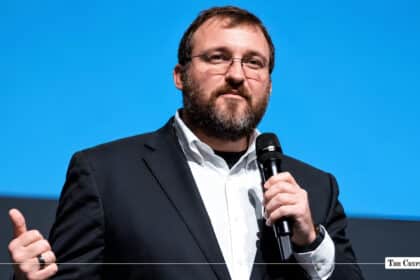
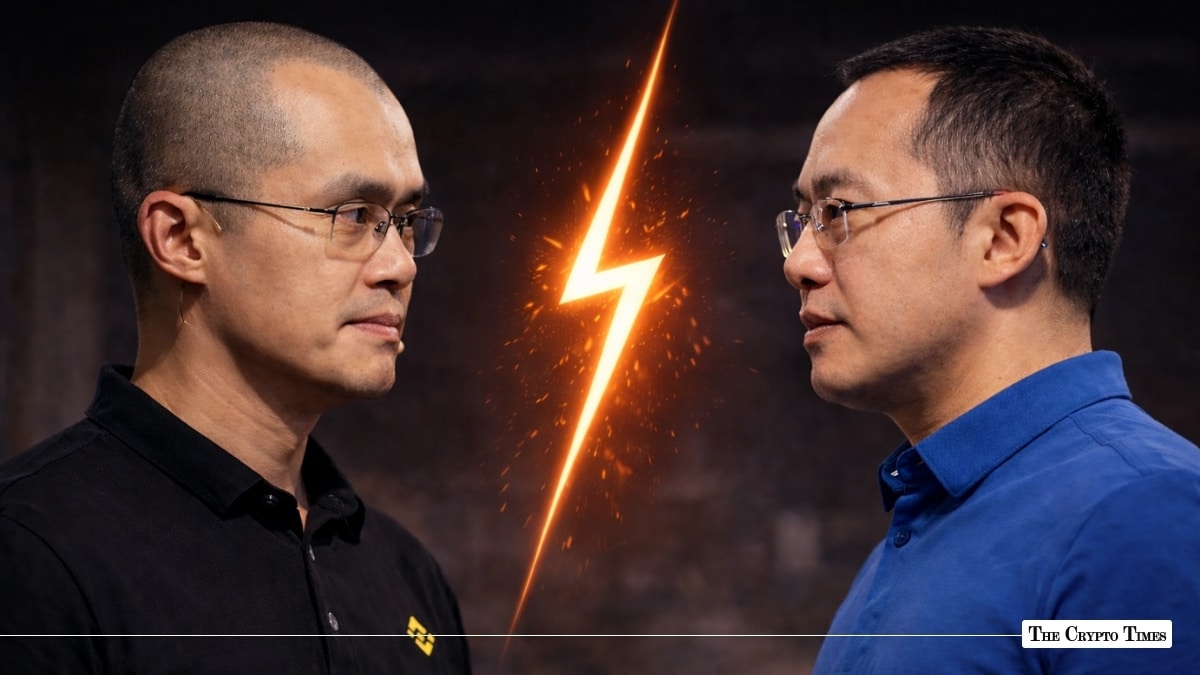
Changpeng Zhao (CZ), the Co-Founder of Binance, has ignited widespread discussion with his outspoken views on token listings, particularly memecoins.
The conversation thread first began when Benjamin Cowen, a popular crypto analyst, CZ questioned why decentralized exchanges (DEX) allow listing of all tokens viable while any centralized exchange (CEX) doing the same is not accepted.
“Crypto exchanges could make the industry seem more legitimate by not constantly listing dogshit memecoins on their platform to take advantage of short-term retail interest,” Benjamin stated. “If we don’t respect ourselves, how can we expect others to respect us?”
CZ fired back at Cowen’s statement, highlighting a perceived double standard in the ecosystem. “DEX listing all tokens is good. CEX listing all tokens bad? I believe exchanges should provide access to everything,” he wrote.
CZ’s advocacy for broad access on centralized platforms contrasts sharply with calls for stricter curation to protect users and elevate industry standards. “For most CEX, there is a balance somewhere,” the he shared in a subsequent reply to the original post, adding, “Listing all tokens have, among other problems, securities issues (like bad smart contract). But it doesn’t mean one have to buy every token listed.”
OKX Founder jumps in
The debate was shortly joined by OKX Founder and CEO Star Xu, who noted that CZ’s view neglected the fundamental difference between a CEX and DEX. He emphasized that decentralized exchanges have self-custody and it does not have any intermediary, thereby all users interacting with DEXs acknowledge the full responsibility for their actions.
“At first glance, this may sound reasonable—but it is actually a false equivalence,” Xu wrote, “DEXs and CEXs serve fundamentally different roles. Open, permissionless access belongs to DEXs; responsibility, standards, and accountability belong to CEXs.”
Xu also highlighted Securities and Exchange Commission Chair Paul Atkins’ view on self-custody, describing it as ‘one’s private property is a foundational American value that should not disappear when one logs onto the internet.’
According to him, centralized exchanges custody users’ funds like banks thus they carry clear obligations around anti-money laundering (AML), sanctions compliance, fraud prevention, and consumer protection. “CEXs are not neutral pipes. They intermediate trust, hold operational responsibility, and therefore have a duty to protect users, not simply list everything that exists,” Xu explained.
Opposing CZ’s point of view directly, the OKX Founder harshly mentioned that conflating DEXs and CEXs is not openness, it is an attempt to avoid responsibility. “This fundamental distinction reflects a long-standing difference in values between OKX and Binance,” he concluded.
Also read: “FTX Was Never Bankrupt”: SBF Reveals Explosive Allegations