Key Highlights
- Bitcoin drops below $80K as $2.7B liquidations hit; ETF outflows and weak demand fuel early bear market pressure.
- U.S. traders, ETF redemptions, and leveraged positions push BTC lower; volatility spikes highlight fragile market structure.
- Crypto treasuries show $25B unrealized losses; retail distracted, institutional flows and liquidation zones now drive price action.
The world’s largest cryptocurrency Bitcoin (BTC) plunged below $80,000 over the weekend, wiping out all gains since the U.S. President Donald Trump’s November 2024 election. Market maker Wintermute reported over $2.7 billion in liquidations as traders reacted to rising risk-off sentiment.
In an update shared on X, the largest market maker in the crypto industry said that the sell-off coincided with mixed Mag7 earnings, a sharp precious metals correction, and the delayed risk repricing triggered by Kevin Warsh’s Fed nomination.
Consequently, crypto underperformed broader markets, showing amplified drops during sell-offs and muted rallies. This pattern reflects typical early bear market conditions.
Trading activity surged last week, with BlackRock’s IBIT ETF reporting over $10 billion in trading volume on Thursday alone. Bitcoin dropped sharply from its October all-time high of $126,198, losing almost half its value in just four months.
Meanwhile, spot BTC ETFs saw steady redemptions totaling $6.2 billion since November, the longest continuous outflow streak since these products launched. The combination of major market events and ETF selling added even more pressure, pushing prices lower.
BTC’s sharp decline explained
U.S. traders drove most of the recent Bitcoin selling. Coinbase prices stayed lower than usual, showing steady domestic outflows. Over-the-counter (OTC) data also confirms U.S. firms were the main sellers all week. ETF redemptions added more pressure, forcing extra selling.
On the derivatives side, IBIT and Deribit now control about half of crypto options trading, showing how much influence big institutions have. As leveraged positions unwound, volatility spiked, leading to a dramatic Friday move that briefly pushed Bitcoin down to around $60,000 before it bounced back slightly.
Several major events added fuel to the sell-off. Warsh’s Fed Chair nomination on January 30, weak Mag7 earnings with Microsoft down 10%, and silver plunging 40% in just three days all shook markets. As a result, investors pulled back from risky assets, hitting both crypto and tech stocks.
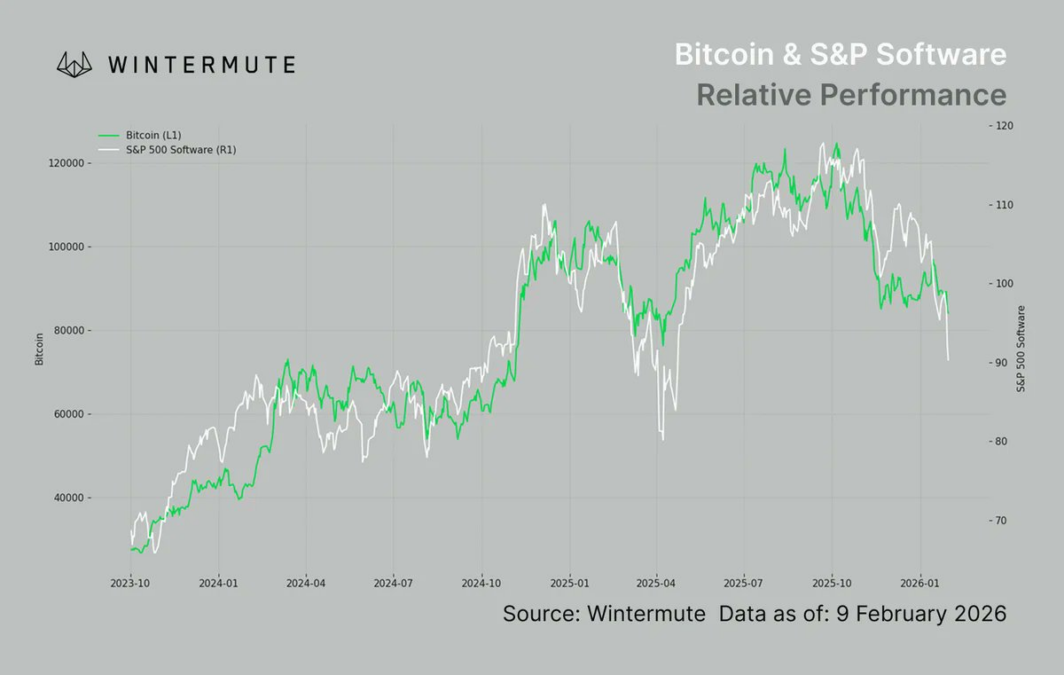
Interestingly, a viral chart last week showed Bitcoin moving almost in sync with AI-focused software stocks in the S&P. Wintermute noted, “The underperformance during rallies and amplified selling during drops is almost entirely explained by AI rotation.”
Structural weakness persists
Even after the recent wave of liquidations, demand for Bitcoin remains weak. CryptoQuant reported that new investor money isn’t coming in to absorb the selling pressure. “In bull markets, drawdowns attract accelerating capital. In early bear markets, weakness triggers withdrawal,” said CryptoQuant.
Although open interest had been building before the drop, thin trading volumes mean price swings are still largely driven by leverage. On top of that, ETF sponsors selling into falling prices create a self-reinforcing loop, pushing prices down even further.
Unrealized losses across crypto treasuries have now reached around $25 billion, mostly concentrated in a few big holders. Many Bitcoin treasuries are trading below the prices at which they were bought, which makes fresh buying less likely.
Retail investors are spreading their attention across other assets, leaving institutional ETF flows and derivatives to largely drive the market. Crypto analytic platform CoinGlass also pointed out in an X post key liquidation zones: heavy liquidity sits above $72,000, while a big liquidation area lies between $60,000 and $55,000, meaning the next breakout could be intense.
Also Read: ETH Whales Pile Into Long Positions as ETH Shows Resilience