Key Highlights
- Bitcoin drops 14% as U.S. dollar liquidity falls, driven by $200B cash buildup ahead of possible government shutdown.
- Markets tighten as Treasury hoards cash; BTC acts as liquidity proxy, hinting at more downside if TGA balances keep rising.
- Shutdown odds rise to 64%, sucking liquidity from crypto and stocks; BTC could test $65K–$75K like last year’s fear zone.
U.S. markets are under pressure as the government builds up cash reserve ahead of a possible shutdown. BitMEX Co-Founder Arthur Hayes noted that Bitcoin’s recent dip reflects a big drop in dollar liquidity.
According to Hayes, roughly $300 billion in dollar liquidity has exited markets in recent weeks, with a $200 billion spike in the Treasury General Account (TGA) being the primary driver. The TGA, the government’s main cash reserve held at the Federal Reserve, appears to be stockpiled to sustain federal operations if budget negotiations stall.
Hayes noted on X, “Roughly $300bn fall in $ liq over past few weeks driven mostly by $200bn rise in TGA, gov could be raising cash balances to fund spending in case of shutdown. $BTC falling not a surprise given the fall in $ liquidity.”
Tighter liquidity often puts pressure on risky assets like stocks and crypto. The .USDLIQ U Index fell from 11.687 million in July 2025 to 10.881 million by January 2026. After hitting a high of 11.789 million in August, the index dropped sharply, saw a few short-lived recoveries, and became more volatile toward the end of the year.
Consequently, Bitcoin, a proxy for market liquidity, has experienced a 14% correction in just two weeks. Analyst Brain commented, “BTC at 82,458 is the ultimate liquidity proxy. TGA at 952 billion dollars is a reserve vacuum. Tomorrow’s shutdown risk at 81 percent odds keeps things risk off.”
Shutdown risks and market implications
According to prediction market platform Polymarket data, the probability of a shutdown on January 31 stands at 71%, with total bets surpassing $29 million. The potential impasse revolves around Democratic opposition to Department of Homeland Security funding. Senate Minority Leader Chuck Schumer stated, “I will vote no on any legislation that funds ICE until it is reined in and overhauled.”
Despite the risk, the situation differs from October 2025’s record 43-day shutdown. Six spending bills have been signed this year, and key departments like Agriculture, Veterans Affairs, Commerce, and Energy already secured funding. DHS holds $178 billion from last year’s “One Big Beautiful Bill Act,” which could allow operations to continue largely uninterrupted.
Crypto analyst CryptoOracle previously said that government shutdowns usually suck liquidity out of markets first, then put it back later, often causing Bitcoin to drop 30–40%. He pointed to last October’s shutdown, saying BTC could fall into a ‘fear zone’ between $65,000 and $75,000.
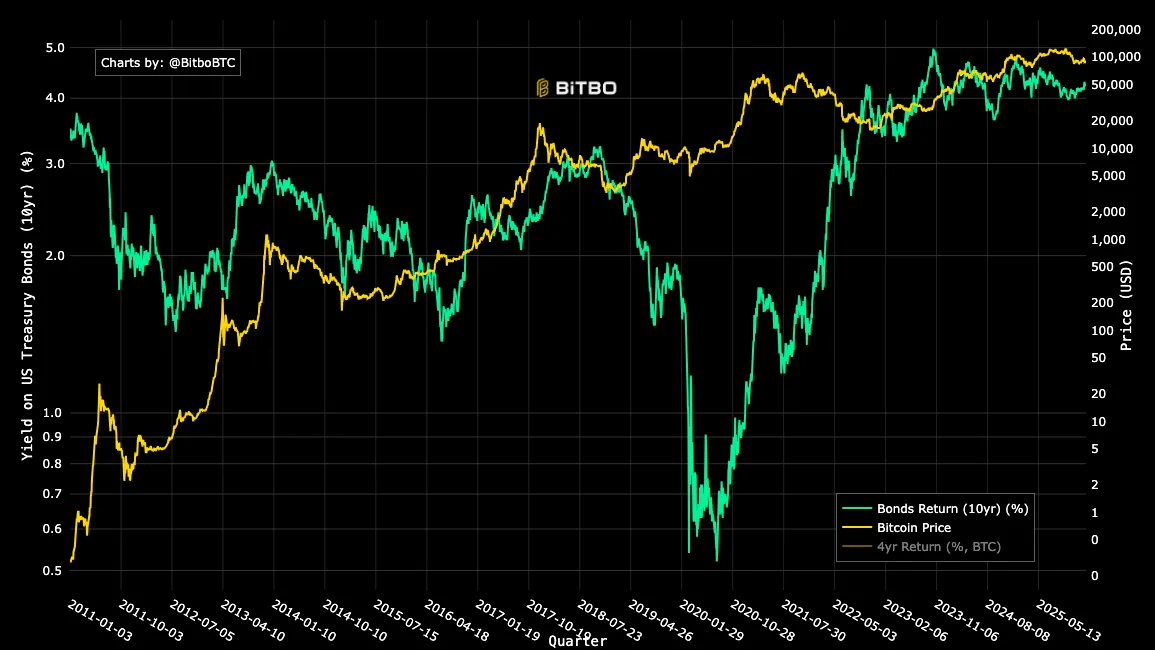
History supports this as per Bitbo data, from 2011 to 2015, Bitcoin rose when U.S. Treasury yields were stable or falling. During the 2020 COVID crash, yields plunged, Bitcoin dipped briefly, then bounced back as investors looked for alternative assets.
Liquidity trends driving crypto volatility
Apart from the government’s cash hoarding, another factor that shows that the crypto market is really under pressure is the general liquidity in the market. The .USDLIQ U Index confirms this dropping by nearly 7% over the last six months. Although some minor increases have been recorded, they have not been sustained, and volatility has picked up towards the end of 2025 and early 2026.
Analyst Brain also pointed out that Bitcoin has the potential to drop even further if its price goes lower than 80,951. Furthermore, since many traders are holding leveraged positions, the market has the potential to move either way.
The U.S. government is hoarding cash ahead of a possible shutdown, putting pressure on risky assets like Bitcoin. Prices might stay shaky for now, but once the situation clears, markets could bounce back strongly.
Also Read: CFTC Signals Reset for Polymarket, Kalshi as Fed vs States Clash Rises