Key Highlights
- Jeel is leveraging a regulatory sandbox to pilot Ripple’s technology for high-speed cross-border transactions and asset tokenization.
- This collaboration serves as a primary pillar for the Kingdom’s Vision 2030 goal of digitizing the national financial landscape.
- The move complements state-level efforts to establish a sovereign digital economy by integrating global blockchain standards into traditional banking.
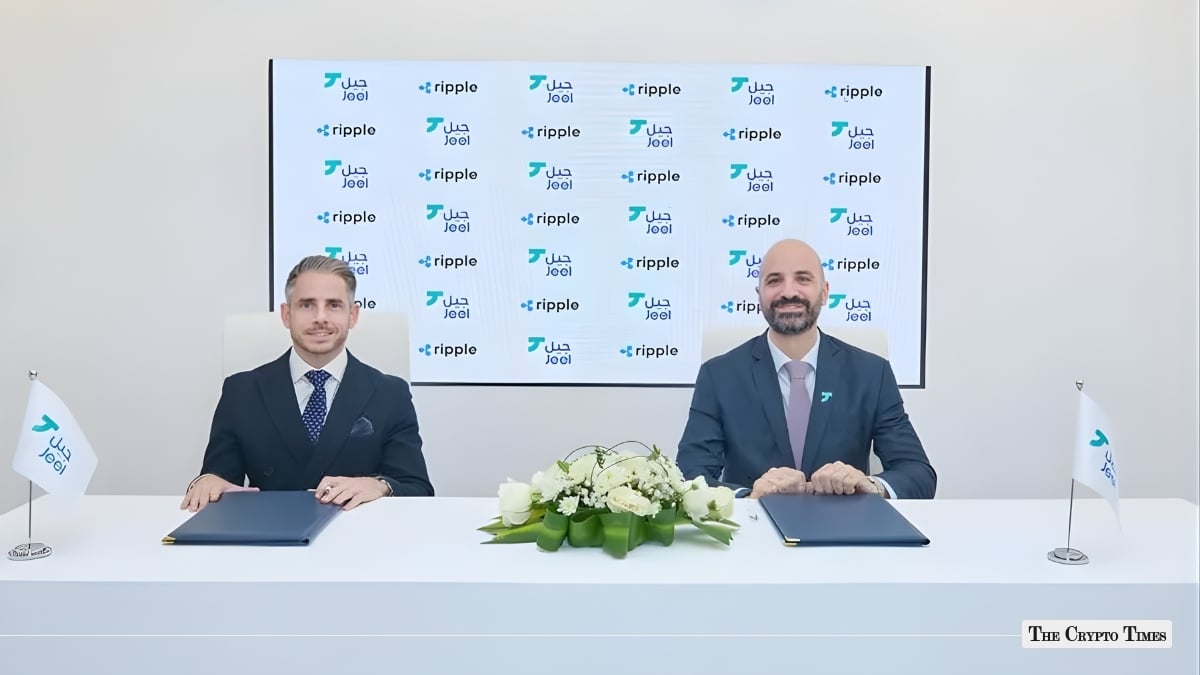
Jeel, the innovation arm of Riyad Bank, today announced its partnership with Ripple in Riyadh, Saudi Arabia. Ripple will supply enterprise-grade blockchain solutions to the Kingdom’s financial sector.
Ripple has signed a Memorandum of Understanding (MoU), in order to advance the Kingdom’s regional banking sector through the testing of new financial infrastructure in a controlled regulatory environment.
Payments as the first target
Saudi Arabia is the hub of key remittance and trade corridors that unite Asia, Africa, Europe, and the Arabian Gulf regions. However, even though digitization has sped up internally, cross-border settlements depend on sluggish and pricey correspondent networks.
The partnership focuses on using Ripple’s digital asset technology to improve the speed and cost-effectiveness of cross-border payment channels. In addition to remittances, the two organizations will work together to develop frameworks for digital asset custody and explore asset tokenization.
They will ensure that all proofs-of-concept meet operational and regulatory standards. By utilizing Jeel Sandbox, this collaboration will facilitate safe experimenting for scalable financial solutions with which economic objectives in the kingdom can be realized.
George Harrak, CEO of Jeel, said that the partnership uses the Jeel Sandbox to explore new financial infrastructure responsibly. He noted that by combining regulated experimentation with global blockchain expertise, they are laying the groundwork to assess scalable use cases that improve cross-border payments and digital asset capabilities in line with the Kingdom’s digital ambitions.
Regional fintech market
The development has occurred during a period characterized by increasing interest in the application of blockchain technology in the region. The country has progressed steadily in its Vision 2030 strategy, seeking to find a competitive fintech environment.
The regional backdrop has seen the country operate on two levels to develop digital assets; there is Riyad Bank’s Jeel, which has focused on modernizing conventional banking systems with the help of Ripple, as well as separate agreements to develop necessary infrastructure, such as the development of Central Bank Digital Currency (CBDC) systems in association with the European exchange WhiteBIT, tokenizing stock market systems, etc.
Future banking system integration
The future implications of this partnership indicate a move toward a fully interoperable and scalable digital financial infrastructure in Saudi Arabia. Ripple’s entry in the evolving fintech market of Saudi could be mirrored by the institutional support available to Riyad Bank that also aims to make the transition to a blockchain-based system.
Reece Merrick, Managing Director for the Middle East and Africa at Ripple, stated that it is against this progressive backdrop that Ripple has signed an MOU with Jeel to explore integrating secure, efficient blockchain solutions into the national financial system.
He further stated that they are committed to illustrating the potential of the enterprise-grade digital asset technology provided by Ripple to facilitate considerable efficiencies in domains like international payments, thus supporting the Kingdom’s strategy to develop a top-tier fintech market.
The alliance between Jeel and Ripple represents a major step in the country’s financial services industry. By marrying international fintech innovation with domestic banking knowledge, the Kingdom of Saudi Arabia is positioning itself to take the lead in the coming revolution in finance.
Also Read: Ripple’s Stablecoin Is Now Live on Binance for Trading