Key Highlights
- Anatoly Yakovenko said Ethereum Layer 2 networks are “not quantum safe” and warned users about long-term security risks.
- He argued that Ethereum L2s rely on multisignature bridges and complex systems, which can create security weak points.
- Solana is taking a different approach by preparing early for quantum threats, with plans for quantum-resistant cryptography.
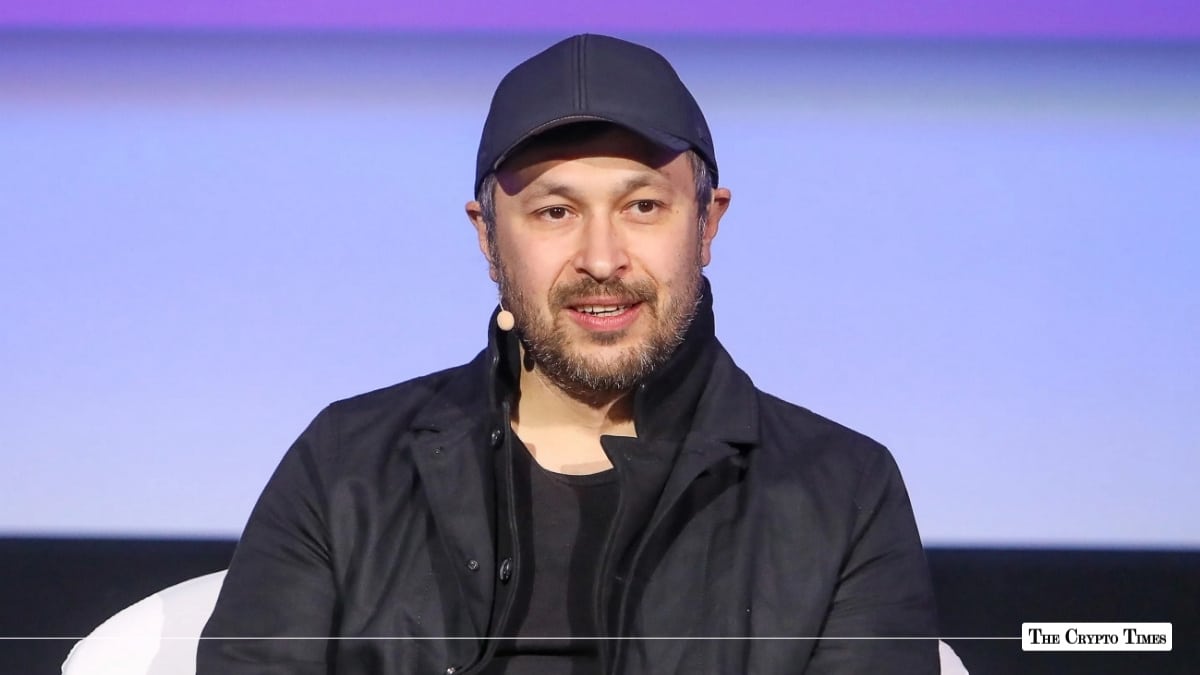
Anatoly Yakovenko, co-founder of Solana Labs, said in a post on X that Ethereum Layer 2 networks are not quantum safe and suggested users should be cautious about long-term security assumptions.
“Ethereum L2s are not quantum safe, abandon all hope,” he wrote.
The comment adds to an ongoing debate in the crypto space about how blockchains might hold up if quantum computers become powerful enough in the future. Quantum computers are expected, one day, to be able to break some of the security systems that today protect crypto wallets and networks.
Yakovenko used this topic to question how safe Ethereum’s Layer 2 systems really are in the long run.
Concerns about Ethereum L2 security
The latest comment adds a new layer to his view. Yakovenko has previously argued that Layer 2 networks depend heavily on multisignature bridges and multisignature setups to move funds between chains.
According to him, these setups often involve several parties approving transactions together, which can create weak points if something goes wrong or if the system is attacked.
In a 2025 X post, which has now been deleted, he said, “the complexity and attack surface of the code needed for a full LZ is so large that its impossible to guarantee that it’s bug free….” He argued that even after years of development, these systems still carry risks that are not always visible to users.
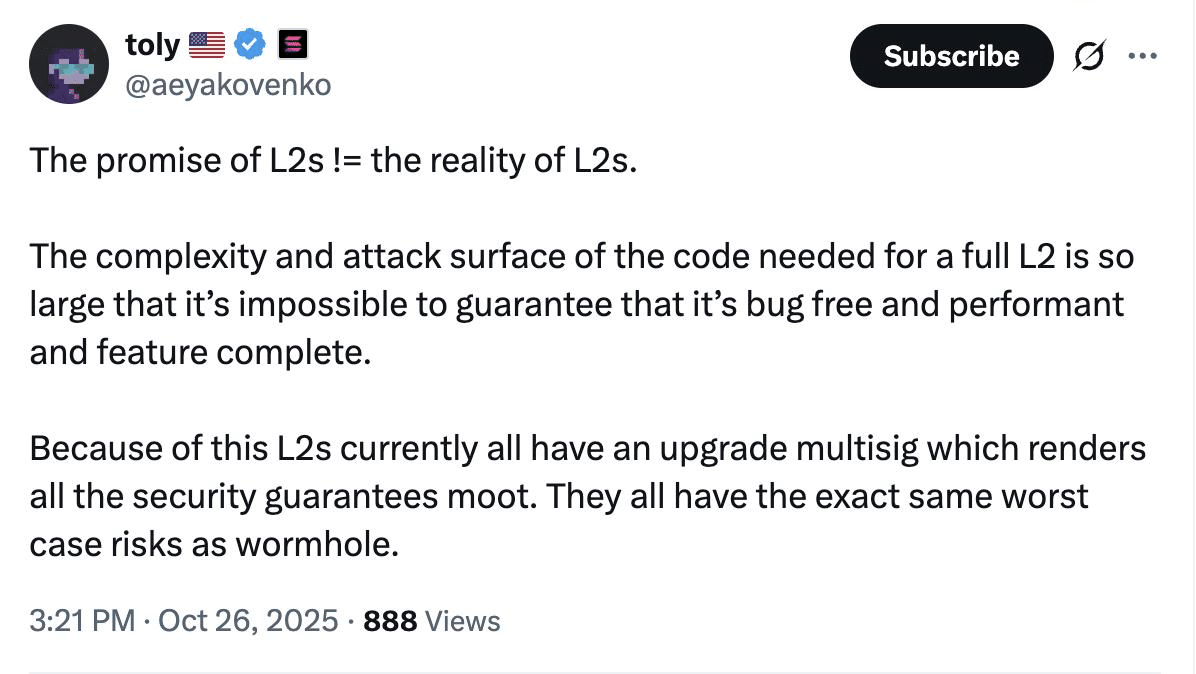
He also pointed to cross-chain systems like Wormhole ETH on Solana, saying that even these systems show similar worst-case risks when compared to Ethereum-based setups, while still generating revenue for Ethereum’s base layer ecosystem.
Solana’s plan for quantum safety
Meanwhile, Solana is taking a different approach by preparing early for possible quantum threats.
The Solana Foundation recently shared a plan that focuses on slowly moving toward quantum-resistant security, instead of changing everything at once. The idea is to prepare early, but the foundation said it will only make major changes if quantum computers actually become a real danger in the future.
Two major engineering teams in the Solana ecosystem, Anza and Jump Crypto’s Firedancer, have both identified Falcon as the preferred post-quantum digital signature scheme.
Falcon is designed to stay secure even if quantum computers become powerful enough to break current encryption methods. It is also built to keep performance strong, which is important for Solana’s fast network. Both teams have already started building early versions for testing.
No immediate changes for now
The foundation noted that performance impact from post-quantum cryptography is expected to remain manageable based on current research. However, they are still moving carefully because blockchain upgrades are complex and require coordination from many different groups across the network.
Overall, the situation shows two different directions in crypto development. Ethereum is expanding through many Layer 2 networks to improve scaling, while Solana is focusing on early preparation for future quantum risks, even though those risks are still far away and not fully proven yet.
Also Read: Hyperliquid Launches Prediction Markets — Can It Rival Polymarket?