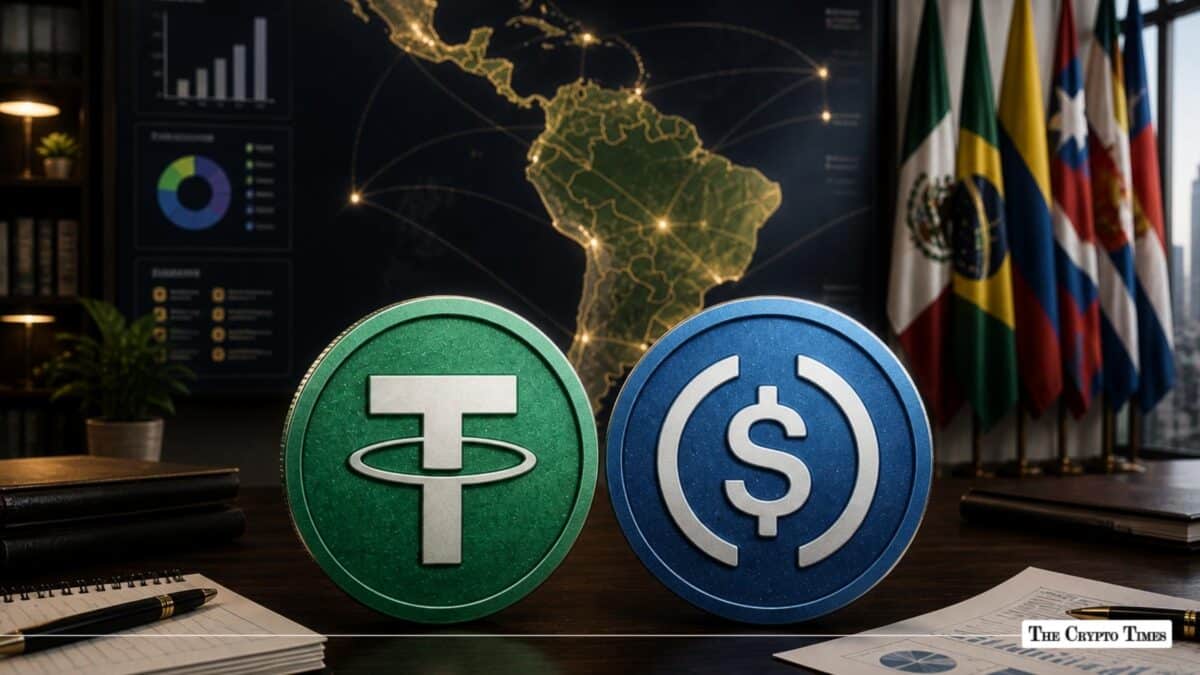
Stablecoins are rapidly maturing into the primary financial infrastructure for Latin America (LATAM), with new data suggesting a fundamental shift in how money moves across the continent. According to Claudia Wang, Chief Marketing Officer at Bybit, the industry is witnessing a “redirection” of the region’s $174 billion annual remittance flow.
Wang pointed to shifting migration patterns, rising payment flows within Central America, and increasing demand for digital dollar alternatives. Her field research across Brazil, Mexico, Argentina, Colombia, and Peru suggests the opportunity is broader than widely assumed.
“Every fintech deck recently has the same slide: ‘LATAM is the next big thing. Stablecoin is the killer of cross-border payment,’” Wang said. However, she added that many firms still lack reliable corridor data and real user insight, which limits their ability to expand effectively.
The great corridor shift
Remittances to Latin America totaled $174 billion in 2025, but Mexico’s share fell 4.5% to $61.8 billion, signaling a shift in regional flows. At the same time, transfers to Central America rose sharply, driven by migration trends and faster cross-border payments.
Countries including Guatemala, Honduras, and El Salvador posted double-digit gains, changing where money is moving across the region. The shift is drawing attention to less-covered corridors, such as Venezuela to Colombia and Argentina to Bolivia.
A new 1% U.S. tax on remittances is also nudging users toward cheaper digital options, including crypto-based transfers and alternative payment channels.
Stablecoins become core financial infrastructure
Stablecoins now account for a large share of crypto activity across Latin America, pointing to a broader shift in how people store value. In Argentina, USD-backed tokens such as USD Coin and Tether make up more than 70% of purchases, reflecting strong demand for dollar-linked assets.
Adoption is also rising in Colombia and Mexico, where currency volatility and limited access to banking services are pushing users toward digital alternatives.
Claudia Wang said most users are not focused on spending stablecoins but on holding them. “The stablecoin balance is the product — not the transaction,” she said. That shift is changing competition among fintech firms, with a growing focus on attracting and retaining user balances rather than just processing transfers.
Cost pressure and competitive landscape
Traditional remittance providers are losing share as digital services gain ground across Latin America. Companies such as Western Union have seen declining usage, while Remitly is expanding with lower-cost transfers and app-based services. Crypto platforms are also growing, offering faster settlement and reduced fees.
Stablecoin-based transfers are pushing costs lower, with fees often below 2%, compared with an industry average of about 6%. The gap can translate into meaningful savings for migrant families sending money home.
Regulation remains uneven across the region. Markets such as Colombia and Argentina are easier for new entrants, while stricter rules in Brazil and Mexico can slow expansion.
Outlook for 2026
The stablecoin market capitalization currently sits at $320.82 billion, with a weekly growth of 0.05%, according to DeFiLIama data, and Tether (USDT) maintaining a dominant 59% market share. However, the GENIUS Act regulatory framework in the U.S. is allowing competitors like USDC and the newly launched PayPal USD to gain institutional ground in regulated LATAM markets like Brazil.
At the same time, venture firm Andreessen Horowitz said stablecoins are evolving beyond their original use case. The firm noted that they are increasingly used for payments, savings, and cross-border transfers, particularly in emerging markets.
Latin America is a key region in that shift, with rising adoption tied to demand for dollar-linked assets and more accessible financial tools.
Also Read: Weekly Wrap: CLARITY Act Enters “Red Zone,” DeFi Hacks Stack Up, ETFs Explode With $1.9B