Key Highlights
- Bhutan will run its own Sei blockchain validator, set to go live in the first quarter of 2026.
- The validator will help expand Bhutan’s blockchain capacity and support its digital transformation efforts.
- Bhutan holds over 11,000 Bitcoin, some of which are earmarked for the Gelephu Mindfulness City project.
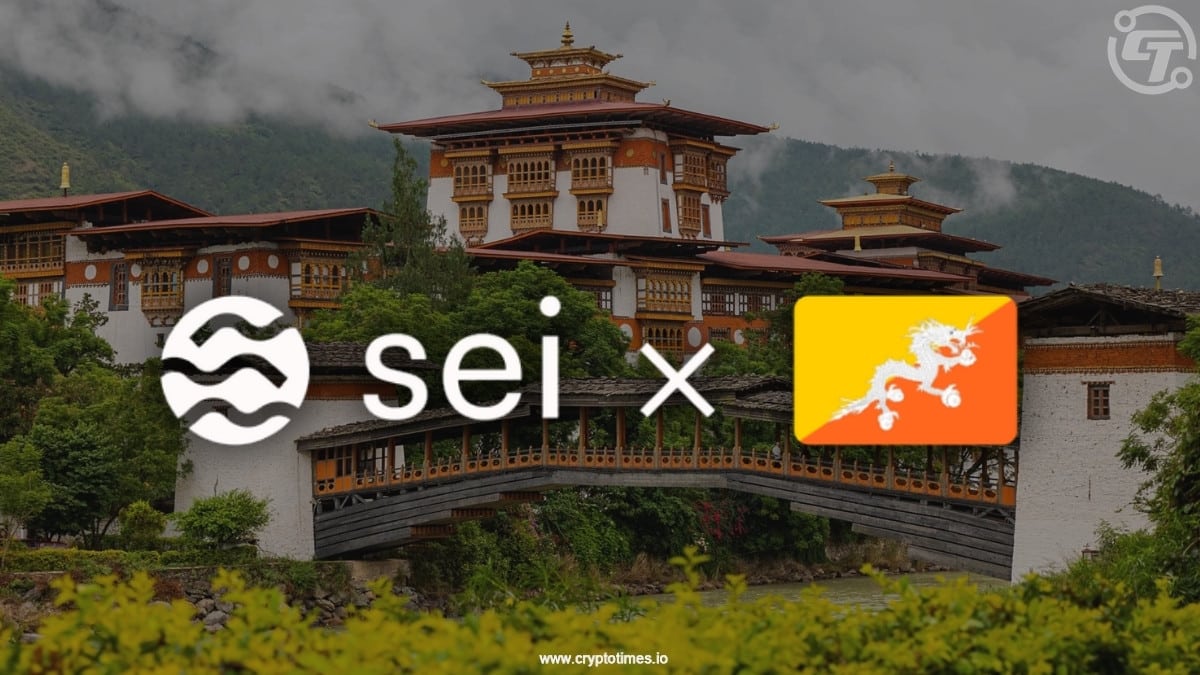
The Kingdom of Bhutan is gearing up to have its own validator node on the Sei blockchain, making it one of the very few countries in the world operating its own infrastructure on a public Layer-1 (L1) blockchain. It is officially transitioning from a passive Bitcoin miner to a core infrastructure provider for the decentralized web.
According to Sei’s blog post, the project is being implemented via Druk Holding and Investments (DHI), the sovereign wealth fund of the Kingdom of Bhutan, and is set to operate in the first quarter of 2026. This makes Bhutan one of the first nations in history to directly secure a public L1 network, positioning the “Mindfulness City” of Gelephu as a global hub for tokenized finance.
Validators have a major role within the blockchain network, which involves the verification of transactions, among other processes that keep the system up and running. By operating one domestically, Bhutan moves from observing blockchain technology to directly participating in its infrastructure.
The project, led by DHI’s InnoTech division, is intended to expand the country’s blockchain capacity and explore opportunities such as asset tokenization and new economic initiatives.
What the partnership aims to build
Eleanor Davies, Science and Innovation Lead at the Sei Development Foundation, said Bhutan has been “an early adopter of advanced technology to support national economic and social initiatives,” adding that Sei was selected by DHI InnoTech to deploy infrastructure aligned with the Kingdom’s priorities.
She said the collaboration represents “a significant investment in national blockchain adoption” and could open the door to future projects in areas such as payments, tokenization, and personal identification.
Phuntsho Namgay, Head of the DHI Department of Innovation and Technology, said the initiative is “an exciting step toward strengthening Bhutan’s role in global blockchain innovation.” He said it also creates opportunities in data valuation, scientific advancement, and financial technology, and that DHI plans to continue exploring projects with Sei as part of Bhutan’s broader digital transformation goals.
The deployment is being supported by Sapien Capital, an investment firm tied to science and innovation initiatives on Sei. While concrete applications have not yet been announced, the validator gives Bhutan a base layer from which future digital projects can be built.
Bhutan in the global blockchain landscape
Bhutan also holds a significant portion of Bitcoin among other countries. According to Bitbo, Bhutan holds around 11,286 coins worth more than $1 billion, with part of the funds supposedly allocated for development projects such as the Gelephu Mindfulness City.
Bhutan is not alone in taking an active role in blockchain. Several major companies run validators or infrastructure for public blockchains. Deutsche Telekom operates validators on networks including Polygon, Injective, and Celo.
At the global level, countries are exploring Bitcoin reserves or digital asset projects. The United States and the United Kingdom hold large amounts of Bitcoin from law enforcement seizures, while nations such as El Salvador have adopted Bitcoin for economic use.
This constitutes a greater interest in the possession of digital assets, as well as the use of the blockchain, not only in the private sector, but also for governments.
Also Read: LSEG Launches DiSH to Settle Real Money on Blockchain