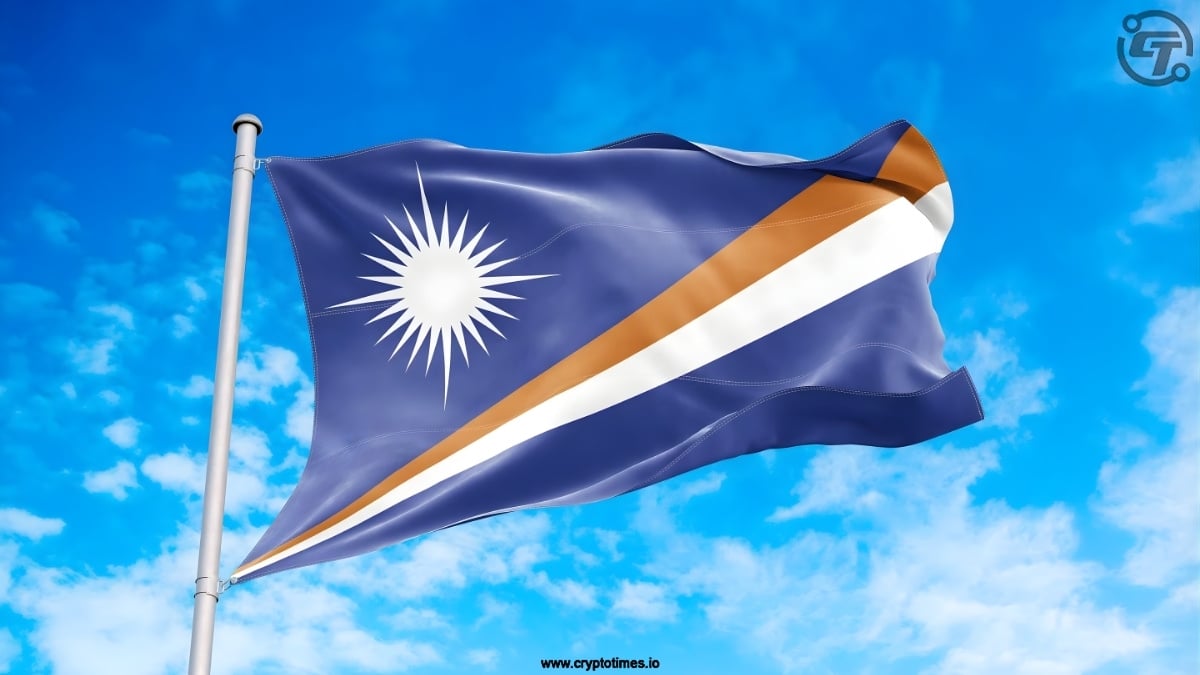
Key Highlights
- The Marshall Islands launched a nationwide UBI program using blockchain-based, dollar-denominated tokens.
- The system is powered by Crossmint wallets and built on Stellar, enabling instant peer-to-peer transfers.
- Funds are distributed via USDM1, a tokenized sovereign bond backed 1:1 by U.S. Treasuries.
The Republic of the Marshall Islands is rolling out a blockchain-based option for its universal basic income (UBI) program, allowing eligible citizens to receive dollar-denominated tokens on their phones through the Lomalo app. The system uses Crossmint-powered wallets on the Stellar blockchain to move funds faster across the country’s scattered islands.
Officials say that the goal is to reduce the daily friction of getting cash in a nation of roughly 1,200 islands, where physical U.S. dollars often arrive by boat, ATMs can run dry, and many residents travel long distances just to withdraw money.
Tokenizing cash access across a dispersed nation
Under the program, citizens receive UBI payments through the Lomalo mobile app, where funds can be stored in a Crossmint-powered wallet and sent peer-to-peer instantly. The system runs on the Stellar blockchain, allowing low-cost, near-instant settlement even across remote atolls.
At the core of the rollout is USDM1, a fully collateralized digital sovereign bond issued by the Marshall Islands and backed 1:1 by short-term U.S. Treasuries. Unlike corporate stablecoins, USDM1 represents a sovereign obligation governed under New York law, with collateral held by regulated U.S. trust entities.
The government said the structure allows digital dollars to circulate without creating a new currency or altering the country’s fully dollarized monetary system, while reducing reliance on fragile correspondent banking links.
From correspondent banking crisis to onchain distribution
Pacific Island nations have lost hundreds of correspondent banking relationships over the past decade, leaving the Marshall Islands dependent on a single foreign bank and driving up remittance and transaction costs.
Officials argue that blockchain-based distribution can ease domestic liquidity constraints, reduce cash hoarding, and lower the economic “tax” created by physical dollar scarcity. The UBI program, known as ENRA, is funded by the country’s Compact Trust Fund, which exceeded $1.3 billion in assets in 2025.
The approach mirrors a broader global trend toward tokenized public finance. Uganda recently launched a CBDC pilot tied to real-world assets, while other governments have tested tokenized bonds and digital payment rails to modernize settlement without abandoning existing legal frameworks.
A real-world test for sovereign tokenization
For the Marshall Islands, the initiative isn’t a crypto experiment or a tech demo. It’s a blunt response to reality, using blockchain as a delivery rail to get money to people scattered across millions of square kilometers of ocean, where the old system keeps failing.
If it works at scale, USDM1 and Lomalo could turn the Marshall Islands into a real-world example of how sovereign-backed digital assets can support welfare and liquidity without breaking U.S. dollar systems or existing law.
Also read: Norway’s Central Bank Sees No Immediate Need for CBDC