Key Highlights
- Norway’s central bank does not recommend a central bank digital currency (CBDC), citing strong payment systems but remains ready to adopt a CBDC if future needs arise.
- CBDC research continues as Norway monitors global trends, exploring tokenization and collaboration with other central banks.
- Experts warn CBDCs can empower or restrict financial freedom, depending on how governments and banks choose to use them.
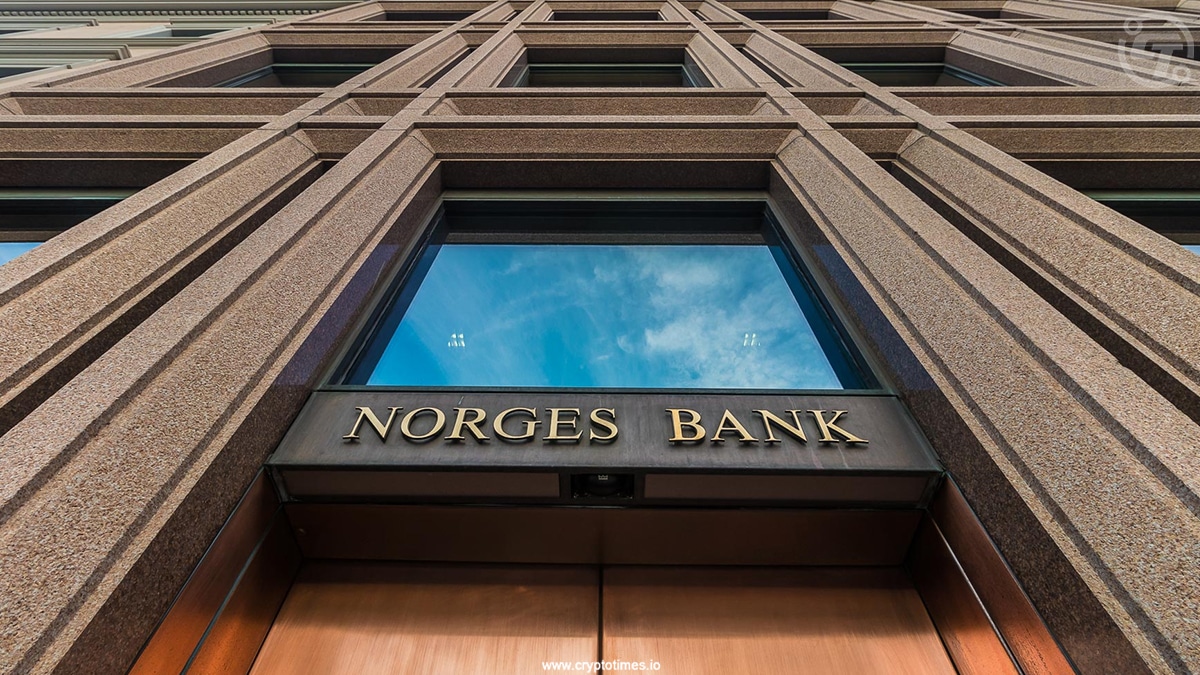
Norges Bank, the central bank of Norway, has decided to hold off on launching its own central bank digital currency (CBDC), saying the nation’s current payment system of Norwegian krone is already strong, reliable, and efficient. After reviewing the need for a CBDC, officials concluded there’s no urgent need for change at this time.
Governor Ida Wolden Bache emphasized, “The need for such a currency may, however, change in the future. We will be ready to introduce a central bank digital currency if it becomes necessary to maintain an efficient and secure payment system.”
The bank clarified that both retail and wholesale CBDC options remain under consideration. Retail CBDC would allow universal access similar to cash or bank deposits, while wholesale CBDC would target banks and financial institutions.
Under this model, bank deposits would be electronic tokens that use blockchain technology. According to Norges Bank, it has a payments system that offers fast, low-cost, and stable payments; hence, immediate implementation of CBDC would not be necessary.
CBDC studies and worldwide trends
Norges Bank has also been researching tokenization and models for digital currencies in order to be prepared for a potential paradigm shift in the financial sector in the future. Strategy 28, published by Norges Bank on December 10, 2025, describes experiments that will be performed with other financial institutions. A report will be published in early 2026.
The central bank also monitors international developments. The Eurosystem is actively considering a digital euro, though standardized IT systems for CBDC integration remain limited. Norges Bank aims to explore potential collaborations with other central banks to leverage shared infrastructure if global adoption accelerates. “We look forward to cooperating with the financial industry and other central banks on work in this area,” Governor Bache said.
Similarly, on the global front, South Africa has paused plans for a retail CBDC. The South African Reserve Bank (SARB) argued that the country’s ongoing payment reforms should take priority. These upgrades, including broadening access to non-bank firms, are expected to deliver improvements more quickly than a digital currency would.
The SARB concluded, “Current evidence does not support introducing [a CBDC] in the short term,” highlighting that digital currency becomes relevant only if cash usage declines or innovation demands central-bank-issued digital foundations.
In contrast, the BRICS block is accelerating its own digital currency ambitions. China’s e-CNY is in an advanced pilot, while India’s e-Rupee and Brazil’s Drex are progressing rapidly. Russia is also testing its Digital Ruble. The focus is increasingly on a potential unified BRICS payment system to facilitate de-dollarization and cross-border trade, contrasting sharply with the Western pace.
CBDCs and financial freedom debate
The discussion around CBDCs is far from purely technical. Ripple’s CTO, David Schwartz, recently highlighted the dual nature of digital currencies. In a post on X, he noted, “If a CBDC creates more options for people who want to use it, that’s good. If it becomes an excuse to hamper other options more consistent with individual freedom, that’s bad.” Schwartz also emphasized that CBDCs could expand access to banking services where private institutions restrict them.
Ripple has supported CBDC projects in countries including Palau, Bhutan, Montenegro, Georgia, and the UK, enhancing its XRP Ledger to handle CBDCs, stablecoins, and tokenized deposits.
Norway is taking a careful approach, keeping its payment system strong while staying ready for a digital currency if needed. This ensures the country can easily adapt to future changes in money and banking technology.
Also Read: OCC Exposes 9 Major U.S. Banks Engaged in Controversial Debanking