Key Highlights
- YouTube now lets U.S. creators receive earnings in PayPal’s PYUSD stablecoin, marking its first major crypto-linked payout option.
- PayPal to handle all crypto conversions, allowing YouTube to continue paying in dollars while creators opt to receive PYUSD.
- YouTube now gives creators the option to get revenue from ads, memberships, and subscriptions in stablecoin.
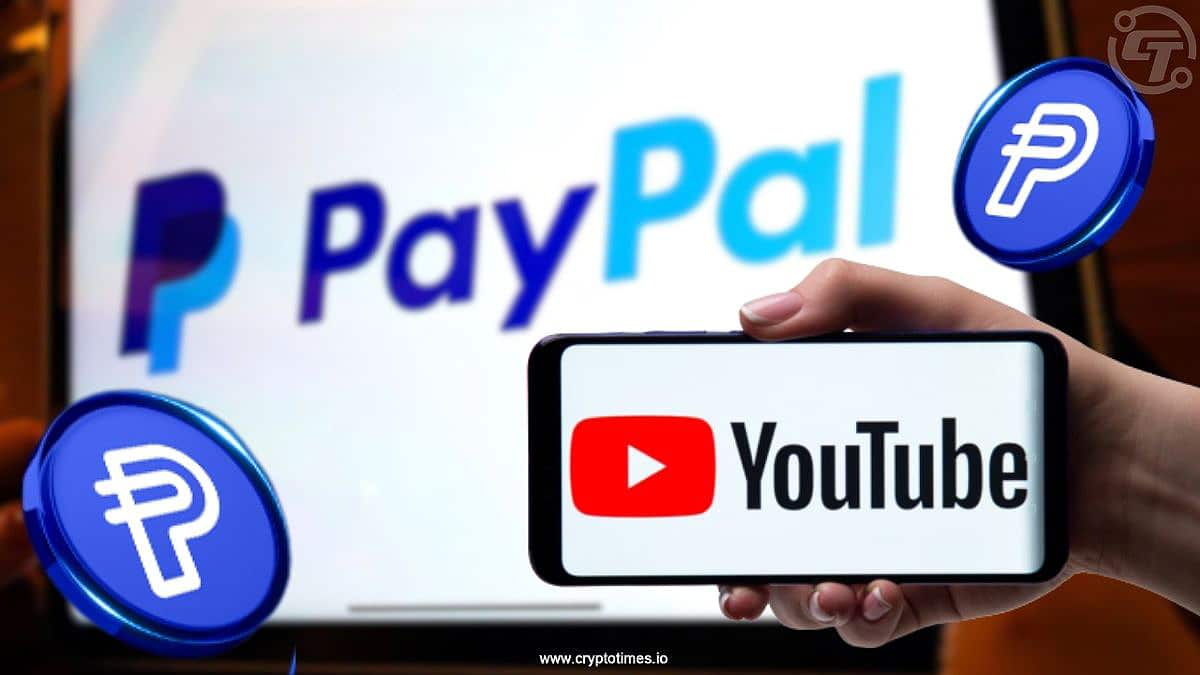
YouTube is rolling out a new payment option that allows U.S.-based creators to receive their earnings in PayPal’s dollar-backed stablecoin, PYUSD.
The option is already live and marks a notable step in how one of the world’s biggest creator platforms experiments with digital money.
PayPal’s Head of Crypto, May Zabaneh, confirmed the integration and said it currently applies only to creators in the United States. Google, YouTube’s parent company, also confirmed that PYUSD payouts are now supported.
How PYUSD payouts work
YouTube already relies on PayPal’s large-scale payout system for paying creators, gig workers, and contractors. Earlier this year, PayPal added the ability for payment recipients to receive their earnings directly in PYUSD rather than cash.
YouTube has now extended that option to creators who want their revenue from ads, memberships, and subscriptions delivered in stablecoin rather than through traditional bank transfers.
Zabaneh noted that PayPal manages the crypto portion end-to-end. YouTube continues to pay in dollars, while PayPal converts them to PYUSD for creators who opt in. This keeps YouTube from having to navigate crypto custody or regulatory hurdles while still offering a crypto-based payout option.
PayPal, one of the earlier tech giants to embrace crypto, launched PYUSD in 2023. According to data from CoinGecko, the token now has a market value approaching $4 billion and is increasingly threaded through PayPal’s ecosystem.
PayPal has gradually integrated PYUSD across its products. It allows users to hold it in their digital wallets or Venmo and use it to pay merchants, and soon enable small-to-medium merchants to pay vendors with it.
Big tech’s growing shift toward stablecoins
The update arrives as big tech players pay closer attention to stablecoins and blockchain-based payment rails. In July, the U.S. President Donald Trump signed the GENIUS Act (the Guiding and Establishing National Innovation for U.S. Stablecoins Act), creating the first federal rulebook for stablecoin payments in the country.
Major firms like Stripe have also moved deeper into the space, most notably through the company’s $1.1 billion acquisition of stablecoin startup Bridge earlier this year. In June, Bridge also filed its Office of the Comptroller of the Currency (OCC) and NYDFS trust bank applications.
In June, companies such as Apple, Google, Meta, X, and Airbnb began exploring ways to integrate stablecoins into their payment systems as part of early discussions with crypto firms. The goal was to lower fees and speed up cross-border transactions using dollar-pegged digital tokens.
Google publicly acknowledged its interest, calling stablecoins a major upgrade to existing payment rails, while Airbnb said it was monitoring the space closely. Meta, after previously shelving its crypto ambitions, also returned to evaluating stablecoin options.
Now, YouTube’s integration adds yet another channel for PayPal’s stablecoin and potentially brings millions of creators into direct contact with on-chain payments, whether or not they’ve used crypto before.
Also Read: 21Shares Forecasts $1T Stablecoins, $500B Tokenized Assets in 2026