Crypto Times Logo Black
Google News Follow Banner
  • News
    • Market
    • Bitcoin
    • Ethereum
    • Altcoins
    • Regulations & Policies
    • DeFi News
    • Blockchain News
    • Industry
  • Exclusive
    ExclusiveShow More
    CLARITY Act Fails 49-50 in US Senate as SEC & CFTC Move Ahead on Crypto Rules Within 48 Hours
    CLARITY Act Fails 49-50 in US Senate as SEC & CFTC Move Ahead on Crypto Rules Within 48 Hours
    Illustrated collage featuring diverse people surrounded by crypto symbols and a corporate boardroom backdrop.
    Quiet Racism in Crypto Gets “Obvious” During Circle’s Arc Mainnet Launch
    3D Liquid Network logo with a hooded hacker shadow and computer code overlays in the background
    Liquid Network Exploit Explained: Unbacked L-BTC and the $320M Peg-Out
    Clarity Act bill with a September 15 calendar and Senate chamber in the background.
    Can the Senate Pass the CLARITY Act on September 15? Here’s the Vote Math
    Simon Gerovich, CEO and President of Metaplanet
    Inside Metaplanet’s Floating Option Pool: How a 2023 Option Clause Followed Its Bitcoin Treasury Era
  • Opinion
    OpinionShow More
    Jackson Hole 2026: Crypto Is No Longer Outside the Fed’s Door
    Jackson Hole 2026: Crypto Is No Longer Outside the Fed’s Door
    The Architecture of Trust Same Routes, New Risks in Global Tokenisation
    The Architecture of Trust: Same Routes, New Risks in Global Tokenisation
    The Architecture of Trust What 4,000 Years of Trade Teach Us About RWA Tokenisation
    The Architecture of Trust: What 4,000 Years of Trade Teach Us About RWA Tokenisation
    One P2P Trade, Months of Limbo Why Innocent Indian Crypto Users Keep Paying the Price
    One P2P Trade, Months of Limbo: Why Innocent Indian Crypto Users Keep Paying the Price
    CLARITY Act The Bill Exists, the Deal Does Not, Trump Has to Wait
    CLARITY Act: The Bill Exists, the Deal Does Not, Trump Has to Wait
  • Learn
    • Explained
    • How To
    • Insights
  • IndicesNew
    • India USDT Premium Index
    • India USDC Premium Index
  • Videos
  • More
    • About Us
    • Our Authors
    • Contact Us
    • Editorial Policy
    • Daily Crypto Puzzles
The Crypto TimesThe Crypto Times
  • All News
  • Market
  • Bitcoin
  • Ethereum
  • Altcoins
  • Regulations & Policies
  • Blockchain
  • DeFi
  • Industry
  • Exclusive
  • Opinion
Search
  • News
    • Market
    • Bitcoin
    • Ethereum
    • Altcoins
    • Regulations & Policies
    • Blockchain
    • DeFi
    • Industry
    • Exclusive
    • Opinion
  • Learn
    • Explained
    • How To
    • Insights
  • IndicesNew
    • India USDT Premium Index
    • India USDC Premium Index
  • Quick Links
    • About Us
    • Our Authors
    • Contact Us
    • Editorial Policy
    • AI Policy
    • Sponsored & Advertorial Policy
    • Daily Crypto Puzzles
  • Videos
  • Glossary
Follow US
© 2026 By Crypto Times. All Rights Reserved.
Industry

Can Bitcoin Infrastructure Solve the Global Compute Crisis?

As the demand for AI processing power skyrockets, a new "dual-use" model for Bitcoin mining facilities is emerging, promising to reshape energy markets and solve the compute bottleneck.

Provided by Argentum AI Argentum AI
From Mining to AI Can Bitcoin Infrastructure Solve the Global Compute Crisis

As artificial intelligence pushes global data centers toward capacity limits, Bitcoin miners are emerging as unexpected participants in the AI compute market.

In recent years, Bitcoin mining has quietly evolved from a controversial consumer of power into one of the most sophisticated tools for grid management. Far from being a static drain on resources, modern mining operations possess a unique capability: the ability to scale consumption up or down in seconds in response to real-time grid conditions.

This flexibility has created a symbiotic relationship with renewable energy. When solar or wind generation exceeds demand, miners power up to consume the excess energy that would otherwise be wasted (curtailed). Conversely, during peak demand, they power down. A recent peer-reviewed study found that pairing a solar plant with Bitcoin mining could reduce the return on investment period from 8.1 years to just 3.5 years, making green infrastructure significantly more viable.

But now, a second evolution is underway. Facing an unprecedented global shortage of computing power for Artificial Intelligence (AI), the mining industry is pivoting. The question is no longer just about mining Bitcoin; it’s about whether this massive, decentralized infrastructure can be repurposed to power the AI revolution.

The Crisis: An Insatiable Demand for Compute

The tech sector is facing a physical limit. A research by Goldman Sachs indicates that in the U.S. alone, power demand from data centers—driven primarily by AI and Machine Learning workloads—is set to increase by 165% by 2030.

Traditional cloud infrastructure is straining under this weight. Grid interconnection timelines for new data centers have stretched to seven or even ten years in many regions due to permitting delays and transmission constraints. This has created a “compute bottleneck,” where the demand for processing power far outstrips the ability to build new facilities.

The Solution: The “Dual-Use” Miner

Amidst this backdrop, Bitcoin mining facilities are uniquely positioned to bridge the gap. These sites already possess the three most difficult-to-acquire assets in the energy world:

  1. High-Capacity Power: Massive grid connections that are already live.
  2. Land & Infrastructure: Secure facilities with advanced cooling systems.
  3. Operational Expertise: Teams skilled in managing high-performance hardware 24/7.

This has led to the rise of a new “dual-use” model. Major public miners like Core Scientific and Iris Energy have already begun pivoting, signing multi-billion dollar deals to host High-Performance Computing (HPC) GPUs alongside their Bitcoin ASICs. The vision is a hybrid fleet: mining Bitcoin when energy is cheap, and processing lucrative AI workloads when demand is high.

Constraints and Trade-Offs

Despite the narrative appeal, the transition is not frictionless:

  • Hardware mismatch: Bitcoin ASIC infrastructure is not directly compatible with GPU workloads. Retrofitting requires significant capital expenditure.
  • Enterprise requirements: AI customers demand strict uptime, service-level agreements, and low-latency connectivity, standards not all mining sites can meet.
  • Power contract limitations: Many mining power agreements prioritize interruptibility over stability, which may conflict with AI workloads.
  • Cooling and networking: AI clusters require more sophisticated thermal management and network architecture than traditional mining setups.

These constraints suggest that only a subset of mining operations are realistically positioned to support enterprise-grade AI workloads.

Case Study: Argentum AI and the Decentralized Approach

While major corporations are building centralized AI hubs, a new wave of projects is attempting to decentralize this model. Argentum AI is one such entrant, building a compute marketplace designed to allow miners of all sizes to monetize their infrastructure for AI workloads.

Unlike traditional cloud leasing, Argentum AI focuses on a specific niche: jurisdictionally-compliant, secure workloads.

Solving the Data Sovereignty Problem

One of the biggest hurdles for decentralized AI is trust. Enterprise customers are hesitant to send sensitive data to anonymous mining farms. Argentum AI aims to solve this with its native Fortis isolation mechanism.

  • Technical Approach: Fortis establishes cryptographically-verified execution environments. This ensures that an AI workload operates in a “black box,” isolated from the host infrastructure.
  • The Goal: This allows sensitive data (e.g., from finance or healthcare) to be processed on a decentralized network without the risk of data leakage, addressing the primary barrier to institutional adoption of DePIN (Decentralized Physical Infrastructure Networks).

Conclusion: A Resilient Energy Ecosystem

The convergence of Bitcoin mining and AI compute is more than a trend; it is a structural shift in how we value digital infrastructure. By transforming mining operations from single-purpose facilities into adaptive, high-performance data centers, the industry is creating a more resilient energy ecosystem.

Whether through massive corporate pivots or decentralized marketplaces, the end goal is the same: to turn the world’s hunger for energy and computation into a balanced, efficient, and profitable market. As the AI boom accelerates, the Bitcoin miners of today may well become the essential power plants of the intelligence age.

Disclaimer: This article was provided by a third-party contributor. The views and opinions expressed in this article are those of the author and do not necessarily reflect the editorial position of The Crypto Times. This content is for informational purposes only and should not be considered financial advice.


Disclaimer: The information researched and reported by The Crypto Times is for informational purposes only and is not a substitute for professional financial advice. Investing in crypto assets involves significant risk due to market volatility. Always Do Your Own Research (DYOR) and consult with a qualified Financial Advisor before making any investment decisions.

Follow The Crypto Times on Google News to Stay Updated!      Google News

Daily Crypto Puzzles
Tickerdle Tickerdle Crypto Connections Crypto Connections Crypto Crossword Crypto Crossword
TAGGED:Bitcoin Mining
Share This Article
Whatsapp Whatsapp LinkedIn Telegram Copy Link

Daily Crypto Puzzles

Tickerdle crypto game Tickerdle Crypto Connections game Crypto Connections Crypto Crossword game Crypto Crossword

Latest News

Polygon Burns 100M POL, Cutting 1% of Supply
Physical XRP and Dogecoin crypto coins positioned side-by-side.
XRP, DOGE Flash Long-Term MVRV Discounts: Santiment
Evernorth Advances Toward Nasdaq Listing as XRPN After S-4 Takes Effect
SEC’s Uyeda Explains Why Agency Dropped Some Crypto Cases
Laptop showing the ARK Invest logo placed on a desk in front of an SEC wall seal.
ARK Venture Fund Gets SEC Nod for Tokenized Fund Shares

Find Us on Socials

You may also like

XRP Ledger Moves Closer to Native Lending With New Upgrade

XRP Ledger Moves Closer to Native Lending With New Upgrade

SKY Token Gains 8.8% in 24 Hours as Major Crypto Assets Decline

SKY Token Gains 8.8% in 24 Hours as Major Crypto Assets Decline

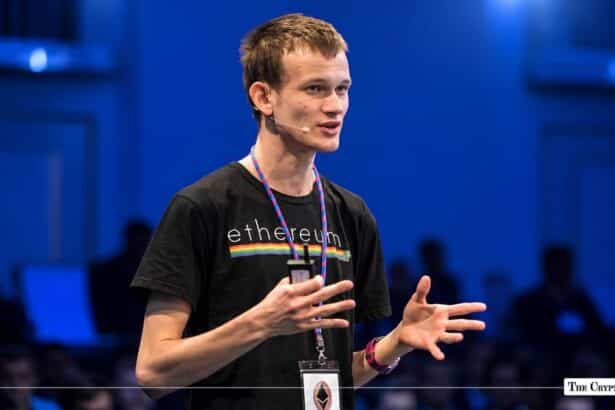
Vitalik Buterin speaking on stage while wearing a black Ethereum t-shirt.

Vitalik Buterin Warns AI Is Changing the Blockchain Privacy Debate

Tetra Digital Expands Canadian-Dollar Stablecoin CADD to Solana

Tetra Digital Expands Canadian-Dollar Stablecoin CADD to Solana

The Crypto Times Logo PNG

News

All News
Market News
Bitcoin News
Ethereum News
Altcoin News
Regulations & Policies
DeFi News
Blockchain News
Industry News

Sections

Exclusive
Opinions
Learn
Insights
Videos
Glossary

India Premium Indices

Stablecoins
USDT
USDC

Play

Daily Crypto Puzzles
Tickerdle
Crypto Connections
Crypto Crossword

Company

About Us
Our Authors
Editorial Policy
AI Policy
Advertorial Policy
Contact Us
Career

Follow Us

X-twitter Linkedin Telegram Youtube Instagram

© 2026 The Crypto Times | A BITROCK TECHNOLOGIES L.L.C. Company.

DMCA.com Protection Status
  • Terms and Conditions
  • Disclaimer
  • Privacy Policy
  • Cookie policy
Do Not Sell or Share My Personal Information