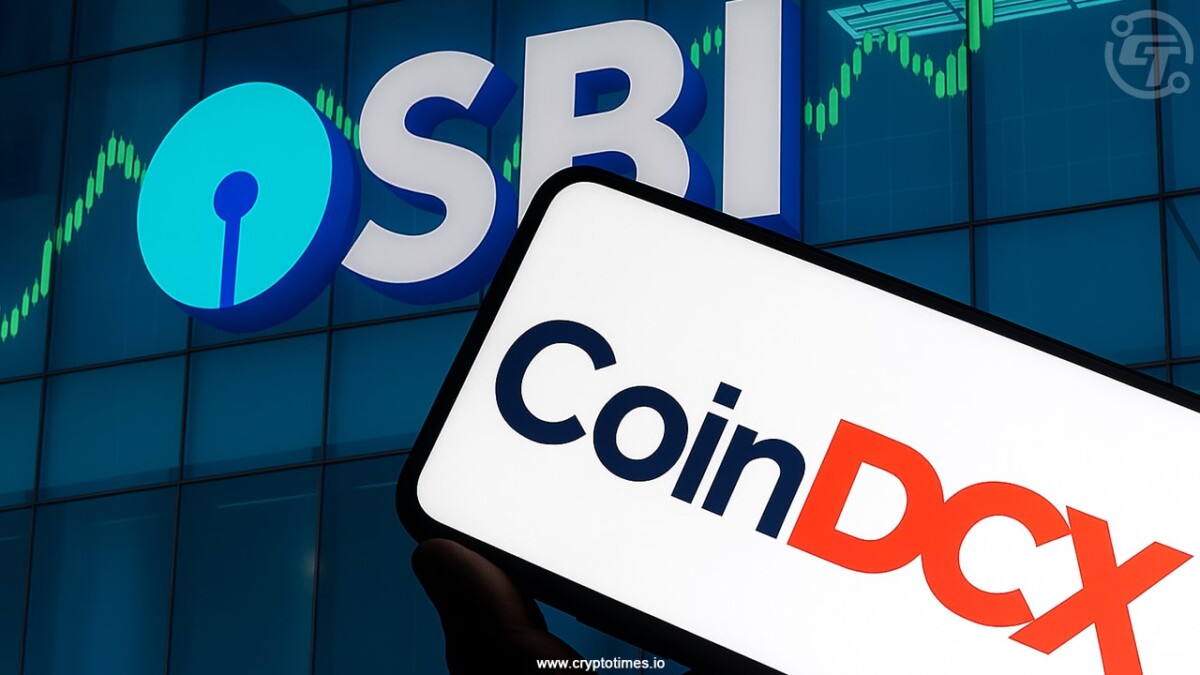
A CoinDCX trader has gone public with his grievances after his withdrawals to a State Bank of India (SBI) account were blocked despite being well under $1,000 USDT. The issue, first flagged on X, has opened a wider debate on whether Indian banks and authorities treat crypto transactions unfairly, even when investors are tax compliant.
The trader wrote that he had sold USDT on CoinDCX and later placed withdrawal requests to his bank. According to him, despite paying taxes, including 1% TDS and 28% tax, totalling nearly 29%, his funds were held back.
Not only was the transaction stopped, but he was also contacted by his bank and asked to visit in person. There, he claimed, officials told him that a special notice had been issued by Cyber Cell India, and he was questioned about his trading history.
His complaint did not end there. On X, he also raised pointed questions: if funds are being taxed so heavily, why are they still flagged as gambling or suspicious? Should Indian investors continue using CoinDCX or delete the app altogether to avoid risk? And most importantly, why is there no coordination between banks and exchanges if the activity is entirely legal?
Community reacts, confusion grows
The post drew immediate attention. Some users asked whether his entire account was frozen or only specific transfers. He clarified that only the “last transactions” were blocked. Others asked whether he had used P2P transfers or sold USDT directly.
Initially, he said P2P, but later corrected himself, noting that he had sold directly on CoinDCX’s market and then tried to withdraw INR.
Influencers such as “Crypto with Khan” weighed in, stating, “This is serious if true”, while the trader himself confirmed that he had already raised the issue with the cyber cell.
CoinDCX steps in
Soon after, CoinDCX’s support handle replied, apologizing for the inconvenience and requesting the trader’s registered email ID for a priority review. But for many onlookers, the response raised another question: why was such an issue not addressed earlier through official support channels, before the trader had to go public?
Ads vs. regulation
The timing of the row is also striking. CoinDCX has been running high-profile campaigns in national and regional newspapers, most recently appearing on the front page of Gujarat Samachar on August 26.
With Gautam Gambhir as brand ambassador and a pitch built around “India ka crypto coach” (Meaning: India’s crypto coach) and #LearnKaroCryptoKaro (Meaning: Learn about crypto and then engage in it), the exchange is presenting itself as a mainstream, trusted platform.
Yet, in parallel, the Indian government continues to remain silent on crypto regulation. The long-promised policy paper, first expected in June, then July, remains missing in action even as September approaches. There has been no mention of crypto in budget speeches or finance bills either.
This contradiction is hard to ignore. On one side, exchanges are allowed to flood media with crypto ads, positioning themselves as educators and coaches. On the other hand, investors find their withdrawals flagged, banks treat their transactions as suspicious, and cyber cells step in despite all taxes being collected.
The bigger question
This isn’t just one trader’s issue. It shows how unclear India’s crypto policy really is. People are paying high taxes, but still, their withdrawals get blocked and treated with suspicion. Every time this happens, trust falls further. And the bigger question stays, if even after paying taxes their money isn’t safe, is crypto in India really an investment, or just a gamble?
Also Read: Zerodha’s Kamath Flags India’s Crypto F&O Boom on Tax, Leverage