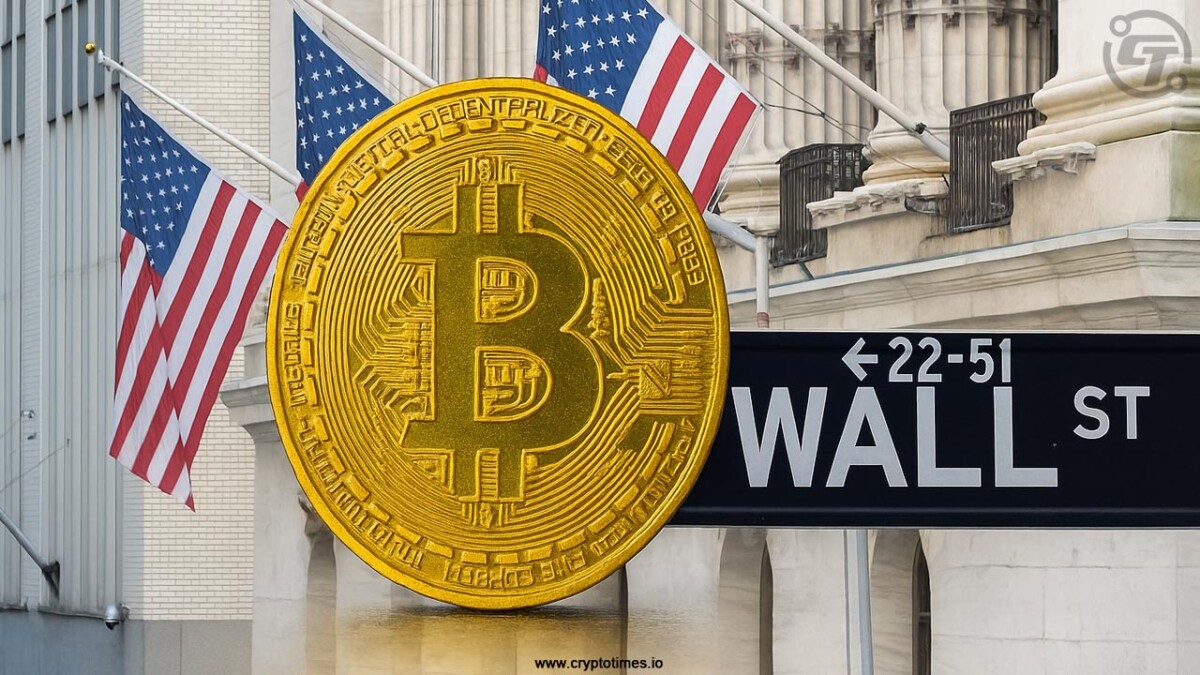
Wall Street is taking control of how Bitcoin is traded by using U.S.-based ETFs and options. According to a Bloomberg report, this is led by BlackRock’s iShares Bitcoin Trust, in 2025 to shift Bitcoin’s center of gravity from offshore exchanges to the U.S. financial system.
Bitcoin was once the wild playground of offshore exchanges and retail traders. Now, more of the action is happening in the U.S., thanks to BlackRock’s iShares Bitcoin Trust, also known as IBIT,
Currently, IBIT is the largest Bitcoin ETF, holding around $86 billion in assets. But what’s more important is how it’s changing the way Bitcoin is traded.
IBIT has sparked a booming market in ETF-linked options, with open interest jumping to $34 billion this year. Its daily trading volume recently averaged $4 billion, beating out ETFs tied to bonds and emerging markets.
According to Asym 500 founder Rocky Fishman, “It’s highly unusual for an ETF to develop an option market of this magnitude ever, let alone eight months after launch.” IBIT now dominates trading among U.S. Bitcoin ETFs, even though it holds just over half of the total assets. That’s a sign it has become the go-to product for managing crypto risk in traditional finance.

According to Bloomberg, more U.S. institutions are buying into IBIT, with ownership nearly doubling since the end of last year. The way people are using options is changing too. Instead of betting on more gains, investors are using puts to protect against losses. Greg Magadini of Amberdata said this shift “has a natural dampening effect on volatility and prevents panic selling.”
A growing number of Bitcoin-dollar trades now happen during U.S. hours. According to Kaiko, that share has jumped from 41.4% in 2021 to 57.3% in 2025. FalconX Research says about half of all spot Bitcoin volume now flows through U.S.-listed ETFs.
Still, there are limits. U.S. rules only allow 25,000 IBIT option contracts, which could hold back bigger strategies. Nasdaq has asked regulators to raise this limit tenfold through a filing in January. However, the SEC hasn’t responded, but it has until September to decide.
Connectivity between offshore and onshore markets is still clunky. Market makers say different systems make it hard to move money between platforms. According to Bloomberg, Coinbase’s recent $2.9 billion acquisition of Deribit in May could help smooth those links. Deribit CEO Luuk Strijers said they’re working on “unified risk frameworks” and easier movement of funds.
Kevin de Patoul, CEO of Keyrock, summed it up: “Eventually, all assets will be digital… and what we now call crypto will just be another part of the financial system.”
Also Read: CEA Industries announce $500M PIPE to Build Largest BNB Treasury