



Binance offers multiple ways to access equity-linked markets – including pre-IPO and listed price exposure via perpetual futures, U.S.-listed direct stocks, and bStocks, tokenized on-chain securities.
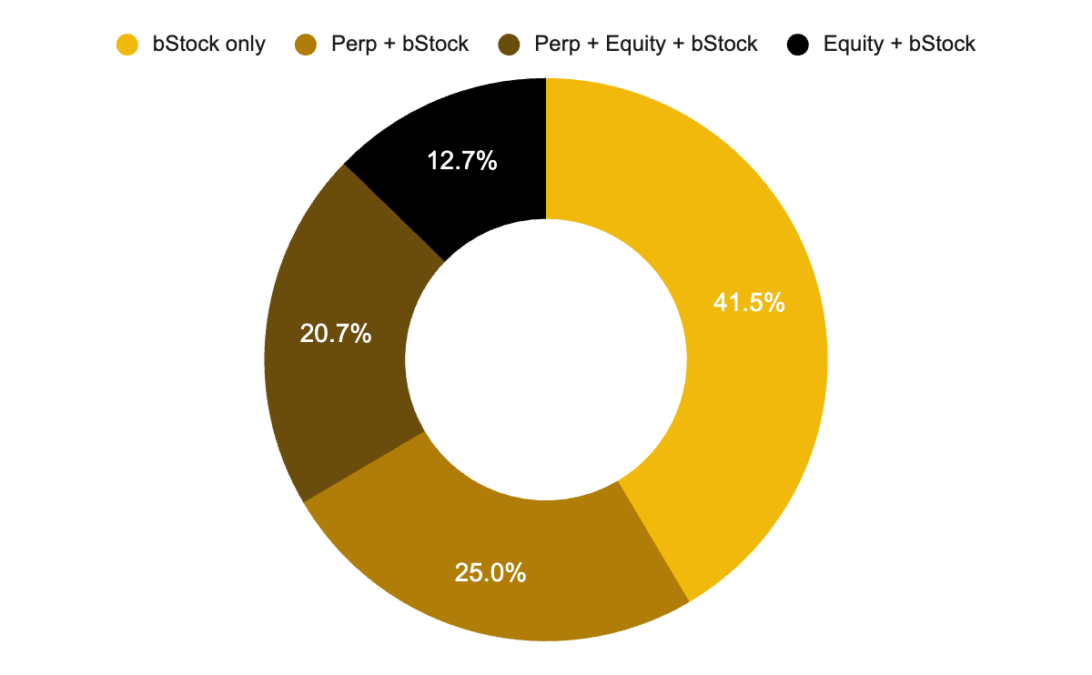
Early data suggests these products are heavily used together. 58.5% of bStocks users also traded perpetual futures or direct stocks in the same period.
Outside regular U.S. market hours, bStocks become the majority of equity-linked volume (bStocks and direct stocks) on Binance, rising to 58% after the closing bell from 48% during the regular session.
In recent months, Binance has expanded its core offerings to include an entire ecosystem of TradFi-linked products, such as TradFi perpetual futures contracts, including Pre-IPO exposure, access to U.S. listed stocks, and bStocks, on-chain tokenized securities.
But how are these products being used in practice? Two things stand out. Users are moving freely between all three formats, and the on-chain layer is scaling faster than many observers would expect. Not only is there growing demand, but for 4 in 10 bStock users, the token was their first entry point into Binance’s TradFi products.
In other words, on-chain is becoming the way in.
bStocks are Becoming the Front Door
Roughly 41.5% of bStocks users started their TradFi journey on Binance with our tokenized security offering. Instead of acting as just an add-on for existing stock traders, we’re seeing bStocks potentially become a gateway into equities for an entirely new generation that began its financial journey in crypto.
The market these users are entering young and growing fast. In under a month, we’ve increased bStock listings from 5 to 36, while the product’s market cap crossed roughly $300M over the same period. Users want access to tokenized securities, and at Binance, we’ve been steadily meeting the demand by expanding the list of available assets.
When Wall Street Sleeps, Binance Takes the Night Shift
Part of the reason for bStocks’ rapid growth is its 24/7 trading. Traditional U.S. equity markets operate on a 24/5 schedule, Monday through Friday. Outside those hours, any reaction from news, earnings, and macro events stays frozen until markets reopen.
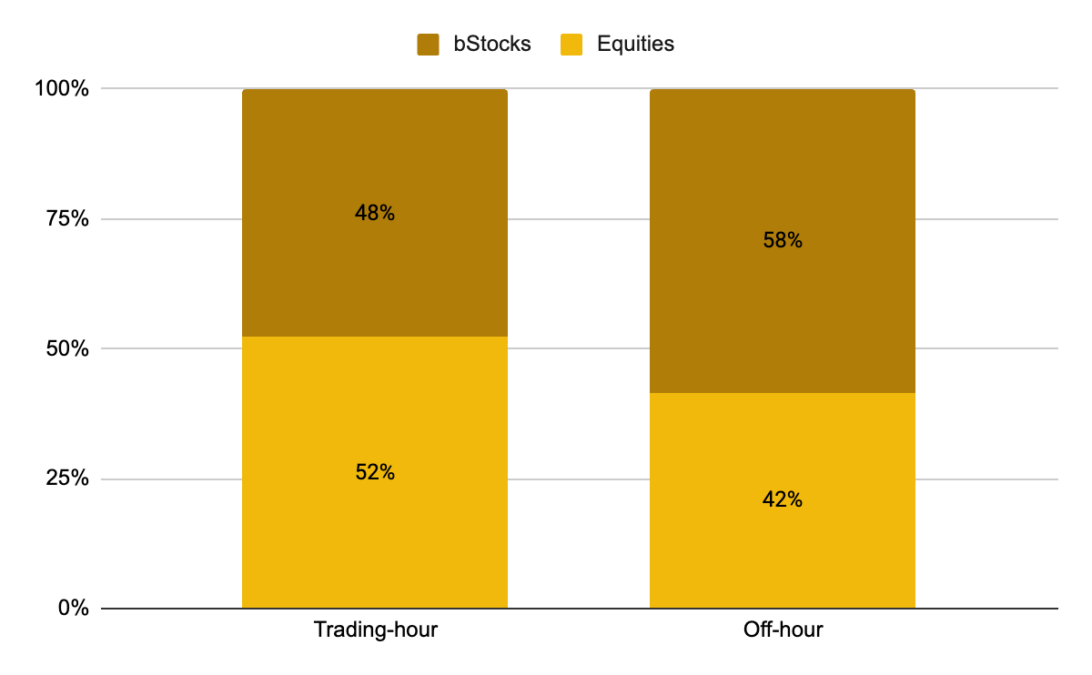
Binance stock trading also offers extended weekday hours, and users are leaning towards bStocks trading during these extended hours. During the regular session, bStocks and direct stocks run close to even, with bStocks at 48% of equity-linked volume. After the closing bell, bStocks becomes the majority at 58%. A market that stays awake, along with the flexibility of digital assets, is a strong proposition for both crypto-native and TradFi traders.
bStocks Utility Runs Deeper Than 24/7 Trading
Round-the-clock access is just one advantage. What keeps users is what the bStock market can accomplish compared to traditional assets.
Each bStock is backed 1:1 by a share held in a regulated custodian account, which is publicly verifiable through Binance’s Proof of Collateral page. Dividends are reinvested automatically via a token rebasing mechanism called the Multiplier.
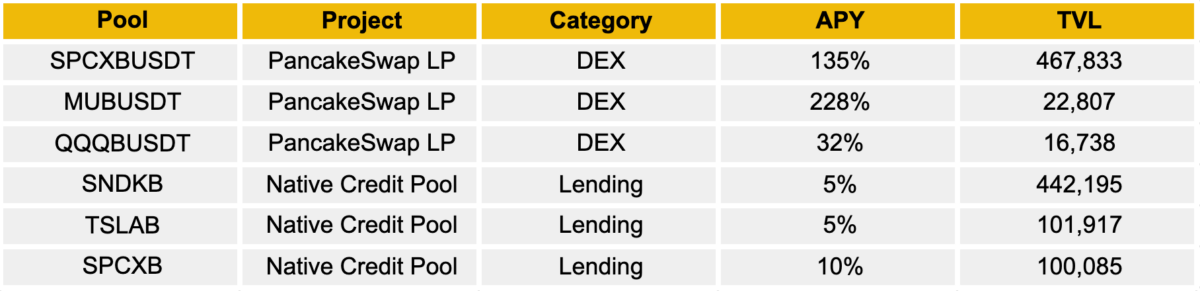
Beyond trading and holding, bStocks can be used across various on-chain applications. For example, users can supply their bStocks to liquidity pools, use it as collateral, or deploy across DeFi strategies to generate extra yield, with PancakeSwap LPs showing APYs from roughly 32% to 228% and native credit pools in the 5% to 10% range.
Another important piece of utility is that, unlike most platforms with tokenized securities offerings, Binance users can freely move between a bStock and its underlying stock 1:1 instantly, with zero conversion fees.
This frictionless loop helps keep the price tightly pegged. And, because TradFi markets don’t operate 24/7 and aren’t on-chain, temporary price differences can emerge between a bStock and its underlying stock, opening primary-market arbitrage opportunities to all users.
Between June 11 and July 8, 2026, a sample of users generated $216M in rapid back-to-back trades across bStocks and the matching equities. A small group of systematic traders accounted for most of the volume, but the overwhelming majority were retail participants, many showing up just once to catch a fleeting price gap before moving on.
Binance Users are Moving Across Products
bStocks, however, doesn’t sit in its own silo, and neither does any product on Binance. Putting perps, stocks, and tokenized securities under one roof allows our users to diversify and build integrated portfolios instead of managing scattered positions across separate apps. The data so far shows that’s already happening: 58.5% of bStock users also traded perps or equities: 25% across perps and bStocks, 20.7% across all three, 12.7% across equities and bStocks.
Let’s look at SPCX’s recent listing as an example. 8.6% of users who traded its pre-IPO perps went on to trade the bStock, against just 0.6% who moved into the direct stock, nearly a 14x edge for the tokenized format as an on-ramp.
A likely explanation for the dramatic difference is familiarity. A token that trades on-chain and sits in the same wallet feels natural to a user who already trades pre-IPO perps. The direct stock, with its separate infrastructure and market hours, is the unfamiliar option.
For more information: Visit Binance Website


