Key Highlights
- The UK sanctions three crypto exchanges and two payment platforms over alleged links to Russia’s sanctions evasion.
- Two targeted entities processed transactions with the A7 network, which the UK says moved over $90 billion.
- The wider package also targets Russian oil companies, 12 shadow-fleet tankers, and 17 military suppliers.
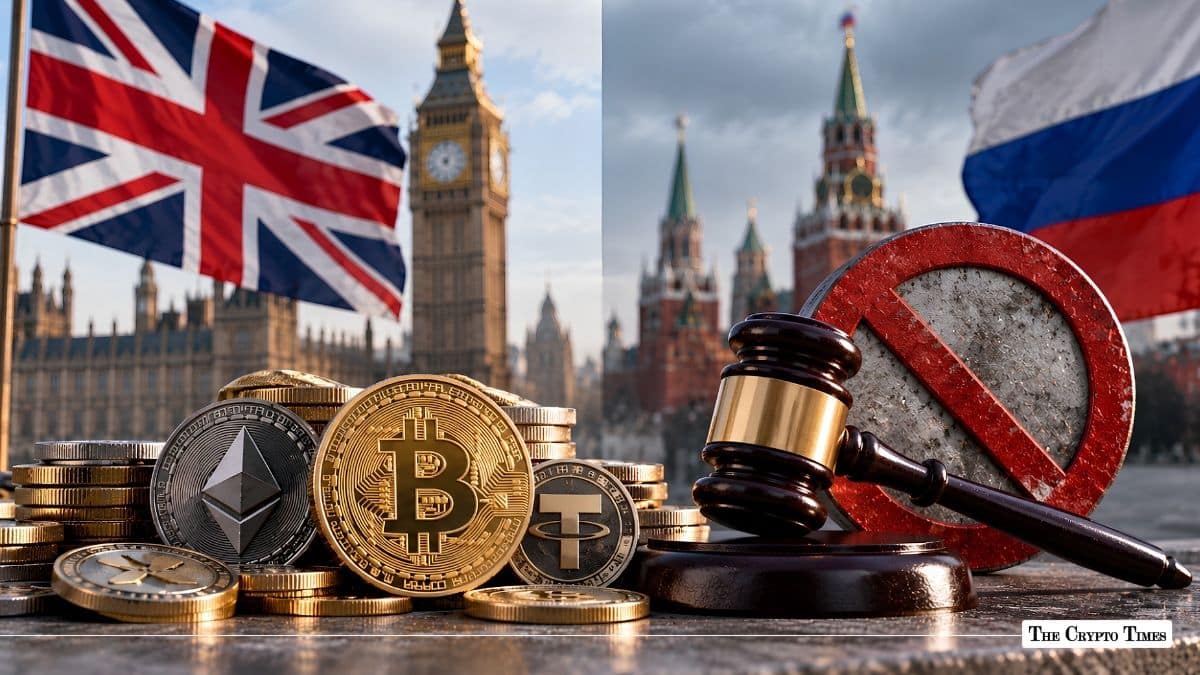
The United Kingdom has announced new sanctions against three crypto exchanges and two payment platforms that it says may be helping Russia move money around existing financial restrictions.
The measures were announced on Thursday, October 8, as part of a wider package targeting 38 individuals and entities linked to Russia’s oil trade, financial networks, and military supply chains. The UK said some of the targeted financial platforms are linked to Kyrgyzstan, while one individual has also been included in the sanctions.
British authorities suspect the platforms are being used to help Russia get around financial sanctions. Two of the entities have also processed or helped facilitate transactions with the A7 illicit finance network.
The rest of the sanctioned crypto-related platforms include Cryptomus, Heleket, VexPay, and TokenSpot, while Tsunami Payments is also among the targeted payment services. The UK sanctions notice lists Cryptomus and Heleket under Xeltox Enterprises Ltd, VexPay under OJSC Processing KG, and TokenSpot under TokenSpot CJSC.
A7 network draws UK’s attention
The A7 network is at the centre of the UK’s latest crypto-related action. The UK says the Kremlin-backed network is used to move money outside the normal financial system and circumvent international sanctions placed on Russia’s financial sector. The network claimed last year that it had moved more than $90 billion, an amount the UK said was roughly half of Russia’s yearly military spending.
By targeting the crypto exchanges and payment platforms linked to this activity, the authorities said the measures are intended to make it harder for people under sanctions to move and access funds. The government’s action is part of a wider effort to restrict financial routes that it believes are being used to support Russia.
Russia’s oil trade also targeted
The latest package does not stop with crypto. The UK also placed sanctions on two Russian oil companies, Zarubezhneft and INK Capital. The UK said the move is aimed at reducing Russia’s oil revenues and closing routes that allow sanctioned oil companies to continue doing business under different names.
The UK also sanctioned 12 more oil tankers that it says are part of Russia’s shadow fleet. The new targets bring the number of sanctioned vessels to more than 600. The UK said many of these ships are more than 20 years old and use methods such as false flags and other deceptive shipping practices to move Russian oil and avoid sanctions.
Military supply chains come under pressure
Another 17 entities and individuals were sanctioned over the supply of goods that the UK, US and EU consider important to Russia’s war effort. These include machine tools, electronics, and other materials used to produce missiles and drones.
According to the British government, some of these goods are moved through third countries to hide their connection to Russia. The latest action includes a European national linked to a third-country entity accused of exporting machine tools to Russia.
Crackdown comes after multiple sanctions
The new sanctions build on the UK’s earlier focus on crypto networks linked to Russia. The UK initially sanctioned the A7 network in May 2026 along with several crypto-related entities it said were helping Russia avoid sanctions. Huobi Global, a Panama-based entity linked to the HTX exchange, was among those targeted at the time.
The UK had also taken action against Kyrgyz-linked crypto networks in 2025, including Grinex LLC and Old Vector LLC. The two were linked to infrastructure behind the A7A5 ruble-pegged stablecoin. At the time, the authorities said more than $9.3 billion had moved through the stablecoin in four months.
With Thursday’s action, the UK is widening its pressure on the financial channels it says Russia uses to move money outside Western sanctions.
Also Read: Greece Lowers Proposed Crypto Tax Rate to 10% in Public Consultation