Key Highlights
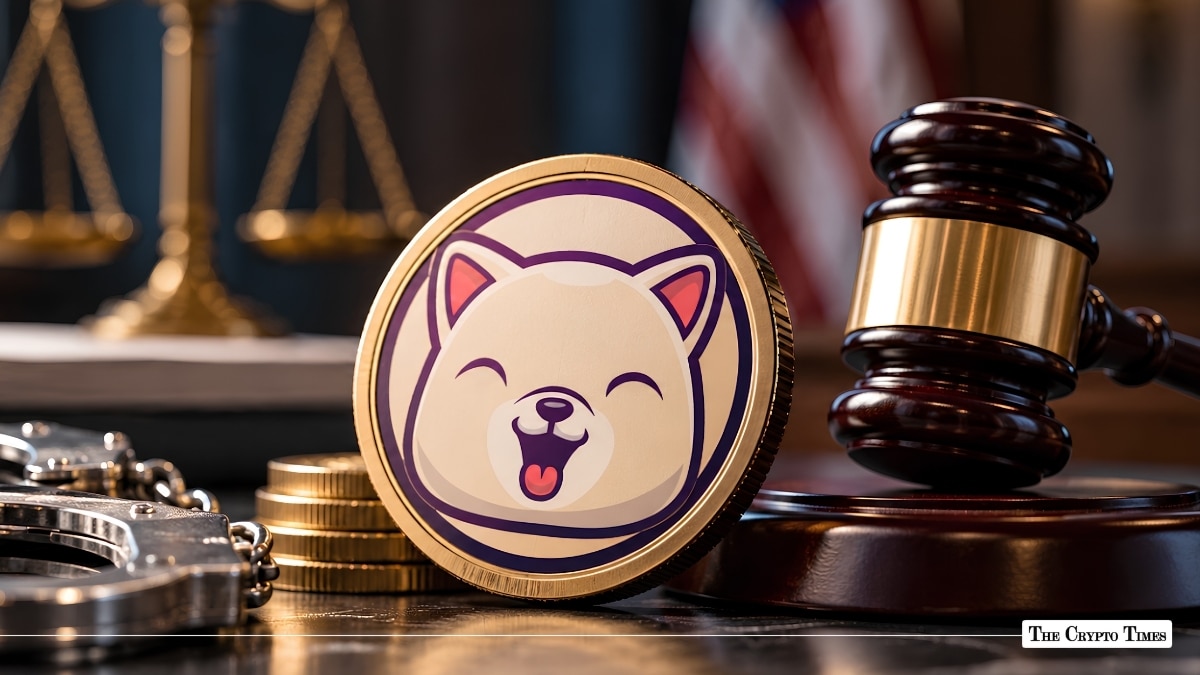
- A federal grand jury indicted Kishu Inu founder Alexander Sisemore on three counts of wire fraud on October 6, 2026.
- Prosecutors allege Sisemore and others falsely described Kishu Inu as a fair launch with no team-token allocations.
- The indictment alleges Sisemore secretly received about 6% of Kishu Inu’s total supply and later sold portions while making contrary public statements.
A federal grand jury in the Northern District of Illinois indicted Alexander Sisemore, also known as “Kishu Man” and “Kimbo,” on October 6, 2026. Sisemore faces three counts of wire fraud under Title 18, United States Code, Section 1343. The case is docketed as United States v. Sisemore, 1:26-cr-00525, and is assigned to Judge John Robert Blakey.
According to the indictment, Sisemore was a founder and creator of Kishu Inu, a digital asset first created in or about April 2021 on the Ethereum blockchain. The token later reached a market capitalization of more than $1.6 billion and had approximately 283,000 holders.
What is a wire fraud
Wire fraud under 18 U.S.C. § 1343 is a federal criminal offense. It applies when a person devises or intends to devise a scheme to defraud or to obtain money or property by means of false or fraudulent pretenses, representations, or promises, and for the purpose of executing the scheme transmits or causes to be transmitted by means of wire, radio, or television communication in interstate or foreign commerce any writings, signs, signals, pictures, or sounds.
Each use of an interstate wire communication in furtherance of the scheme can constitute a separate count. The statute carries a maximum penalty of 20 years in prison, along with fines and restitution.
Alleged Kishu Inu token scheme
The indictment states that beginning no later than April 2021 and continuing until at least October 2023, Sisemore, together with others, knowingly devised and participated in a scheme to defraud in connection with the sale of Kishu Inu tokens.
Prosecutors allege that Sisemore and Individual A, identified as a founder, initial developer and also known as “Inu Dev” and “Jake,” made materially false statements to investors and potential investors. The statements were intended to maintain the token’s liquidity and increase its price while the two sold large quantities of tokens they had secretly allocated to themselves at creation.
On or about April 17, 2021, after the creation of one hundred quadrillion Kishu Inu tokens, the tokens were received into a wallet known as the Kishu Inu Deployer. Before the tokens were offered for sale to the public, Individual A transferred approximately 6 percent of the total supply to four Ethereum wallets controlled by Sisemore and approximately 6 percent to four wallets controlled by Individual A.
The indictment alleges that Sisemore, Individual A, and Individual B, known as “Churro,” made false representations that included the following: Kishu Inu had been “fair launched” with no “team tokens,” meaning founders had not allocated tokens to themselves; the founders held only 1.7 percent of the tokens.
And the other one being the largest holders obtained tokens through a private sale rather than an allocation; the founders were holding rather than selling their tokens; and the project was not a “rug pull.”
These statements appeared on websites including kishuinu.finance, kishu.finance, and kishu.com, as well as in white papers and messages posted to Telegram and Reddit groups. A May 28, 2021, message attributed to Sisemore sought to reassure investors that developers had purchased their tokens, owned only 1.7 percent, and were not conducting a rug pull.
While making these statements, Sisemore and Individual A sold their allocated tokens. The indictment states Sisemore generated profits exceeding $9 million and Individual A generated approximately $800,000. Transactions were conducted through multiple wallets and crypto mixers. Specific wire transfers cited include trades on the Gate.io exchange, among them an October 27, 2021, swap of approximately 4.74 trillion Kishu Inu tokens for 39,308 USDT.
Prior investigation
In 2026 the FBI’s Chicago Division publicly sought to identify investors in Kishu Inu. The agency stated that investors’ assets may have been stolen and that a potential “backdoor” allowed the creation of additional tokens. The claimed stolen cryptocurrency was gradually sold during the robust market for the token in 2021.
The FBI said Kishu Inu was promoted through Kishu.com, billboards, social media, Telegram and Reddit. The indictment remains an allegation. Sisemore is presumed innocent unless and until proven guilty in a court of law.
Prior Wire Fraud case involving cryptocurrency
In a separate matter resolved in May 2024, Thomas John Sfraga, also known as T.J. Stone, pleaded guilty to wire fraud in Brooklyn federal court. According to the U.S. Attorney’s Office for the Eastern District of New York, Sfraga admitted to defrauding investors of more than $1.33 million.
He operated schemes that included phony home-renovation projects and a fake cryptocurrency wallet, using aliases such as Vandelay Contracting Corp. and Build Strong Homes LLC. Officials stated he promised returns of up to 60 percent in three months. Sfraga, then 55, faced a maximum prison term of 20 years and was ordered to pay restitution of the $1.33 million.
Also Read: Babylon, HashKey Cloud to Enable Native Bitcoin Borrowing via Aave