Key Highlights
- Circle stock fell nearly 5% to $62.72 during early trading, down from an intraday high above $65.
- The stock had recently surged 14% to $71.96 after Circle received final approval to launch Circle National Trust.
- Mizuho cut Circle’s price target from $85 to $50, adding pressure to the stock.
Circle (CRCL), the issuer of the USDC stablecoin, saw its stock fall almost 5% during early trading hours on Thursday.
At the time of writing, the stock is trading for $62.72, down from an intraday high above $65. Trading volume stood at $16.02 million, according to data from Robinhood, while the company’s market cap was approximately $15.63 billion.
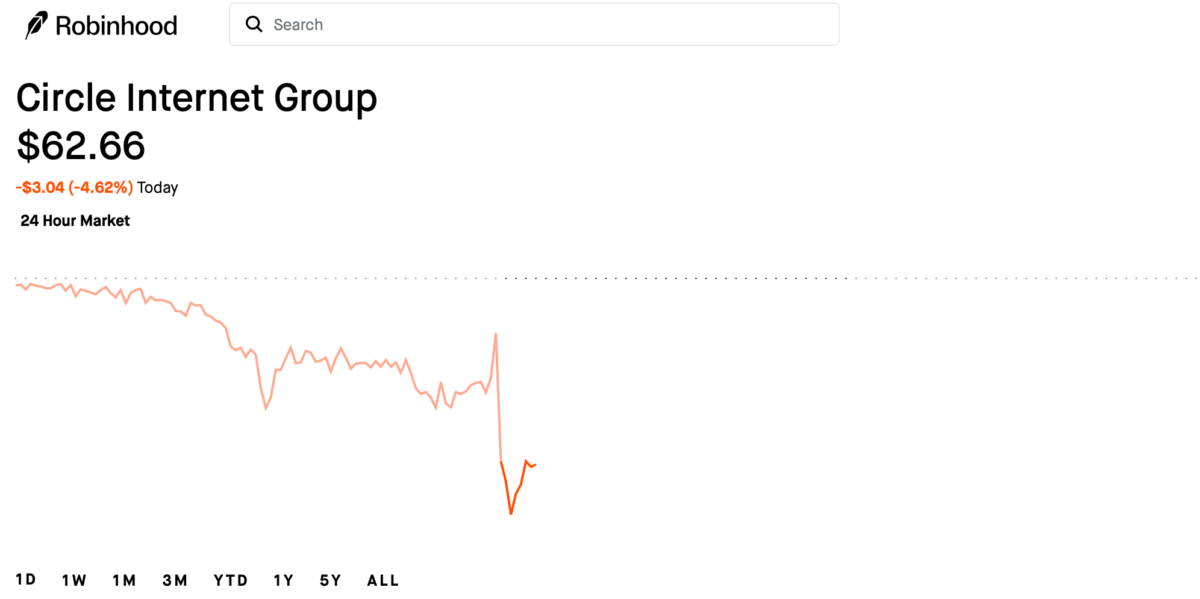
Circle stock falls after recent rally
The decline followed a recent rally that saw Circle’s stock climb to $71.96, gaining about 14% after the Office of the Comptroller of the Currency (OCC) granted final approval for the company to launch Circle National Trust.
The approval marked a significant milestone for Circle, concluding a process that began more than a year ago. The company applied for a national trust bank charter on June 30, 2025, and received conditional approval in December of the same year. With final approval now in place, Circle can move ahead with opening Circle National Trust under direct federal oversight.
Why Circle is falling
However, investor attention has since shifted to a different concern.
On Tuesday, Japanese investment bank Mizuho downgraded Circle from Neutral to Underperform and cut its price target from $85 to $50. The bank said rising competition could put pressure on the way Circle makes money from USDC, its dollar-backed stablecoin.
The main concern is OpenUSD, a new stablecoin project launched on June 30 by the Open Standard consortium. The group has more than 140 partners, including Mastercard, Stripe, Coinbase, and BlackRock.
OpenUSD raises new competition
Mizuho said OpenUSD “could fundamentally alter CRCL’s business model.” Circle generates a significant portion of its revenue from the reserves backing USDC. OpenUSD, however, plans to charge a small operating fee and give most of its reserve income to issuers and distributors.
That difference could create a major challenge for Circle. If other stablecoin projects begin offering partners a bigger share of reserve income, Circle’s partners may also demand more money. This could reduce the amount Circle keeps from its USDC business.
The issue is especially important because Circle is expected to renegotiate its revenue-sharing agreement with Coinbase, its largest distribution partner, in August. Coinbase is also backing OpenUSD, which Mizuho believes could give the crypto exchange more power during those talks.
USDC supply falls as competition grows
USDC has also lost some momentum. According to data from CoinMarketCap, its circulating supply has fallen to about $73 billion from nearly $80 billion in March.
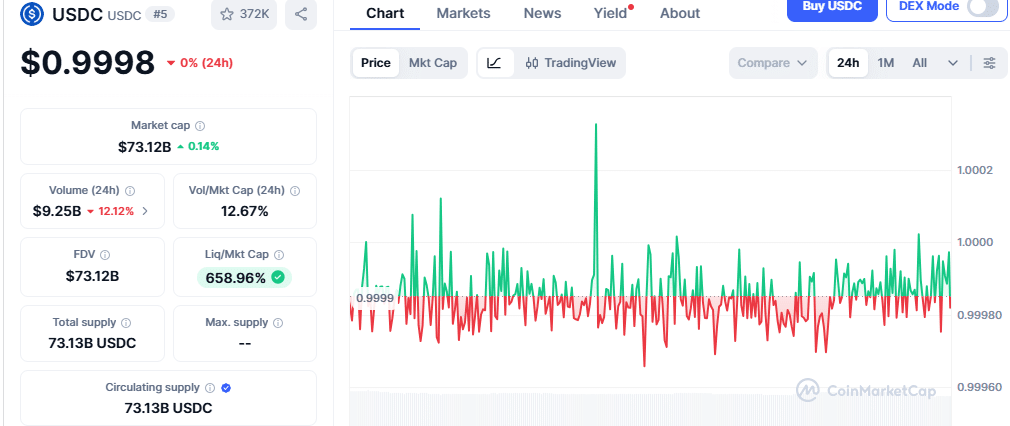
At the same time, the overall stablecoin market has shrunk by roughly $10 billion since May as crypto trading activity weakened and competition increased.
Mizuho raised its estimate for Circle’s 2027 distribution and transaction costs to 73% from 64%. It also cut its adjusted EBITDA forecast to $699 million from $1.09 billion. JPMorgan separately warned that a deal involving Hyperliquid, Circle, and Coinbase could also put pressure on earnings from USDC.
Also Read: Cathie Wood’s ARK Invest Buys 220K More Circle Shares as CRCL Selloff Deepens