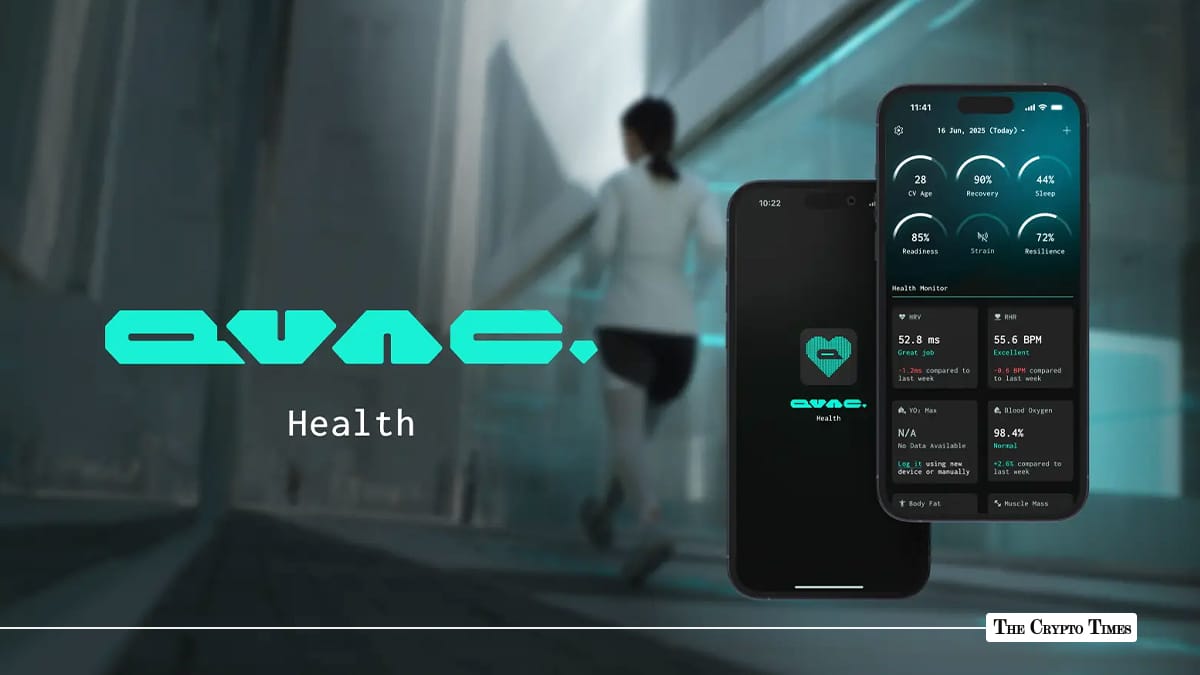
Tether, the issuer of the largest stablecoin (USDT), announced today the open-source release of QVAC MedPsy, a family of state-of-the-art medical AI models designed for edge devices.
The 1.7B and 4B parameter text-only models deliver expert-level healthcare reasoning directly on smartphones, laptops, and servers—without any cloud dependency.
According to the official release, the smaller MedPsy-1.7B outperforms Google’s MedGemma-1.5-4B-it by +11.42 points on average across closed-ended medical benchmarks and surpasses larger models on HealthBench and HealthBench Hard. The 4B version beats MedGemma-27B-text-it (nearly 7x larger) on key metrics, including HealthBench Hard (+16 points) and MedXpertQA.
The company claims that MedPsy models achieve up to 3.2x fewer response tokens than comparable models, boosting speed and efficiency on consumer hardware.
They support GGUF quantization for reduced memory use while retaining strong performance, making them ideal for privacy-sensitive clinical settings, low-resource environments, and personal health applications.
Released under the permissive Apache 2.0 license, the models are available on Hugging Face with full GGUF variants. This launch advances Tether’s QVAC platform for decentralized, local-first AI, expanding the company’s focus beyond stablecoins into sovereign intelligence that prioritizes user privacy and accessibility.
Tether’s AI pivot: From stablecoins to sovereign intelligence
Once synonymous solely with USDT, the world’s largest stablecoin, Tether is now executing a deliberate strategic pivot into artificial intelligence.
Under CEO Paolo Ardoino’s leadership, the company has quietly built the QVAC platform as its flagship vehicle for decentralized, local-first AI—moving far beyond crypto infrastructure to create privacy-first tools that run entirely on user devices.
The launch of QVAC MedPsy marks the latest and most ambitious step in this evolution, transforming Tether from a financial heavyweight into a serious player in edge AI.
By open-sourcing compact, high-performance medical models under Apache 2.0, Tether is positioning itself at the forefront of sovereign intelligence: technology that prioritizes user data ownership, eliminates cloud dependency, and brings expert-level reasoning to everyday devices.
This shift reflects a broader vision of extending Tether’s influence into critical real-world sectors such as healthcare, where privacy, efficiency, and accessibility are paramount.
Also read: SlowMist Labels Grok AI Bankr Hack a Permission Chain Attack