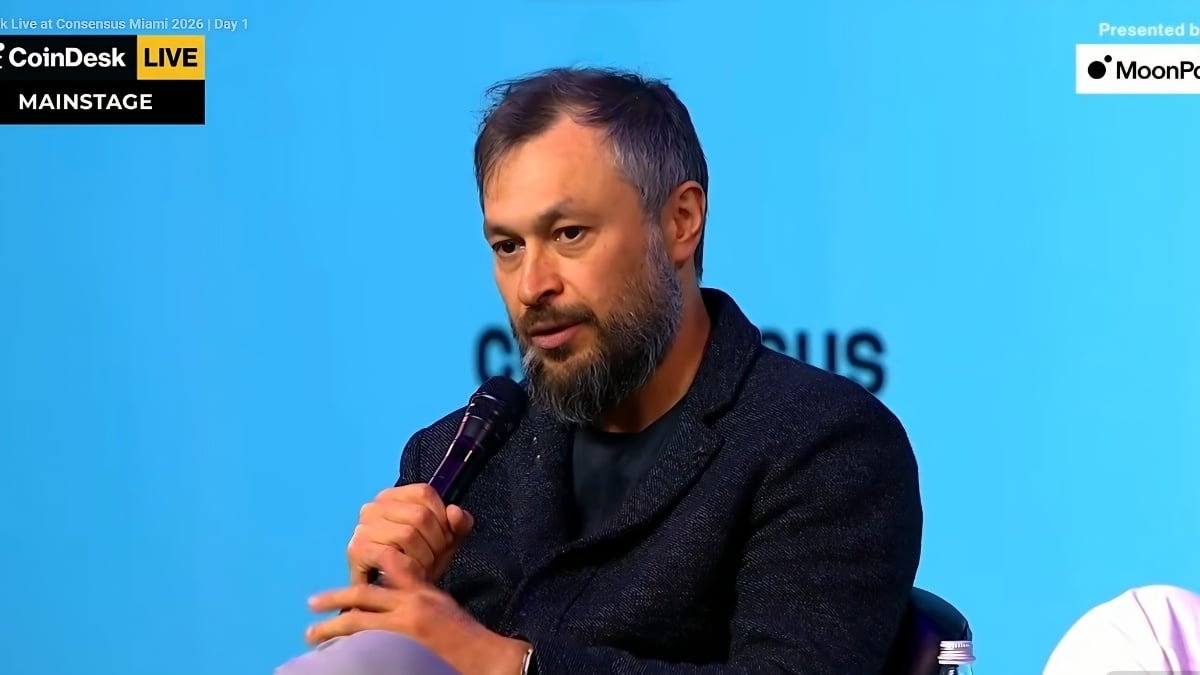
Solana co-founder Anatoly Yakovenko said crypto builders should rethink how they design products if the industry wants to move beyond its niche user base.
Speaking at Consensus 2026 on Tuesday, Yakovenko argued that the current phase of the market presents a window to build applications aimed at broader adoption rather than continuing to target early crypto users. He added, “Rethink of what’s possible today, given the speed and the region, the throughput of the Solana, and try to build those businesses from the ground up.”
Timing, not ideas, was the problem
Yakovenko pointed to earlier cycles, particularly around 2017, when many crypto use cases were proposed but failed to gain traction. According to him, the issue was less about flawed concepts and more about premature timing.
He compared the situation to early internet startups, where viable ideas often emerged before the underlying technology or infrastructure was ready. In his view, improvements in speed, cost, and throughput, particularly on networks like Solana, now make it possible to revisit those same ideas with a better chance of achieving product-market fit.
Builders urged to start from current capabilities
Rather than iterating on legacy designs, Yakovenko said developers should reassess what is now feasible given the performance of modern blockchain systems.
He emphasized building from the ground up with today’s infrastructure in mind, focusing on applications that can scale to a larger user base rather than remaining confined to crypto-native audiences.
Balancing decentralization and practical needs
Yakovenko also addressed the ongoing tension between fully decentralized systems and the requirements of institutional users, who often need more control to meet regulatory obligations.
He argued that this tension is often overstated. According to him, institutions prefer operating on neutral base layers where no single party has control, as it provides predictability and reduces counterparty risk. At the same time, he said application-level controls can be added by developers or businesses to meet specific compliance needs without altering the underlying system.
Clarity over control
A key issue for institutional adoption, Yakovenko noted, is not the absence of control but the lack of clarity. He said organizations want to understand the rules of the systems they operate in and ensure those rules are consistent and enforceable.
Open-source, permissionless networks offer that baseline, while allowing participants to build tailored frameworks on top.
Focus shifts to scalable applications
Yakovenko’s remarks reflect a broader shift in focus within the industry, from experimentation toward building usable products. He suggested that lower costs and higher throughput now remove earlier constraints, making it more realistic to develop applications that can serve mainstream users at scale.
The challenge, according to Yakovenko, is execution. With infrastructure maturing, the next phase depends on whether developers can translate technical capability into products that appeal beyond the existing crypto audience.
Also Read: “Big Shift”: Ripple CEO Turns Bullish on Clarity Act Progress