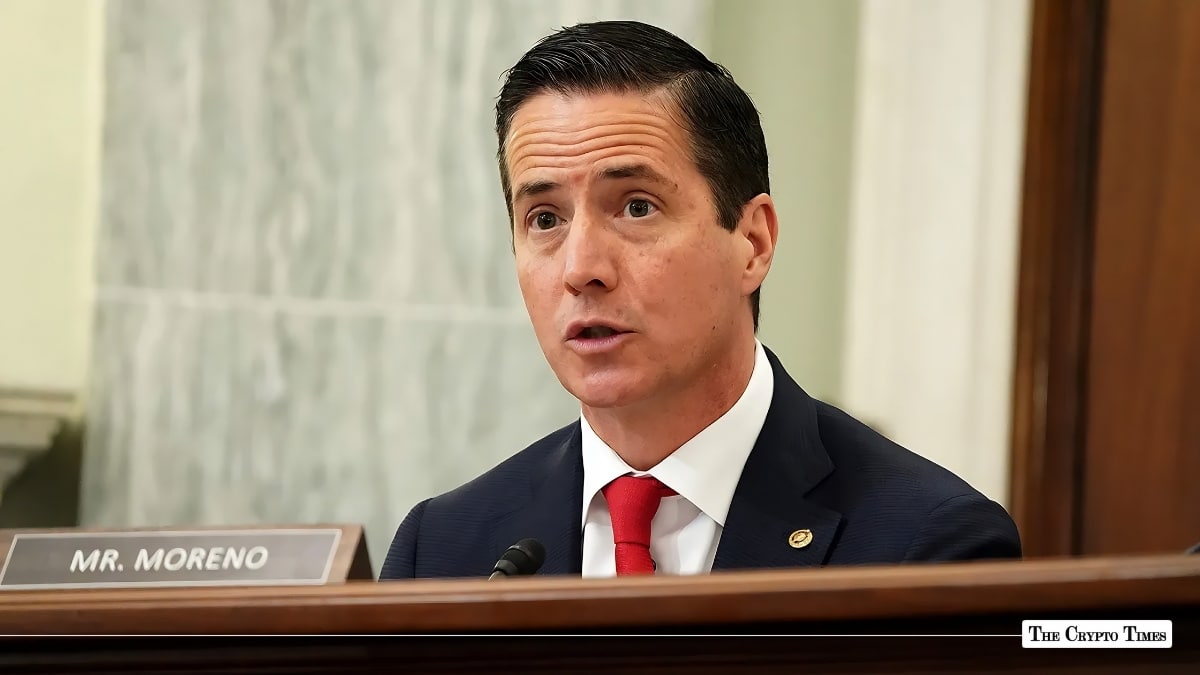
U.S. Senator Bernie Moreno said the Digital Asset Market Clarity Act could be signed into law before July 4, pointing to recent legislative movement and backing from U.S. President Donald Trump as key drivers.
Speaking about the bill’s trajectory at Solana Accelerate USA, Moreno said lawmakers expect to move it through the Senate in the coming weeks, with a target of placing it on the president’s desk before the end of June. He said, “We passed the Genius Act and next week we’re going to mark up the Clarity Act.”
Senate process moves toward markup
The Senate is preparing to take up the CLARITY Act in committee, a procedural step that would allow lawmakers to debate, amend, and advance the bill. Moreno described the upcoming markup as a “big deal,” signaling that the legislation is entering a more decisive phase.
He noted that multiple committees have jurisdiction over digital asset regulation, meaning the final version will require coordination across panels before it can proceed to a full Senate vote. That process, often referred to as combining provisions into a single package, remains one of the key hurdles before floor consideration.
Stablecoin yield dispute surfaces before vote
Meanwhile, days before the Senate Banking Committee is expected to mark up the bill, disagreement over its stablecoin yield provision has moved into the open.
Five major industry groups, the American Bankers Association, Bank Policy Institute, Consumer Bankers Association, Financial Services Forum, and Independent Community Bankers of America, issued a joint statement criticizing the Tillis-Alsobrooks compromise.
The groups argued that while the proposal aims to restrict yield-bearing stablecoins, the language does not go far enough. They warned that allowing such products could reduce lending across consumer, small-business, and agricultural sectors, calling for clearer and stricter limits.
Senators defend compromise language
Key sponsors pushed back on the criticism. Senator Cynthia Lummis, who leads the Senate Banking Subcommittee on Digital Assets, said the compromise reflects months of negotiation and brings the bill closer to passage. She has previously framed the current Congress as a narrow window for advancing comprehensive crypto legislation.
Senator Thom Tillis, who worked on the provision with Senator Angela Alsobrooks, said lawmakers had engaged with stakeholders to address concerns around deposit flight. He added that the process required balancing competing priorities and warned against letting disagreements stall broader progress, noting that some in the banking sector remain opposed to aspects of the bill.
Moreno frames stablecoins as dollar expansion tool
Moreno also cast stablecoins as a strategic extension of U.S. financial influence, arguing that their growing use in cross-border payments and business transactions effectively spreads dollar dominance.
He said the rise of dollar-backed digital assets is strengthening demand for U.S. Treasuries and reinforcing the dollar’s global role. In that context, he dismissed efforts by the BRICS bloc to challenge the dollar, arguing that such initiatives have lost momentum compared to the expansion of dollar-linked stablecoins.
Path to passage still conditional
Despite Moreno’s timeline, the legislation still faces several procedural steps, including committee approval, reconciliation across jurisdictions, and a full Senate vote.
The emerging dispute over stablecoin yield adds another layer of complexity ahead of markup, even as supporters continue to signal confidence that the bill can advance in the near term.
Also Read: Rep. Horsford Says Crypto Tax Bill Is Foundation as CLARITY Stalls