Just days before the U.S. Senate Banking Committee is expected to mark up the Digital Asset Market Clarity Act, better known as the CLARITY Act, the political fight over the bill’s most contested provision, which is the stablecoin yield, has spilled into public view.
On Monday, five of the most powerful banking trade groups in Washington—the American Bankers Association, the Bank Policy Institute, the Consumer Bankers Association, the Financial Services Forum, and the Independent Community Bankers of America—issued a joint statement criticizing the recently finalized Tillis-Alsobrooks compromise on stablecoin yield.
The group says, “Senators Tillis and Alsobrooks are seeking to achieve the correct policy goal – prohibiting the payment of yield and interest on stablecoins; however, the proposed language falls short of that goal. It is imperative that Congress get this right. Research demonstrates that yield-earning stablecoins could reduce all consumer, small-business, and farm loans by one-fifth or more, making it essential for the prohibition to be clear and transparent.”
The response from the bill’s two key Senate sponsors was swift and pointed.
Holding the Line: What the Senators Said
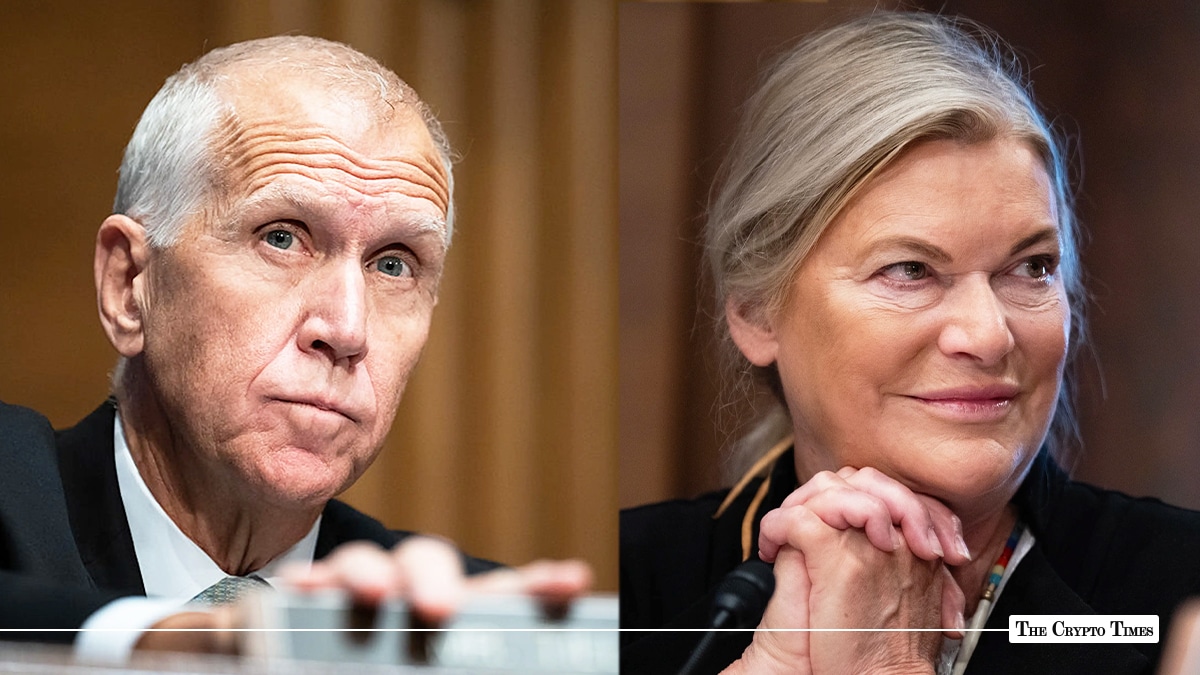
Senator Cynthia Lummis (R-WY), who chairs the Senate Banking Subcommittee on Digital Assets and has been the bill’s most vocal champion, posted on X: “This finalized, bipartisan text is the culmination of months of hard work to deliver a compromise on yield we can all live with. We are closer than ever to getting the Clarity Act across the finish line.”
For Lummis — who announced in December 2025 that she will not seek a second term — the CLARITY Act represents a defining legacy item. As The Crypto Times has previously reported, the senator has repeatedly framed this Congress as the last realistic window for comprehensive crypto market structure legislation before at least 2030.
Senator Thom Tillis (R-NC), who co-engineered the compromise alongside Senator Angela Alsobrooks (D-MD), pushed back on the banking lobby’s framing in more direct terms. In his own X post, Tillis wrote: “Senator Alsobrooks and I have worked on a bipartisan basis with all stakeholders to address the banking industry’s concerns about deposit flight.” He added, “We have worked in good faith with all sides throughout this process to encourage compromise and to avoid letting the perfect become the enemy of the good.”
His closing line was the sharpest: “Some in the banking industry may not want either of these things to happen, and we respectfully agree to disagree.”
Why This Moment Matters
The synchronized public defense from Lummis and Tillis is more than rhetorical positioning. It signals that the bipartisan coalition assembled around the compromise is holding firm against last-minute lobbying — at the precise moment when last-minute lobbying tends to derail legislation.
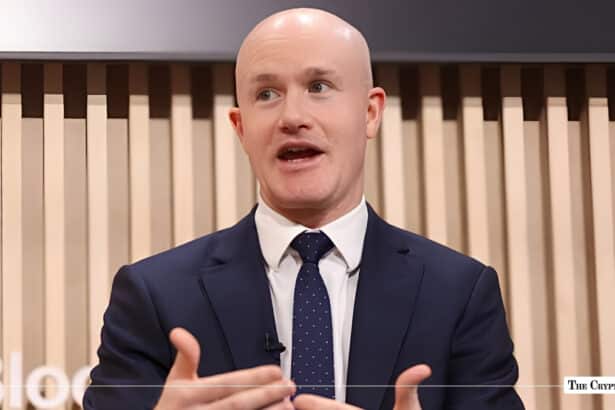
The Tillis-Alsobrooks framework, prohibits crypto firms from offering yield on stablecoin deposits where that yield is “the functional or economic equivalent” of bank offerings, while preserving the ability of crypto firms to run rewards or activity-based incentive programs. Coinbase CEO Brian Armstrong, whose company had been at the center of the negotiations, posted “Mark it up” on X within minutes of the text becoming public.
The banking trade groups’ statement attempts to reopen that closed compromise. The senators’ coordinated response — within hours, on the same platform, defending the same language — suggests the coalition has no intention of reopening it.
The Procedural Picture
The Senate Banking Committee is now targeting the week of May 11 for the markup, with the SEC simultaneously planning a CLARITY Act roundtable later in the month. Senator Tim Scott (R-SC), the committee chair, has reportedly secured Tillis’s vote and additional Republican support, though Senator John Kennedy (R-LA) continues to withhold his — leaving the goal of a unified 13-of-13 Republican vote unmet.
A separate concern raised by Tillis—that law enforcement groups oppose a DeFi liability provision in the bill—also remains unresolved. Moreover, another related pressure point is emerging from the Senate Judiciary Committee. Chairman Chuck Grassley (R-IA) is expected to weigh in this week on the CLARITY Act’s proposed safe-harbor language under Section 1960 of the U.S. Criminal Code. This provision shields non-custodial DeFi software developers, wallet providers, and blockchain infrastructure operators from money-transmitter liability—so long as they do not knowingly facilitate money laundering.
The bill faces five sequential hurdles before reaching the President’s desk: a Senate Banking Committee markup, a 60-vote Senate floor threshold, reconciliation with the Senate Agriculture Committee’s version (which advanced from committee in January), reconciliation with the House-passed CLARITY Act from July 2025, and a presidential signature.
Market Stakes
Polymarket traders currently price the odds of the CLARITY Act being signed into law before the end of 2026 at roughly 47%, down from 82% in February. Galaxy Digital’s Head of Research Alex Thorn estimated the odds at “roughly 50-50, and possibly lower” in a research note.
The next two weeks — between now and the Memorial Day recess on May 21 — will largely determine whether the Lummis-Tillis defense holds, or whether the banking lobby’s late pressure succeeds in reopening a compromise that took months to broker.
Also Read: WLFI Sues Justin Sun Over Token Dispute and Defamation Claims