Key Highlights
- Iggy Azalea is facing a U.S. class action lawsuit over the MOTHER token, with investors alleging they were misled.
- The lawsuit claims the token was promoted as having real-world utility, but many of those uses were not fully delivered or clearly explained.
- The MOTHER token launched in May 2024 on Solana, hit about $200M market value, then crashed heavily.
Retired rapper Iggy Azalea is facing a class action lawsuit in the United States over her MOTHER token, which is now down 93% from its peak.
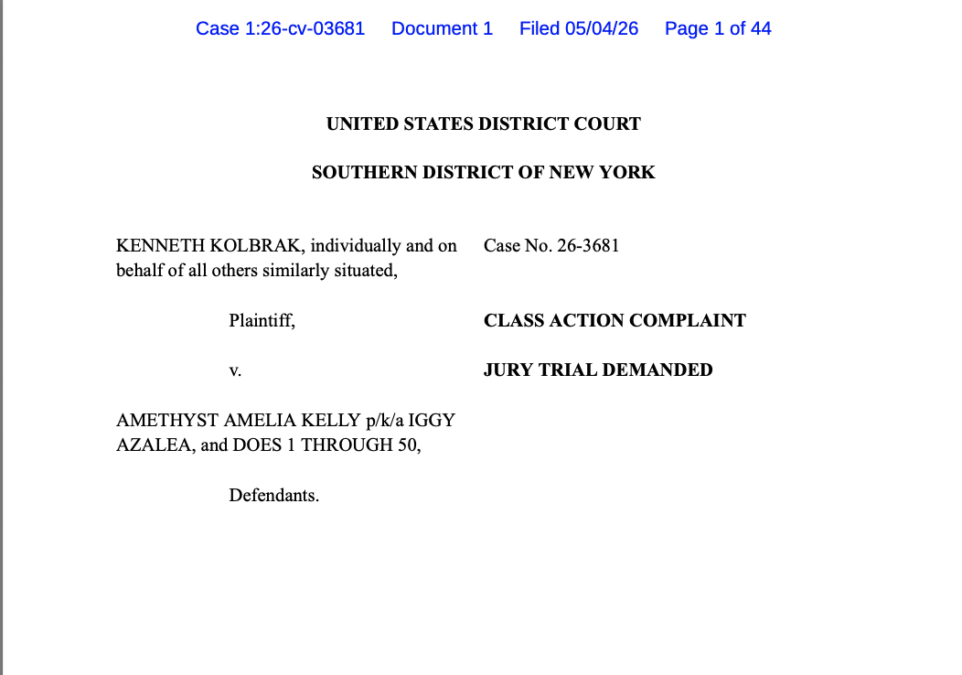
According to the court filing, investors claim they were encouraged to buy the token based on strong promotional messaging at launch. They allege the project was presented as having real-world utility and strong backing, but its value declined as those expectations were not met.
Claims around real-world use
The court filing says the case is not about normal crypto losses. It clearly states: “This case is not about ordinary volatility in a cryptocurrency.” Instead, it says the token was pushed through a marketing campaign that made it look like a working financial product with real-world utility.
According to the complaint, the token was promoted as the main currency for an ecosystem that was tied to several ventures. This includes a telecom service, as well as an online casino called Motherland.
The filing also said that major crypto firms such as Wintermute Trading Ltd. and DWF Labs were linked to the project, which investors say was used to build trust among buyers.
However, the lawsuit alleges that many of these claims were “limited, incomplete, contradicted, temporary, or not delivered in a durable way.” It also says important details about these partnerships were not shared with buyers.
Promised ventures vs what actually happened
The lawsuit talked more about the Motherland casino incident as an example. The filing said that it was advertised as being powered by MOTHER, with Azalea posting on her social pages that “I hope you held on to your $MOTHER / You’ll need it to get into MOTHERLAND.” But when it launched in January 2025, its main operations reportedly used USDT instead of the token.
Another example is the telecom service, where users were told they could pay for phones or plans using MOTHER and save “up to $600 per year.” The complaint said there is no strong proof of a stable, long-term system that allows people to use the token in real daily services.
On top of that, the lawsuit also pointed out how the false promotions affected the token price. The filing said that MOTHER’s price jumped over 50% after the DWF Labs partnership was announced but said the terms behind that arrangement were not disclosed. At the same time, holders received no ownership, no revenue share, and no legal rights tied to any business.
Iggy Azalea has not yet publicly addressed the lawsuit.
Price decline and market activity
The MOTHER token launched in May 2024 on the Solana blockchain and gained attention immediately due to the fact that it was linked to a celebrity and promoted for more than just a week. On launch, the token did well, reaching a market value of around $200 million within a week. But that hype faded quickly as the price fell shortly after. Over time, it dropped to about $1 million.
Later on, blockchain analysis firms flagged the token for early trading activity involving large token movements before public trading fully settled.
One account linked to early insiders allegedly sold a large portion of tokens soon after launch. This added further pressure to the market and increased suspicion among traders about how evenly the token was initially shared. However, the project later tried exploring changes to its structure, including a move to a new creator-focused platform called Thrust. Despite this, the t
oken still struggles after losing its trust.
At the time of writing, the token is trading for $0.001245, down 93% from its peak when it was trading for around $0.2, according to CoinMarketCap.
Also Read: $295M Hack Fallout: Drift Protocol Rolls Out User Recovery Plan