Key Highlights
- Ethereum co-founder Vitalik Buterin said EIP-8141 makes privacy protocols more first-class.
- The proposal brings general-purpose programmability to the verification stage, similar to how the EVM works.
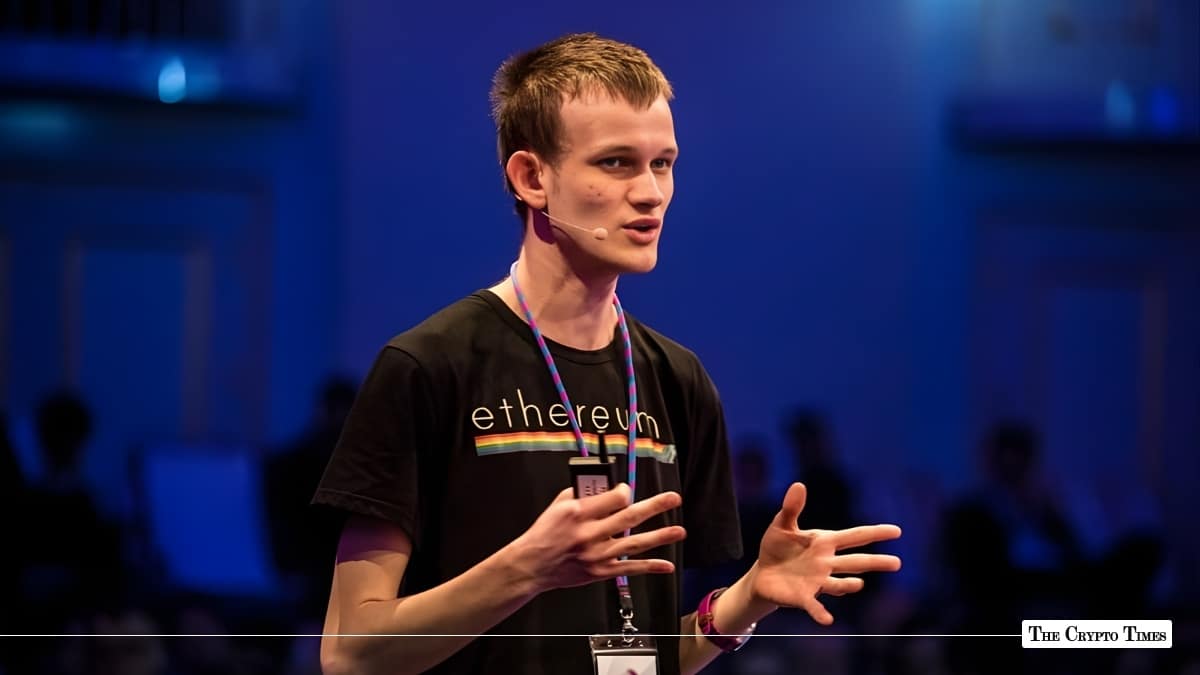
Ethereum co-founder Vitalik Buterin highlighted the importance of EIP-8141, a proposed upgrade designed to make Ethereum safer and more private in a post-quantum world. While discussions around quantum resistance and execution-layer security continue, Buterin’s framing shifts the narrative toward something bigger.
In a reply to an X post, Buterin said the update “makes privacy protocols much more first-class” and allows accounts to move away from fixed digital signatures, preparing the network for future quantum computer threats.
What is EIP-8141?
The EIP-8141 proposal, also called Frame Transactions, would let accounts switch from the standard ECDSA signature system to safer and more flexible signature types.
By enabling programmability at the verification layer, Ethereum could:
- Decouple itself from rigid signature schemes
- Adapt faster to new cryptographic standards
- Improve both privacy and scalability in the long run
However, the proposal is also complex and could introduce new risks if not carefully implemented, particularly around compatibility and execution-layer security.
What comes next
Buterin’s post was in response to Ladislaus von Daniels, a researcher at the Ethereum Foundation, who said the AllCoreDevs team is expected to make a decision on including EIP-8141 soon.
“AllCoreDevs plans to make a decision on EIP-8141 (frame transactions) inclusion in Hegota this Thursday… If you care about post-quantum security on the consensus layer (leanCL), you should equally care about it on the execution layer,” he wrote.
In his reply, Buterin explained, “The reason why EIP-8141 is such a powerful omnibus is that it enables the exact same thing that made the EVM itself a powerful omnibus—its general-purpose programmability—available at the verification stage, when before the verification stage was only hardcoded ECDSA.” The upgrade is part of the upcoming Hegota fork.
Preparing Ethereum for quantum threats
Buterin has long seen EIP-8141 as an important factor for long-term security. In an earlier discussion, he pointed to four main areas that could be at risk, which include validator signatures in consensus, Ethereum’s data system, everyday wallet signatures, and some zero-knowledge proofs used by applications and layer-2 networks.
By allowing accounts to move away from fixed ECDSA signatures, the proposal creates a path toward post-quantum security, which could help Ethereum resist future attacks from quantum computers.
The upgrade is also expected to let Ethereum wallets work more like smart programmable accounts. Users may not need ETH to pay for gas fees, and they could use new ways to approve transactions.
These accounts could include custom signature rules, social recovery options if keys are lost, gas payments in ERC-20 tokens, and automatic batch or scheduled transactions. These changes aim to make Ethereum easier to use while keeping it secure.
Previous attempt toward quantum security
Before EIP-8141, Ethereum tried account abstraction in steps. EIP-4337, launched in 2023, added smart contract wallets that work through a parallel system using bundlers and EntryPoint contracts. EIP-7702 in 2025 made accounts more flexible.
However, none of these changes fully added account abstraction to Ethereum’s main protocol. EIP-8141 will do this natively, removing extra layers and simplifying transaction validation for all users.
According to Buterin, the proposal brings general-purpose programmability to the verification stage, similar to how the Ethereum Virtual Machine works, making it a powerful omnibus upgrade.
In addition, the Hegota upgrade is shaping up to be one of Ethereum’s most user-focused updates in years. It brings together almost ten years of research, making wallets safer and more flexible for normal users and big infrastructure providers.
By including both privacy and post-quantum safety, the proposal is intended to help prepare Ethereum for future security challenges.
Also Read: Vitalik Buterin Shares Fast Confirmation Rule Update for Ethereum