Key Highlights
- The Bait: A fake Facebook profile under the name Lakshmidevi Reddy built rapport over months before pitching a fraudulent investment.
- The Spoof: Victims were directed to download “CBOE US,” a malicious app designed to mimic the legitimate Chicago Board Options Exchange.
- The “Hook” Tactic: Fraudsters allowed a ₹2.1 lakh withdrawal early on to build false confidence before extracting the final ₹60 lakh.
- Systemic Crisis: The case follows a ₹4.4 crore triple-scam in Hyderabad, highlighting a coordinated surge in elder-focused crypto fraud.
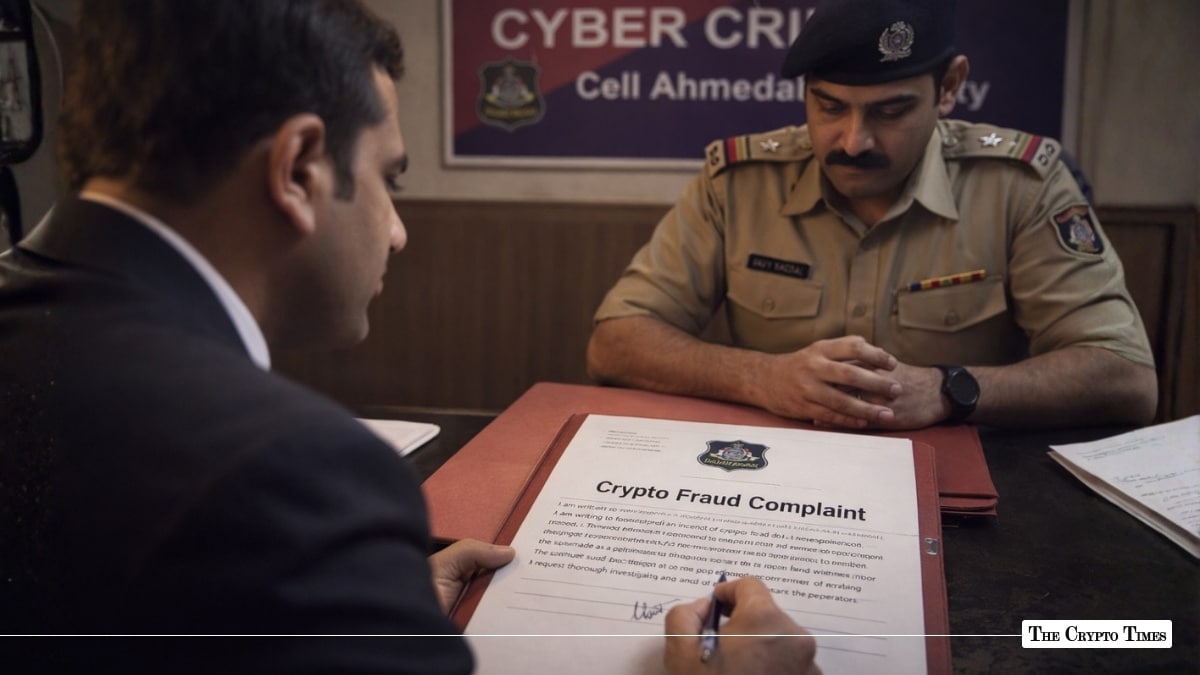
A 70-year-old advocate in Ahmedabad, Gujarat has been defrauded of ₹57.9 lakh in a cryptocurrency scam that deployed a textbook playbook: a fake social media identity, a fabricated trading platform, and carefully engineered trust.
The case, reported by the Ahmedabad Cyber Crime Cell, adds to a deepening crisis of crypto-enabled fraud targeting senior citizens across India.
The setup: From Facebook to fake exchange
According to the Cyber Crime Cell, the victim Girdharilal Jugalkishore Sharma of Shilaj area was targeted between November 2025 and February 2026. The operation began when an individual using a Facebook profile under the name ‘Lakshmidevi Reddy’ engaged with one of Sharma’s posts and struck up a conversation. The communication then migrated to WhatsApp and video calls, during which the accused built rapport by projecting a wealthy lifestyle and claiming extensive investment experience.
Subsequently, in January, the fraudster directed Sharma to a website claiming to be associated with a U.S.-based trading platform and instructed him to download an application called ‘CBOE US’—a name designed to mimic the legitimate Chicago Board Options Exchange. After registering on the platform, Sharma was contacted by a purported customer care executive through an international WhatsApp number, completing the illusion of a professional operation.
Small wins, then the drain
The scam followed a pattern that investigators now recognize as standard operating procedure in India’s crypto fraud ecosystem. Sharma initially invested ₹50,000 in USDT, which appeared in his in-app account. To cement his confidence, the operators arranged small withdrawals totalling ₹2.1 lakh in installments that were actually credited to his bank accounts—a classic “return-the-hook” tactic designed to make victims believe the platform is genuine before the real extraction begins.
Encouraged by the apparent returns, Sharma transferred a total of ₹60 lakh across multiple transactions between January 8 and 29 to bank accounts at several different banks, as directed by the accused. The application displayed fabricated profits showing his portfolio at over 1.9 lakh USDT. When he attempted to withdraw, he was asked to pay additional charges framed as taxes. Neither his investment nor the phantom profits were ever returned.
Layered fraud, familiar playbook
Police described the operation as a “layered approach” involving fake identities, fabricated trading platforms, and a web of bank accounts to obscure the money trail.
Sharma contacted the National Cybercrime Helpline (1930) before filing a formal complaint. The use of USDT as the investment vehicle is notable: Tether has become the currency of choice in Indian crypto fraud networks, both for its perceived legitimacy among victims unfamiliar with crypto and for its utility in moving funds rapidly across jurisdictions.
A police official said, “A case of cheating and criminal breach of trust has been registered against unknown persons, including the operators of the social media profile, WhatsApp numbers and bank accounts involved.”
India’s crypto scam epidemic shows no signs of slowing
The Ahmedabad case is far from isolated. It arrives during what has become the most concentrated period of crypto-enabled fraud in India’s history. Just two days ago, The Crypto Times reported that three senior citizens in Hyderabad lost a combined ₹4.4 crore to scams deploying nearly identical tactics — including a 69-year-old retiree who was lured via Instagram into a fake AI-powered crypto trading app that blocked withdrawals while demanding repeated “gas fees” and “swap charges.”
The pattern extends well beyond individual cases. Recent cases include one in Mangaluru, where the police recently dismantled an ₹85 crore USDT laundering pipeline linked to operators in China. Additionally, the CBI arrested the CTO of Darwin Labs at Mumbai airport in connection with the ₹6,000 crore GainBitcoin Ponzi scheme. And a ₹10.74 crore “digital arrest” scam in Pune saw funds stolen from elderly routed through crypto exchanges linked to handlers in China and Hong Kong.
What ties these cases together is the infrastructure: fake trading platforms, fabricated profit dashboards, social media traps, USDT as the preferred rail, mule bank accounts for layering — and overwhelmingly, senior citizens as targets. The government’s “PRAHAAR” counter-terrorism strategy, released in February, specifically flagged the growing use of crypto wallets by criminal networks, and the Enforcement Directorate has attached assets worth over ₹12,000 crore in connection with transnational cyber fraud.
For victims like Sharma, the warning comes too late. For everyone else, the message from law enforcement is unambiguous: any unsolicited investment opportunity arriving via social media, particularly one promising assured crypto returns, should be treated as a scam until proven otherwise.