Key Highlights
- Sam Bankman-Fried highlights traditional financial systems require KYC credentials like Social Security numbers and passports—details that autonomous AI instances do not possess.
- Crypto’s digital-native, permissionless structure allows AI agents to query blockchains and execute payments without human intermediaries.
- A shift toward “human master” models for AI payments raises complex legal questions regarding who is liable for an AI’s financial actions.
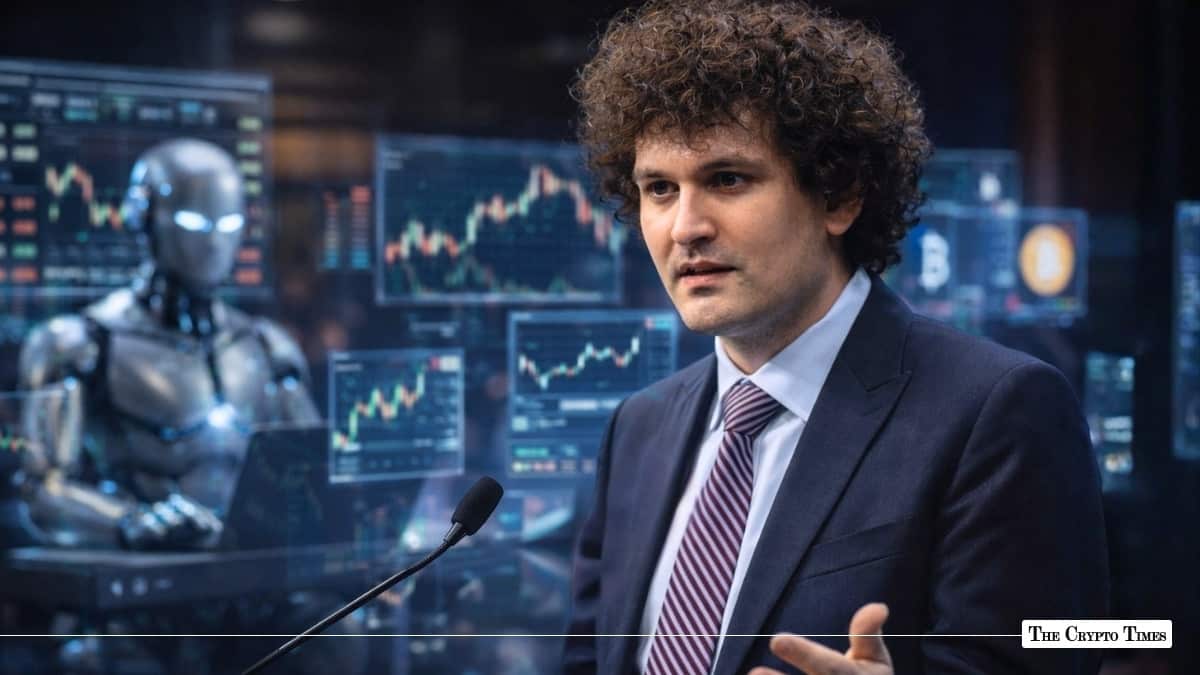
Collapsed exchange FTX’s imprisoned Founder Sam Bankman-Fried (SBF) has identified what he calls “the biggest question for crypto”: will artificial intelligence (AI) adopt it as a primary layer for commerce?
As AI models like OpenAI’s ChatGPT and Anthropic’s Claude scale toward greater autonomy, their need for “compute”—the raw processing power required to function—is skyrocketing. However, the mechanism by which an AI pays for this resource remains a friction point that could decide the fate of the blockchain industry.
Why traditional finance fails the machine
Currently, if an AI instance seeks to independently purchase more GPU time or data storage, it encounters the “Know Your Customer” (KYC) wall. Traditional banking institutions require a name, a physical address, and a government-issued ID.
“How do they KYC?” SBF questioned, noting that AI has no passport or Social Security number. This “identity gap” makes wire transfers and credit card payments nearly impossible for a truly autonomous digital entity.
Because traditional finance is built for biological humans and registered corporations, it inherently excludes the digital-first entities that are currently driving the most significant technological shift of the century.
Crypto as the native language of AI
Unlike legacy banks, decentralized ledgers are permissionless. An AI does not need a birth certificate to generate a wallet address or sign a transaction. By querying the blockchain directly, an AI agent can execute micro-payments for compute in real-time, matching the speed of digital operations with the speed of digital settlement.
SBF posits that the world is currently at a fork in the road: either the financial world becomes “natively digital” to accommodate AI, or we revert to a “human master” model. In the latter, every AI is treated as a legal agent of a specific person who handles the KYC and takes the blame if things go wrong.
If an AI is granted a crypto wallet and the power to trade, the question of liability becomes a legal minefield. If an AI executes a series of “bad” trades or causes a market flash crash, current laws are ill-equipped to determine if the programmer, the owner, or the AI itself is at fault.
The direction the industry takes—whether toward autonomous AI wallets or human-supervised “agent” accounts—will have massive implications. If AI adopts crypto-native payments, it could provide the “killer use case” that digital assets have sought for over a decade, finally decoupling crypto’s value from mere speculation and anchoring it to the essential utility of the global AI infrastructure.
Also Read: Vitalik Buterin Questions Corporate AI Control Amid Claude Distillation