Key Highlights
- Three U.S. lawmakers introduced a new bill to protect blockchain developers from being charged.
- The bill clarifies that only platforms that hold user funds should be regulated, not developers who only write software code.
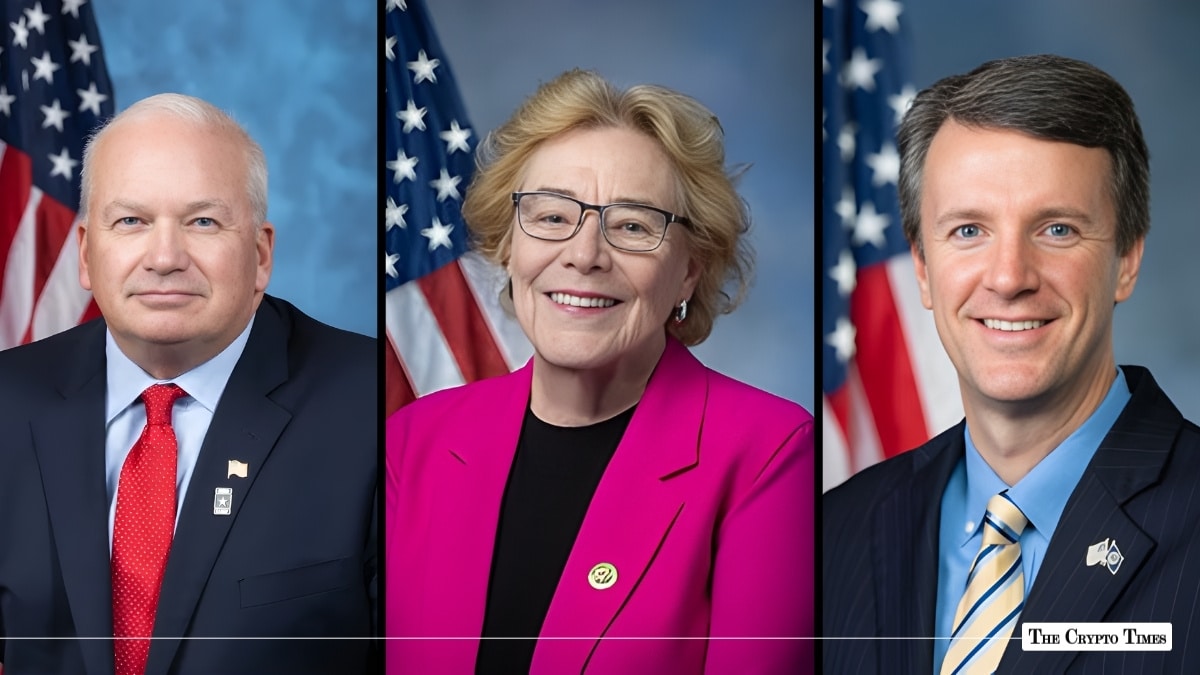
Three U.S. lawmakers, Representatives Scott Fitzgerald, Ben Cline, and Zoe Lofgren, have introduced a bipartisan bill designed to protect blockchain developers from criminal liability. The legislation aims to clarify how existing law applies and ensure that developers who only write code should be treated differently.
In an X post on Thursday, journalist Eleanor Terrett stated that the proposed law, named the Promoting Innovation in Blockchain Development Act of 2026, focuses on Section 1960, which is a U.S. criminal rule originally designed to regulate money transmitters.
Protecting developers from harsh punishments
Section 1960 was meant to regulate entities that hold or manage customers’ funds, like payment platforms or crypto exchanges. This new bill makes it clear that software developers who only write code should not be punished under this law, as they do not control customers’ funds.
Section 1960 has been a key discussion lately because it was recently applied to cases involving platforms like Tornado Cash and Samourai Wallet.
Keonne, the founder and developer of Samourai Wallet, was arrested by the U.S. Department of Justice in April 2024 and was sentenced to 5 years in prison last year. Similarly, Roman Storm, a developer of the privacy Tornado Cash, was convicted on one count of conspiracy to operate an unlicensed money transmitting business.
Developers and industry advocates argue that this approach was unfair and confusing, since coding software is not the same as running a financial business. This is expected to help in sectors, especially for DeFi projects, where open-source code is used by anyone.
Previous Senate efforts to protect developers
Earlier this year, Senators Cynthia Lummis and Ron Wyden introduced a similar bill, the “Blockchain Regulatory Certainty Act,” in January 2026.
According to a previous report, at the time, Lummis said, “Blockchain developers who have simply written code and maintain open-source infrastructure have lived under threat of being classified as money transmitters for far too long.”
Wyden added, “Forcing developers who write code to follow the same rules as exchanges or brokers is technologically illiterate and a recipe for violating Americans’ privacy and free speech rights.” The bill is expected to be part of broader crypto rules currently being prepared by the Senate committee.
This bill defines “non-controlling developers” as those who create or maintain blockchain software without having the ability to control or access user funds alone.
It protects activities such as publishing software for distributed ledgers, as well as maintaining blockchain networks. Advocates hope that these bills will be approved to avoid confusion and allow developers to build safely in the U.S.
Also Read: Indiana’s Crypto Turn: Public Retirement Funds Eye Bitcoin and ETFs