Key Highlights
- Bitcoin price swiftly jumped, breaking weeks of late-day dumps, liquidating over $120 million in shorts and adding ~$60B to crypto market cap.
- The pump follows market optimism after Jane Street was accused of insider trading before the 2022 Terra Luna collapse. Traders link the legal pressure to the sudden stop in familiar algorithmic selling.
- Additionally, the U.S. President Donald Trump urged fast passage of the Stop Insider Trading Act to block lawmakers from trading individual stocks, boosting broader anti-insider sentiment and crypto optimism.
Breaking the drastic downward momentum, cryptocurrency markets staged a sharp rebound on February 25, as Bitcoin surged roughly $2,000 in a matter of hours, liquidating over $120 million in short positions and adding approximately $60 billion to the overall crypto market capitalization.
The move reversed weeks of downward pressure, with Bitcoin climbing from recent lows near $63,000 to trade around $65,875, and briefly touching $66,000 by early morning, according to data from CoinMarketCap. It surged by nearly 3% in the past 24 hours, with a trading volume of $40 billion.
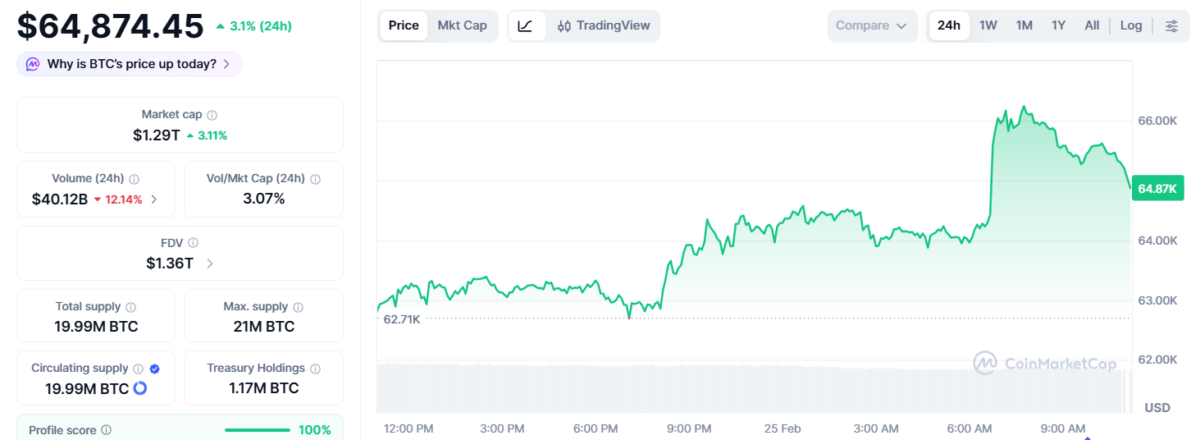
As usual, major altcoins followed suit, with Ether gaining close to 5%, hovering near $1,935 before pushing back, while Solana led with gains up to 6%, pushing the total crypto market cap toward $2.3 trillion.
Traders and analysts pointed to a break in a persistent pattern of late-day selling pressure, often observed around 8 PM ET, that had characterized recent sessions. For the first time in weeks, that window saw buying instead of dumps, fueling speculation about shifting market dynamics.
On-chain observers and community discussions highlighted the absence of aggressive algorithmic selling as a key catalyst for the relief rally, amid broader risk-on sentiment in global equities.
The Jane Street Vs crypto drama
The timing of the pump has drawn particular attention to ongoing legal scrutiny of quantitative trading giant Jane Street. Just a day earlier, on February 24, a lawsuit filed by the Terraform Labs bankruptcy administrator accused the firm of insider trading tied to the 2022 Terra Luna collapse.
The allegations claim Jane Street exploited non-public information from a private Telegram group to withdraw significant UST liquidity ahead of the depeg, front-running the event and exacerbating the $40 billion wipeout.
While Jane Street has dismissed the claims as “baseless” and “desperate,” the suit has sparked renewed debate over manipulative practices in crypto markets. Some market participants now link the lawsuit to the sudden halt in familiar selling patterns, suggesting reduced influence from certain high-frequency players or a shift in sentiment following the legal action.
Trump’s call for banning insider trading
Adding to the optimism was the U.S. President Donald Trump’s latest statements on insider trading. In his State of the Union address on February 24, Trump called for a ban on stock trading by members of Congress, urging passage of the Stop Insider Trading Act “without delay.”
Trump emphasized preventing lawmakers from profiting off non-public information, drawing rare bipartisan applause in the chamber. Though the moment quickly gave way to partisan jabs, including a pointed reference to former House Speaker Nancy Pelosi’s trading history.
The push aligns with long-standing proposals like the one from Rep. Bryan Steil, which would bar lawmakers, spouses, and dependent children from buying individual stocks while requiring advance disclosure of sales.
While the congressional trading ban targets traditional markets, crypto observers see parallels in calls for greater transparency and reduced insider advantages across asset classes. Trump’s remarks, delivered amid ongoing crypto volatility, have fueled speculation that broader anti-manipulation sentiment could spill over, boosting confidence in digital assets.
Whether the rally sustains depends on resistance levels near $66,300 and continued macro tailwinds, but for now, the combination of broken patterns, legal developments, and political signals has injected fresh momentum into an oversold market.