Key Highlights
- Citadel asked the SEC to regulate DeFi platforms trading tokenized U.S. stocks like traditional exchanges.
- The crypto community criticized Citadel, saying its approach could harm innovation and unfairly target developers.
- Citadel warned that broad exemptions could weaken investor protections like fair access and market transparency.
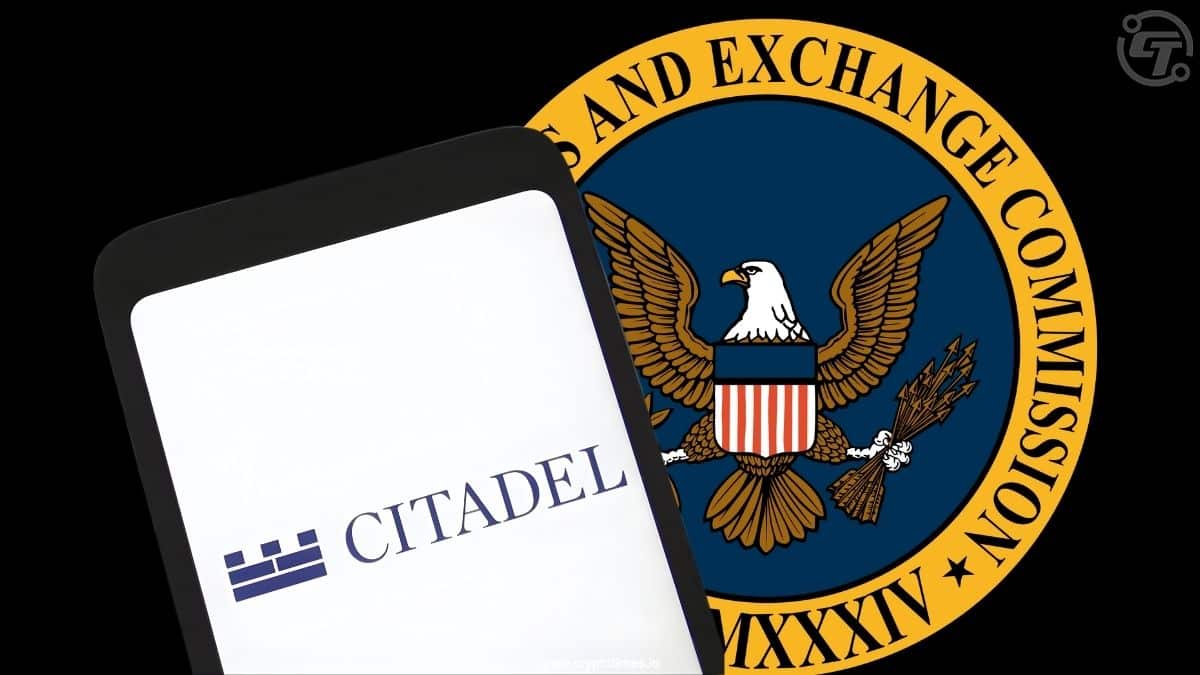
Citadel Securities, a U.S. market-making firm, asked the U.S. Securities and Exchange Commission (SEC) to apply more pressure on decentralized finance (DeFi) platforms and not to grant broad exemptions that would allow U.S. investors to trade tokenized U.S. equities through these DeFi platforms without traditional oversight.
The firm argues that the SEC should not give wide exceptions from the rules that define what an “exchange” or “broker-dealer” is. Citadel said that doing such could create two different sets of rules for the same stock, which could be confusing and unfair.
In a letter sent to the SEC on Tuesday, the firm recommended that all intermediaries in tokenized stock trades, including DeFi protocols, be fully identified.
DeFi platforms already function like exchanges
Citadel noted that many DeFi systems already operate like exchanges by using automated methods, such as algorithms, to match buyers and sellers. Some DeFi participants, like wallet providers, automated market makers, and trading apps, also act like broker-dealers because they earn money from transactions.
The firm cautioned that sweeping exemptions could undermine key protections in U.S. markets, including fair access, transparency after trades, market monitoring, and anti-front-running measures. Citadel called for the SEC to follow formal notice-and-comment rulemaking rather than offering broad exceptions.
“Realizing the potential benefits of tokenization requires applying the key bedrock principles and investor protections that underpin the fairness, efficiency, and resiliency of U.S. equity markets,” the letter said.
Pushback from the crypto community
The letter drew criticism from the crypto space. In an X post, Hayden Adams, founder of Uniswap, accused Citadel CEO Ken Griffin of “coming for DeFi,” calling out the claim that decentralized protocols cannot provide “fair access.”
“Makes sense the king of shady TradFi market makers doesn’t like open source, peer-to-peer tech that can lower the barrier to liquidity creation,” Adams wrote.
Summer Mersinger, CEO of the Blockchain Association, also criticized Citadel’s suggestion. She said it was “overbroad and unworkable” and that treating software developers like financial companies could harm U.S. innovation and push tech work to other countries.
In short, Citadel argued that DeFi platforms need clear rules to avoid gaps in investor protection, while the crypto industry stressed that excessive regulation could slow innovation. The debate highlights the ongoing tension between traditional finance and decentralized systems. How the SEC responds to this may shape the future of tokenized equities and determine whether DeFi platforms follow the same rules as stock exchanges.
Also Read: Kraken Partners With Deutsche Börse on Digital Assets