Key Highlights
- Bank of America suggests wealth clients allocate 1–4% of portfolios to crypto.
- Starting in January, advisers can recommend four bitcoin ETFs for regulated exposure.
- Regulatory clarity and growing demand make crypto more accessible to investors.
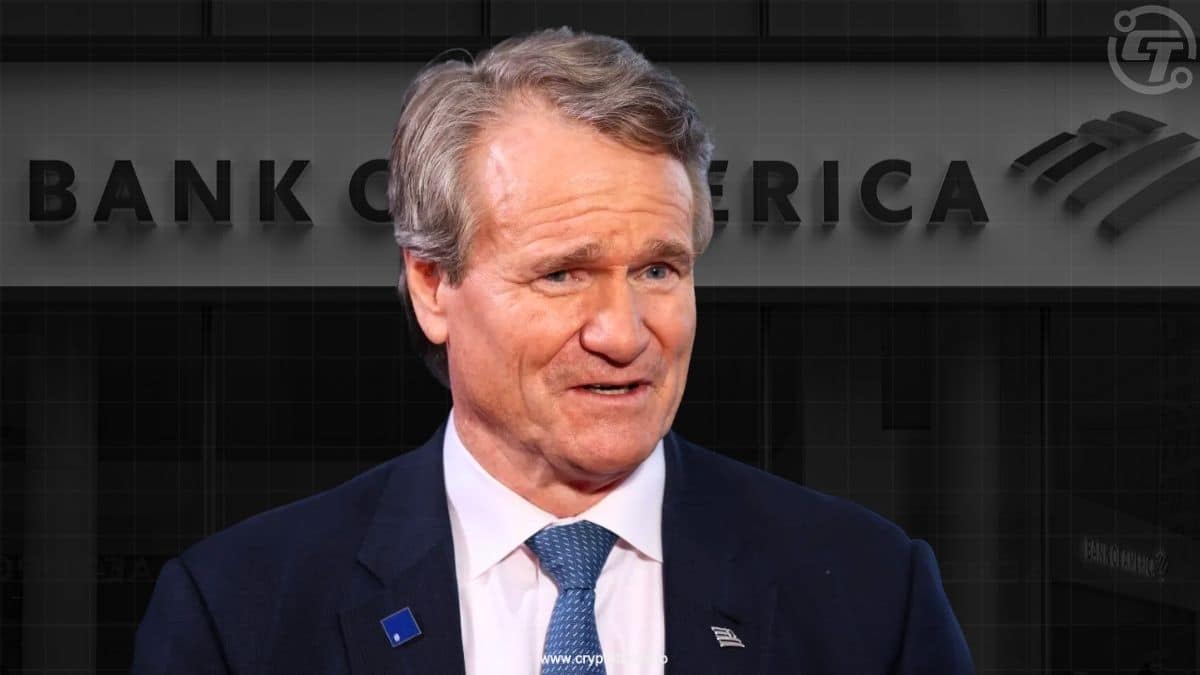
Bank of America is now telling its wealth management clients it may be time to consider cryptocurrency. For the first time, the bank is suggesting that clients could put between 1–4% of their portfolios into digital assets, depending on their risk tolerance. This guidance is aimed at clients using Merrill, Bank of America Private Bank, and Merrill Edge.
“For investors with a strong interest in thematic innovation and comfort with elevated volatility, a modest allocation of 1% to 4% in digital assets could be appropriate,” said Chris Hyzy, the bank’s Chief Investment Officer for its Private Bank.
“Our guidance emphasizes regulated vehicles, thoughtful allocation, and a clear understanding of both the opportunities and risks.”
Until now, clients could only access crypto products if they specifically asked for them, and advisers could not actively recommend them. “This update reflects growing client demand for access to digital assets,” said Nancy Fahmy, Head of the bank’s Investment Solutions Group.
Bitcoin ETFs to be covered in January
Starting January 5, Bank of America will begin covering four bitcoin ETFs that advisers can recommend:
- Bitwise Bitcoin ETF (BITB)
- Fidelity Wise Origin Bitcoin Fund (FBTC)
- Grayscale Bitcoin Mini Trust (BTC)
- BlackRock iShares Bitcoin Trust (IBIT)
These ETFs allow clients to invest in Bitcoin without holding the cryptocurrency directly, providing a regulated avenue for exposure. Hyzy suggested that conservative investors stick closer to 1%, while those more comfortable with risk could consider up to 4%.
Wall Street moves toward crypto
Bank of America’s guidance is part of a broader trend on Wall Street. Morgan Stanley recently suggested 2–4% of a portfolio could be allocated to crypto, BlackRock has recommended 1–2%, and Fidelity suggested 2–5%, with up to 7.5% for investors under 30.
Vanguard also recently announced it will start offering some crypto ETFs and mutual funds on its platform, giving investors another way to get exposure to digital assets.
Other banks, including Charles Schwab, JPMorgan Chase, and Morgan Stanley, already let clients invest in certain crypto ETFs. Fintech platforms like SoFi are expanding direct crypto trading for retail investors, and more banks are expected to follow.
Regulatory changes encourage banks
A big reason more banks are getting into crypto is that the rules have become clearer. The President Donald Trump administration rolled back some of the Biden-era restrictions that limited what banks could do with digital assets. That gives them more freedom to offer trading, custody, and advisory services.
Even so, a lot of banks are still waiting for Congress to pass laws that lay out clear federal oversight for crypto. Some are experimenting already, trying to figure out the best way to offer these services to clients. JPMorgan, for instance, allows Chase credit card holders to fund accounts on Coinbase, though its wealth advisers haven’t received formal guidance yet.
Volatility remains a risk
The timing comes as cryptocurrencies continue to experience swings. Bitcoin reached above $126,000 in early October but has since fallen roughly a third, trading around $85,000 on Monday. Year-to-date, bitcoin is down about 10%, while the S&P 500 has risen over 15%.
The ups and downs in the crypto market show why banks suggest keeping crypto allocations small, since it is still a high-risk investment. Even so, Bank of America’s new guidance shows that digital assets are starting to be seen as a small, strategic part of a diversified portfolio, rather than just a risky experiment.
Now, Bank of America’s wealth clients can use regulated crypto products and talk to advisers freely about digital assets. For a lot of investors, this makes getting involved in crypto much easier and less risky than before.