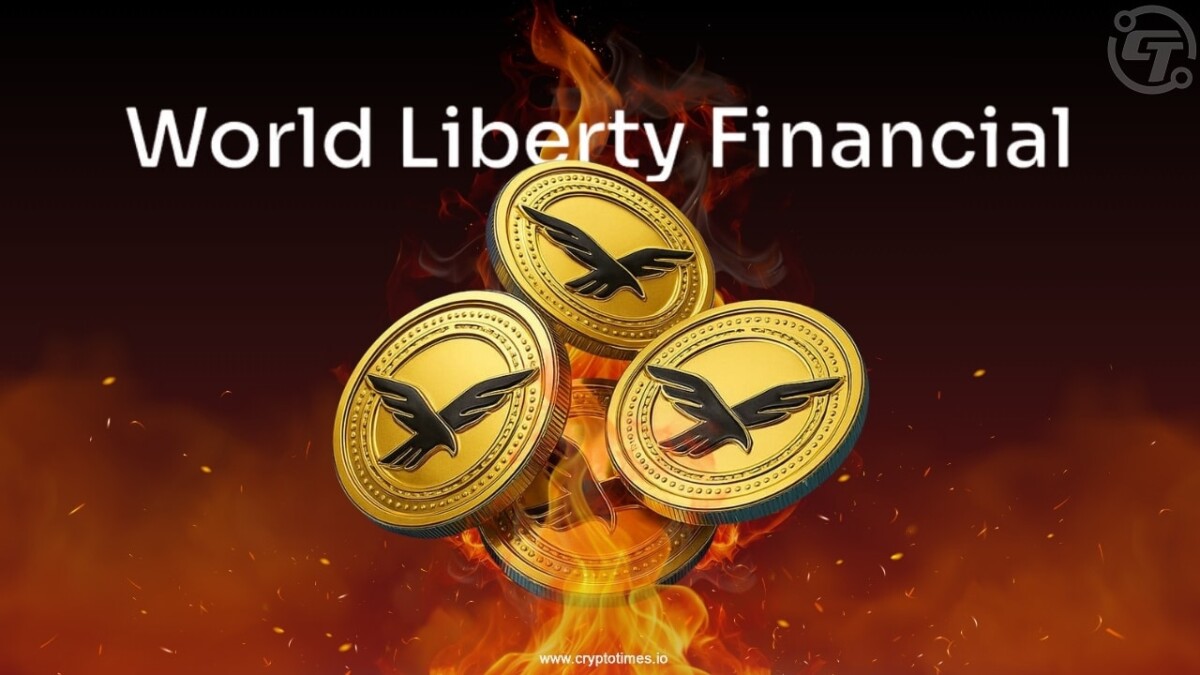
The WLFI community is voting on a governance proposal that would commit 100% of the protocol’s Treasury liquidity fees to a buyback-and-burn program, permanently removing purchased tokens from circulation.
The proposal, now live, applies exclusively to fees generated from WLFI’s protocol-owned liquidity (POL) on Ethereum, BSC, and Solana. Fees earned by partner liquidity providers or third-party pools are excluded. Execution would be carried out manually, with every burn recorded on-chain for verification.
Full Allocation Toward Deflation
At the heart of the proposal is the decision to route the entire stream of POL fees toward buybacks. WLFI plans to take all the fees earned from its liquidity positions, use them to buy WLFI tokens from the open market, and then burn those tokens.
By putting the entire Treasury fees into this, the idea is to have a stronger impact on reducing supply instead of dividing the funds between operations and burns.
Backers believe this approach directly ties the network’s activity to token scarcity. As WLFI usage and trading volumes increase, so do liquidity fees — and in turn, the number of tokens permanently removed. Proponents also say the measure rewards committed holders, since reducing supply over time effectively increases their relative stake.
Alternatives and Community Sentiment
Before the proposal went live, WLFI also looked at other options. One was to leave the fees in the Treasury for operations, and another was to split them between the Treasury and Burns. But the wider community leaned toward a stronger approach, putting the entire share of Treasury liquidity fees into buybacks and burns to create maximum impact.
The Vote and What’s Next
Token holders are being asked to choose between three options:
- FOR — Use 100% of WLFI Treasury POL fees for buyback-and-burn
- AGAINST — Keep fees in the Treasury
- ABSTAIN — No preference
If approved, the initiative will become the foundation of an ongoing deflationary strategy. WLFI has also suggested that the program could expand to cover additional revenue streams in the future, steadily increasing the scale of buybacks and burns as the ecosystem grows.
The result of the vote will decide if WLFI goes all-in on a 100% deflationary model, or if it keeps Treasury revenue aside for operations and growth.
Also Read: Hyperliquid’s USDH Governance Vote Scheduled for Sept 14