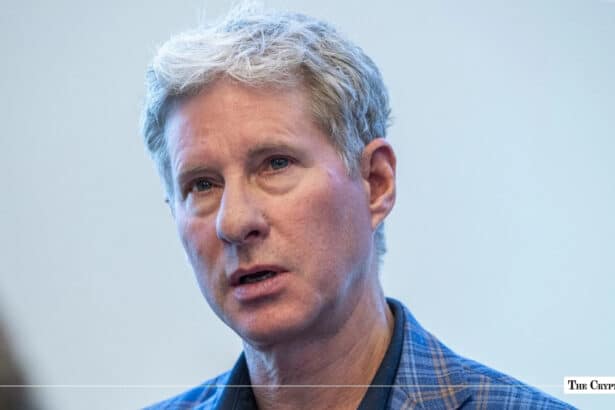
Ripple’s chief Technology officer , David Schwartz, has recently given one of his posts revealing insights into where the future of XRP and the XRP Ledger (XRPL) is heated – and it’s clear that it extends well beyond just payments.
In a series of pointed statements, Schwartz emphasized that what Ripple is building shouldn’t be seen as just another payments platform. It is more like the delivery of a fully operational financial system than a structure for managing only crypto. This broader approach for XRPL contains XRP, Ripple’s own stablecoin RLUSD and the integration of key areas such as lending, investing and main features of traditional finance.
Schwartz believes the XRPL is transforming into a financing system that is highly decentralized, efficient and this time faster, more open and available to more people than banks. A key part of this evolution includes support for tokenized real world assets, decentralized exchanges, and smart contracts capabilities.
Schwartz highlighted that a thriving decentralized exchange (DEX) cannot function with only one asset. That’s why the network is being shaped to support a variety of tokens and financial instruments. Still, XRP remains a central pillar. As a native asset without counterparty risk, it stands out in the XRPL ecosystem. Every account can hold it by default, and it’s the go-to asset for paying transaction fees, making it critical for features like auto bridging and liquidity routing.
Despite XRP’s structural importance, Schwartz acknowledged a major challenge: quantifying how much of XRP’s current market value is actually driven by on-ledger activity and ecosystem use. As Ripple moves forward, that connection may shift — and it’s something the company is keeping a close eye on.
The message is clear: Ripple isn’t just building for the crypto crowd anymore. Its technology is aimed at creating a complete, decentralized financial stack with XRP at its heart, but not its boundary.
Also Read : Ripple RLUSD Dubai Approval to Push XRP Price Up 20%