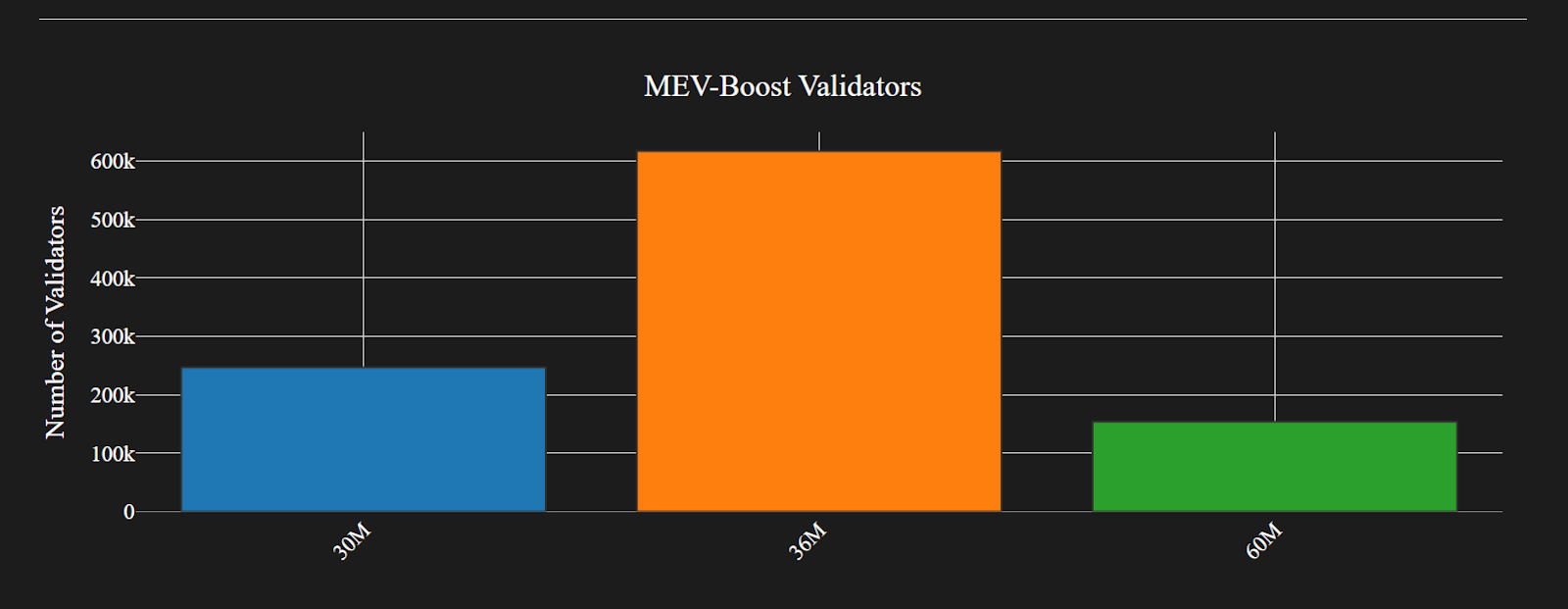
Amid the increasing attention on Ethereum, a notable number of validators—around 153,795—have hinted to increase the network’s block gas limit to 60 million units, nearly double from its current ceiling of 36 million.
If standardized, this increase in gas limit could drastically transaction throughput on Ethereum’s base layer. Most of the validators are currently favoring the 36 million units in gas limit, which was increased earlier this year from the 30 million.
On the Ethereum network, gas is a fundamental unit that is used to measure computational power required for transaction execution. The gas limit represents the total gas amount of all transactions that can be consumed within a single block.
As per GasLimit.pics data, an independent gas limit dashboard for Ethereum, nearly 13.5% of validators are pushing for the gas limit increase. Once this number reaches 50%, the network will adjust the block gas limit automatically to 60 million.
The increase in gas limit enables Ethereum network to process more data and eventually increases the network’s capacity to process more transactions in a single block.
Unlike other upgrades, such as Pectra, this change would not require a hard fork. It can be adjusted by Validators through node configuration while proposing blocks.
Also read: Vitalik says Ethereum should back fragile cashless systems