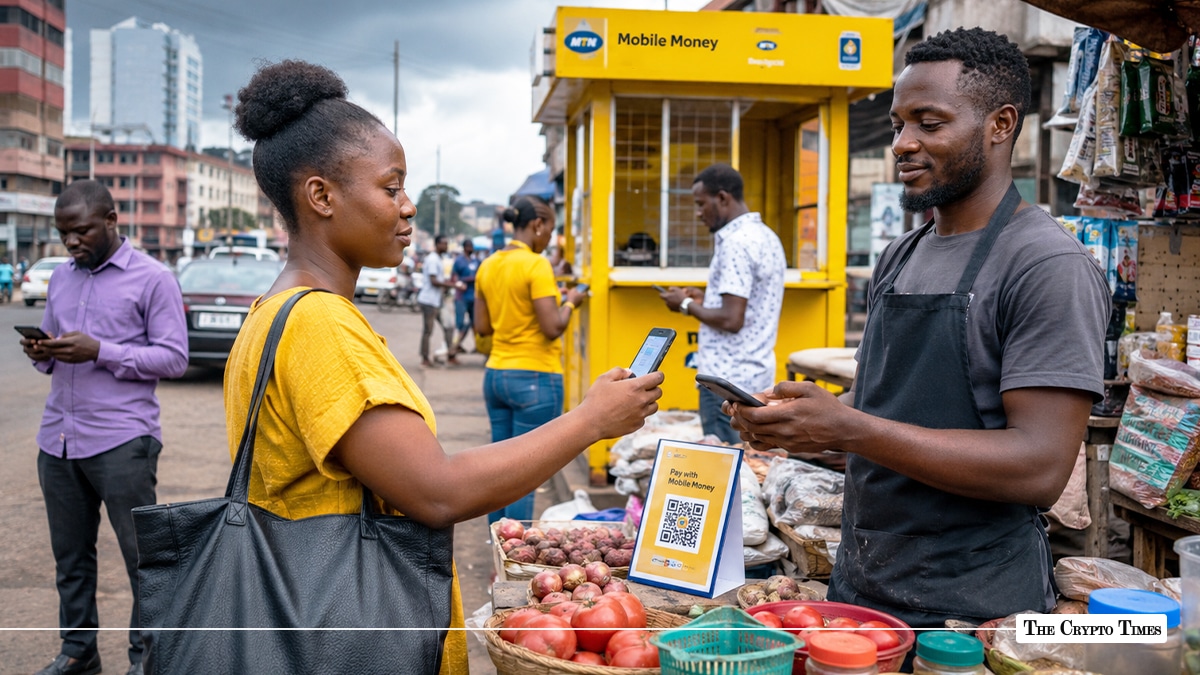
In the global race for cryptocurrency adoption, the most significant innovation isn’t happening in the high-frequency trading firms of Wall Street or the regulatory boardrooms of Brussels. It is happening in the street-side mobile money kiosks of Nairobi, Lagos, and Lusaka.
As we move through 2026, Africa has solidified its position as the world’s most practical “sandbox” for decentralized finance (DeFi). While the West often views crypto as a speculative investment, the African continent has transformed it into a mechanical necessity for daily survival, cross-border trade, and financial inclusion.
At the heart of this revolution is a pre-existing infrastructure that the rest of the world lacks: a network of nearly 1 billion mobile money wallets across 43 African markets, with the broader continent representing the largest concentration of the 2.1 billion mobile money accounts globally tracked by the GSMA State of the Industry Report 2025.
The Foundation: Why Mobile Money Over Traditional Banking?
For decades, traditional banking in Africa has faced high barriers to entry, including physical distance to branches, high maintenance fees, and strict documentation requirements that exclude millions. Mobile money—pioneered by services like M-Pesa, MTN MoMo, and Airtel Money—solved this by turning the mobile phone into a bank branch.
In 2026, this infrastructure has reached a critical mass. According to the GSMA, the mobile money sector processed approximately 108 billion transactions valued at more than $1.68 trillion in 2024 alone, with Sub-Saharan Africa contributing approximately $190 billion to regional GDP. With nearly 1 billion active wallets, the continent possesses a unified “digital ledger” that predates the blockchain boom. The current trend isn’t about replacing mobile money with crypto; it is about using mobile money as the ultimate “on-ramp” and “off-ramp” for the decentralized economy.
The Landmark Shift: Bridging the “Last Mile” Gap
The biggest hurdle for crypto adoption has always been the “last mile”—the ability to convert local fiat currency into digital assets without a traditional bank account.
A major breakthrough occurred on April 9, 2026, when the integration between the VALR, which is Africa’s largest crypto exchange by trade volume, and Onafriq, the continent’s leading digital payments gateway went live. This partnership effectively bridged the gap between crypto liquidity and the 1 billion mobile money wallets across 43 African markets.
By allowing users to deposit and withdraw crypto using local currencies like Kenyan Shillings (KES), Zambian Kwacha (ZMW), and Tanzanian Shillings (TZS), expanding shortly after to include Ugandan Shillings (UGX), Central African CFA Francs (XAF), and Congolese Francs (CDF), via their mobile phones, the “last mile” problem was effectively solved. Transactions are processed through a conversion pathway that moves from local currency to USDC before being swapped into the selected cryptocurrency, with the maximum transaction limit currently set at $300 per transaction.
As VALR Co-Founder and CEO Farzam Ehsani put it: “Mobile money has already reshaped financial access across the African continent. By enabling direct connections in local currencies, we offer millions a practical pathway to Bitcoin, stablecoins, tokenised gold, and more.”
This isn’t just a win for one company; it is a blueprint for how digital assets can reach the unbanked globally.
Practical Use Cases: Beyond Speculation
While the world watches Bitcoin’s price action, African users are focusing on the utility of stablecoins and peer-to-peer (P2P) transfers.
1. Decentralized Remittances
Cross-border payments within Africa have historically been some of the most expensive in the world. By using mobile money to fund crypto wallets, migrant workers can now send value across borders in minutes for a fraction of the cost of traditional wire transfers.
2. Hedging Against Volatility
In nations facing high inflation, the ability to quickly swap mobile money balances for USD-pegged stablecoins (like USDT or the regulated USDPT on Solana) provides a vital tool for wealth preservation.
3. Smarter On-Ramps and Rebate Cycles
The infrastructure has become so efficient that exchanges are now focusing on lowering the cost of entry. For example, during the May 2026 rebate cycle, users are seeing significant fee reductions on mobile money deposits, further incentivizing the shift from cash to digital assets.
Technical Breakdown: The Hybrid Economy
The current African crypto model is a hybrid. It utilizes the “Centralized Trust” of mobile money providers for local currency handling and the “Decentralized Transparency” of the blockchain for settlement.
| Feature | Traditional Banking | Mobile Money + Crypto |
|---|---|---|
| Accessibility | Limited (Branch-based) | High (Mobile-first) |
| Settlement Speed | 3-5 Business Days | Near-Instant |
| Cost | High (7-9% fees, per World Bank data) | Low (1-3% fees) |
| Infrastructure | Legacy Systems | Blockchain + 1B Wallets |
Governance and The Safety Narrative
As adoption scales, the regulatory picture is becoming sharper and more contested.
South Africa’s proposed Draft Capital Flow Management Regulations of 2026, published April 17, 2026 for public comment, represent the most significant overhaul of the country’s capital flow architecture in over six decades. The regulations would bring crypto assets formally into the exchange control framework, treating them as a distinct but regulated form of capital.
The proposals have drawn pointed industry pushback. VALR — the very exchange at the center of the Onafriq integration — has publicly called the regulations “overly restrictive,” warning they “undermine the nature of crypto assets and the practical exercise of self-custody rights.” The Bitcoin community has gone further, with some commentators comparing the proposed regime to North Korea’s capital control system. The public comment window closes between May 18 and June 10, 2026, with the Treasury having published two conflicting deadlines — itself a marker of how rapidly the framework is moving.
The contrast across the continent is stark. While South Africa tightens its capital flow framework, Onafriq’s 43-market network continues to enable lighter-touch mobile money flows that effectively route around traditional capital controls — a regulatory tension that will define African crypto policy in 2026.
However, users must remain vigilant. As The Crypto Times has documented in recent coverage of the DSJ Exchange $150 million Ponzi scheme investigation and pig-butchering scam crackdowns, increased adoption often brings increased risk from social engineering and AI-driven fraud. The key to safe adoption is using verified “bridges” and maintaining control over your digital keys.
The Future: A Global Blueprint?
What is happening in Africa today is a preview of the “Financial Inclusion 2.0” model that could eventually be adopted in other emerging markets like Latin America and Southeast Asia. Indeed, Western Union’s USDPT stablecoin launch on Solana on May 4, 2026, currently piloted in the Philippines and Bolivia, with a 40-country expansion planned for 2026, applies the same “regulated stablecoin + physical-network last-mile” architecture that VALR-Onafriq pioneered. The model travels.
The integration of nearly 1 billion wallets into the crypto ecosystem has proven that you don’t need a massive banking overhaul to digitize an economy. You simply need to build on the infrastructure that people already use and trust every day.
As we look toward the second half of 2026, the question is no longer if Africa will lead in crypto adoption, but how quickly the rest of the world will learn from the “African Sandbox.”
Also Read: Africoin Joins Ghana SEC Sandbox to Test Real-World Asset Tokenization
Frequently Asked Questions (FAQ)
How does the VALR and Onafriq integration work?
It allows users in countries like Kenya, Zambia, Tanzania, Uganda, and Central/East African CFA-zone countries to link their mobile money wallets (like M-Pesa or MTN MoMo) directly to their crypto exchange accounts for instant deposits and withdrawals. PerVALR’s official documentation, local currency is converted into USDC before being swapped into the user’s selected cryptocurrency, with all settlements processed via stablecoins.
Which currencies are currently supported for mobile money crypto payments?
The initial rollout includes KES (Kenya), ZMW (Zambia), and TZS (Tanzania), expanded shortly after launch to include UGX (Uganda), XAF (Central African CFA Franc), and CDF (Democratic Republic of Congo), with more African currencies expected throughout 2026.
Is it cheaper than a bank transfer?
Generally, yes. Per World Bank Remittance Prices Worldwide data, intra-African bank-based remittance corridors typically cost 7-9%, while mobile money + crypto rails consistently land in the 1-3% range — a meaningful structural cost advantage. Note: VALR’s mobile money transaction limit is currently set at $300 per transaction.
How can I stay safe when using mobile money for crypto?
Always verify that you are using a licensed exchange and be wary of anyone contacting you on social media offering “guaranteed returns” or help with “lost funds.”