Federal authorities have charged three Tennessee men in connection with a violent cryptocurrency robbery and kidnapping conspiracy that allegedly targeted crypto holders across the San Francisco Bay Area and Los Angeles.
According to the official release, Elijah Armstrong, Nino Chindavanh, and Jayden Rucker were indicted on charges including conspiracy to commit Hobbs Act robbery, conspiracy to commit kidnapping, attempted robbery, and attempted kidnapping.
Prosecutors allege the group traveled from Tennessee to California to specifically target individuals believed to hold significant cryptocurrency assets.
Fake delivery scheme to access victims
According to the indictment, the suspects allegedly posed as delivery workers to gain access to victims’ homes in San Francisco, San Jose, Sunnyvale, and Los Angeles.
Authorities stated that once inside, the group allegedly used firearms, duct tape, and zip ties to restrain victims and force them to reveal cryptocurrency account credentials.
In one incident, prosecutors said a victim was forced at gunpoint to access his crypto accounts, allowing co-conspirators to transfer roughly $6.5 million in cryptocurrency into wallets controlled by the group.
DOJ calls “Brazen and Dangerous”
U.S. Attorney Craig H. Missakian described the alleged operation as highly violent and organized.
“These individuals, as alleged, terrorized their victims in the hopes of stealing vast sums of cryptocurrency,” Missakian stated.
“The scheme was not only sophisticated, but it was brazen, violent, and dangerous.”
The FBI also emphasized growing concerns around organized criminal groups targeting crypto investors through both cyber-enabled and physical attacks.
“The FBI will not tolerate criminals who travel into our communities with the intent to terrorize our citizens,” said FBI Acting Special Agent in Charge Matt Cobo.
The rise of ‘Wrench attacks.’
This case is the latest example of so-called “wrench attacks” — where criminals use physical violence and threats to bypass digital security. As cryptocurrency adoption grows, such real-world extortion tactics are becoming more common, forcing high-net-worth holders to rethink their operational security (OpSec).
Potential life sentences
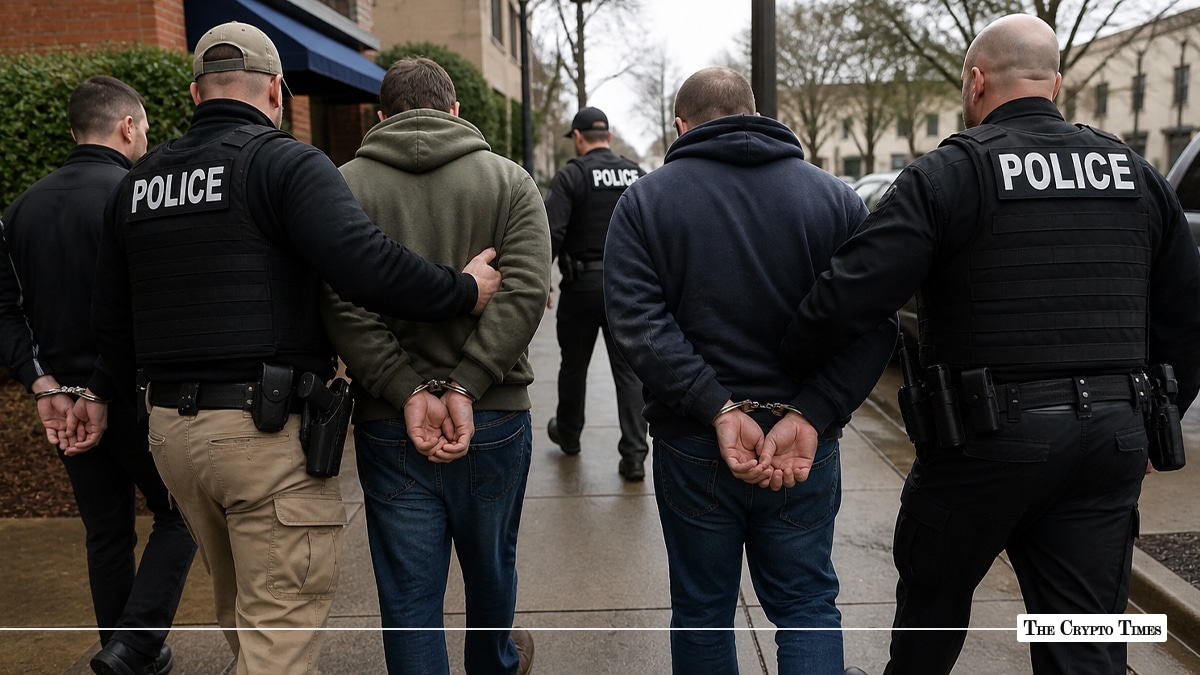
Authorities confirmed Armstrong and Rucker were arrested in Los Angeles on December 31, 2025, while Chindavanh was arrested earlier in Sunnyvale on December 22, 2025.
All three defendants are currently in federal custody.
If convicted, the defendants could face up to 20 years in prison for robbery-related charges, potential life sentences for conspiracy to commit kidnapping, and fines of up to $250,000 per charge.
Federal officials noted that all defendants are presumed innocent unless proven guilty in court.
The case highlights a growing trend of criminals targeting cryptocurrency holders through physical extortion, kidnapping, and forced wallet access rather than relying solely on cyberattacks.
Earlier this year, U.S. authorities sentenced Marlon Ferro, known online as “GothFerrari”, to over six years in prison for participating in a crypto theft ring involving burglary, hacking, and physical theft of hardware wallets from victims’ homes.
Also read: U.S. Seizes $500K in Crypto Linked to Nigeria-Based Email Fraud Network