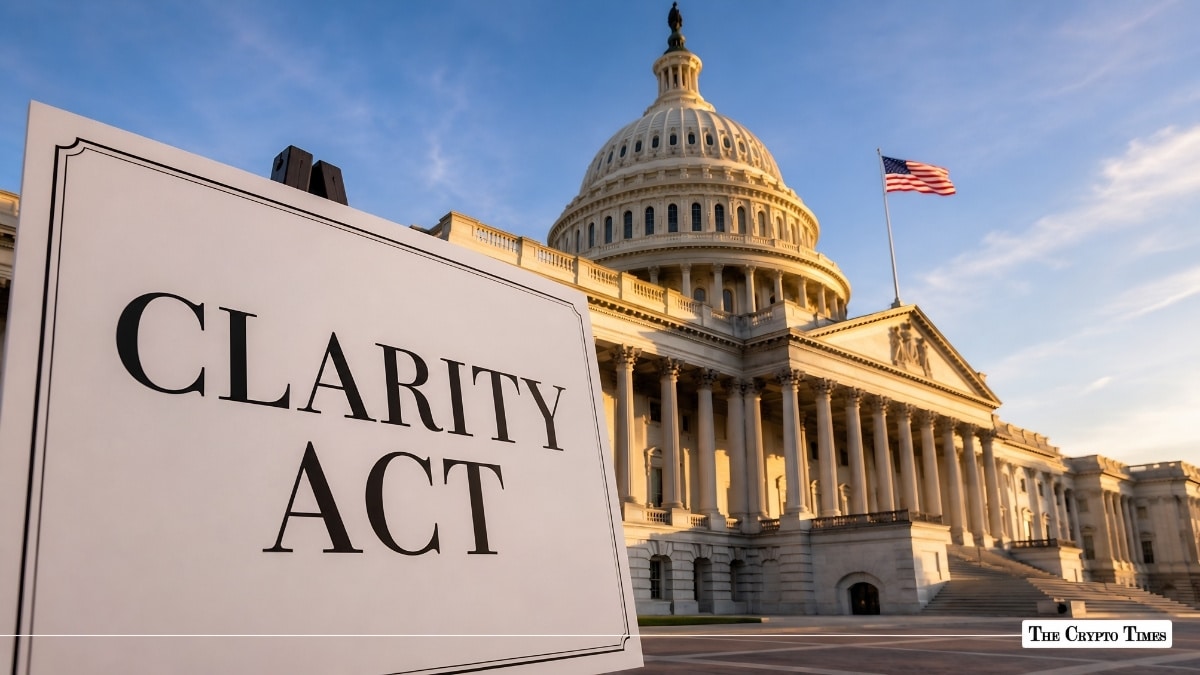
Michael Saylor, executive chairman of Strategy (formerly MicroStrategy) and one of Bitcoin’s most vocal advocates, doubled down Tuesday on the significance of the advancing Digital Asset Market Clarity Act of 2025.
In a post on X Tuesday, Saylor described the Senate Banking Committee’s upcoming markup—scheduled for May 14—as the catalyst for “the next wave of Digital Capital, Digital Credit, and Digital Equity” in the U.S. and beyond.
The CLARITY Act aims to end years of regulatory ambiguity by drawing a clearer line between the SEC and CFTC. Under the bill, digital commodities like Bitcoin would fall primarily under CFTC oversight for spot markets, while providing tailored pathways for capital raising, DeFi protections, and stablecoin-related innovations.
Saylor specifically pointed to language recognizing “activity-based rewards” tied to stablecoins and distributed ledgers as essential for “responsible digital yield markets.”
“The bill recognizes activity-based rewards tied to payment stablecoins and distributed ledger participation as — critical to enabling innovation, competition, and consumer adoption,” Saylor said, adding, “That is the path to responsible digital yield markets.” He also linked to the Senate Banking Committee’s draft text in a subsequent X post.
The comments come as the Senate Banking Committee prepares for a markup session on May 14, marking the chamber’s first formal debate on the legislation that passed the House last year.
Michael Saylor and Strategy’s Bitcoin Empire
Saylor’s Strategy currently holds 818,869 BTC, representing the largest corporate treasuries in the world. The company’s dual-stock structure—with MSTR serving as a high-beta Bitcoin play and STRC tied to yield strategies—positions it to benefit directly from clearer rules around digital commodities and on-chain financial products.
The highlighted provision in the CLARITY Act is particularly relevant for Saylor’s vision. By carving out protections for rewards linked to stablecoins and blockchain participation, the bill could legitimize yield-generating mechanisms that many in traditional finance have viewed skeptically.
Industry observers see this as a potential foundation for expanded DeFi-style products and corporate crypto strategies moving onshore.
For the wider crypto industry, the legislation seeks to resolve long-standing jurisdictional battles by assigning clearer roles to the CFTC for digital commodities like Bitcoin and providing regulatory certainty for market participants.
Supporters argue it will attract institutional capital and reduce reliance on offshore platforms, though banking groups continue to push back on certain provisions.
With the markup just days away, Saylor’s pointed emphasis on the yield language signals his belief that the bill could mark a structural shift—from regulatory uncertainty to a framework that supports the kind of Bitcoin-centric financial innovation he has championed for years.
Also read: Bhutan Could Run Out of Bitcoin by September After Latest 100 BTC Transfer