Key Highlights
- Sen. Ashley Moody said agencies should not use enforcement as a substitute for clear crypto rules.
- Moody argued the CLARITY Act can give regulators defined authority instead of open-ended agency interpretation.
- She warned that weak U.S. digital asset policy could help China’s de-dollarization push.
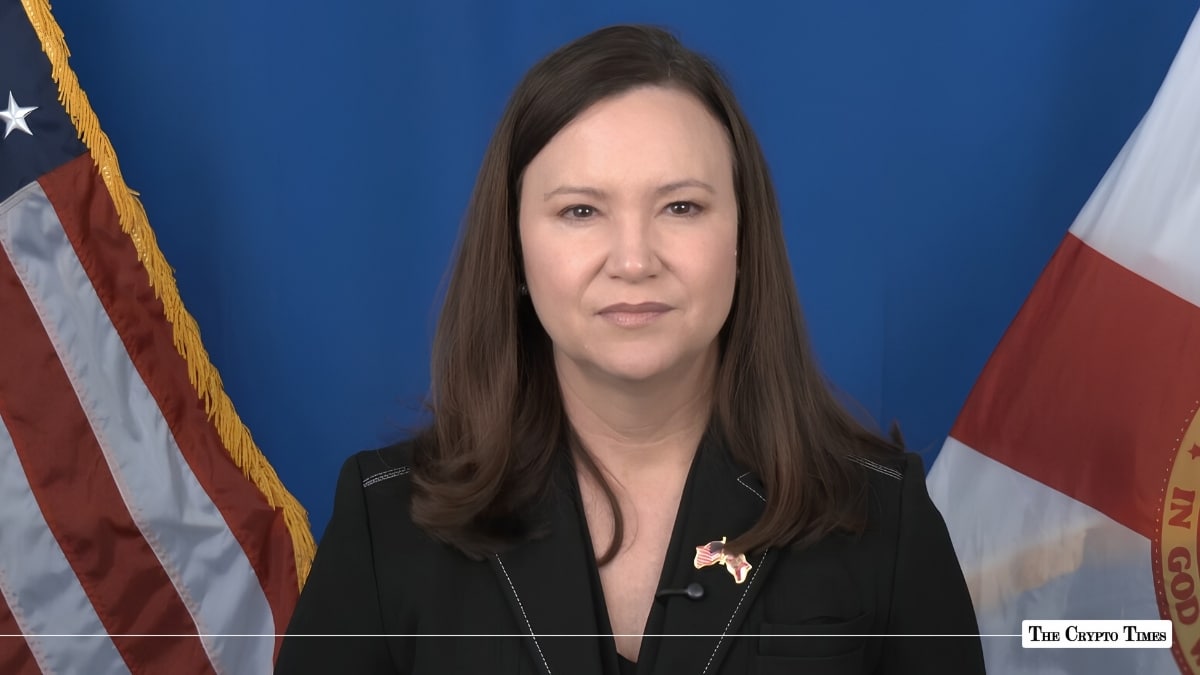
Florida Senator Ashley Moody said Congress must pass clear digital asset legislation to prevent U.S. agencies from using enforcement actions as a substitute for defined crypto rules.
Speaking at Consensus in Miami, Moody said unclear rules create a “gotcha government” problem, where companies are forced to guess how regulators will interpret old statutes against new technology.
“Everyone should avoid that at all costs, not just because it’s a bad way to enforce laws, but it weakens trust between the people and their government,” Moody said.
The comments come as Congress debates the CLARITY Act, a broader crypto market structure bill aimed at defining how digital assets should be treated by federal regulators. The bill follows the GENIUS Act, which President Donald Trump signed into law on July 18, 2025, creating the first federal regulatory framework for payment stablecoins.
Moody, who previously served as Florida’s attorney general, said her enforcement background shaped her view that regulators should not act before the public and industry understand the rules.
“When nothing exists, they’re just kind of trying to come up with something as they go,” Moody said, referring to enforcement without clear legislative guidance.
Moody says agencies need congress to define crypto authority
Moody said agency power comes from Congress, meaning regulators need clear statutory limits before acting against fast-moving industries such as crypto.
“The other thing that’s dangerous about agencies deciding on their own without clear guidance from Congress is all of agency power comes from the people,” Moody said.
She added that lawmakers should set definitions and “rein in those agencies” when new technologies create uncertainty around existing laws.
The Florida senator said that during her time as attorney general, her office faced similar issues when new technology made existing statutes difficult to apply. Instead of immediately bringing enforcement actions, she said officials engaged industry groups, held stakeholder meetings, and issued guidance before beginning enforcement.
That approach, she argued, is a better model for digital assets than surprise enforcement.
Crypto framed as national security issue
Moody also tied digital asset legislation to U.S. national security, warning that weak domestic rules could push capital and innovation outside the United States.
“If we don’t come in early and start identifying ways that a market can be exploited, we’re never going to get a handle on it on the back end,” she said.
Moody said U.S. policy must protect citizens without “unnecessarily restricting innovation,” arguing that excessive restriction would hurt American competitiveness against rival nations.
She specifically pointed to China’s de-dollarization ambitions and said the U.S. must ensure digital asset activity remains inside the country.
“If we lose that, then you’re relying on traditional diplomacy or military action,” Moody said, adding that the dollar remains central to U.S. sanctions power.
Moody currently serves on several Senate committees, including Judiciary, Homeland Security and Governmental Affairs, HELP, Joint Economic Committee, and the Special Committee on Aging, according to her Senate biography. She was also added to the Senate Armed Services Committee in March 2026 after Markwayne Mullin was confirmed to lead the Department of Homeland Security.
GENIUS Act sets stage for market structure fight
Moody said the GENIUS Act showed what can happen when Congress gives markets regulatory certainty, claiming the stablecoin market expanded sharply after the law passed.
The White House said the GENIUS Act requires payment stablecoin issuers to maintain 100% reserve backing with liquid assets such as U.S. dollars or short-term Treasuries, publish monthly reserve disclosures, and comply with anti-money laundering and sanctions obligations.
Moody’s remarks now put the CLARITY Act in the same policy frame: not just as a crypto industry bill, but as a test of whether Congress can replace regulation by enforcement with clear rules before innovation leaves the U.S.
Also Read: White House Crypto Advisor Confirms July 4 Target for CLARITY Act Passage