Key Highlights
- Co-CEO Richard Teng said that the $19 billion in liquidations hit every exchange and were triggered by China’s rare earth export controls and new U.S. tariffs, not internal issues.
- U.S. equities lost $1.5 trillion that day with $150 billion liquidated—far larger than crypto’s $19 billion wipeout.
- Geopolitical tensions and rate uncertainty pressured crypto, but Teng noted retail demand has cooled while institutional and corporate inflows remain strong.
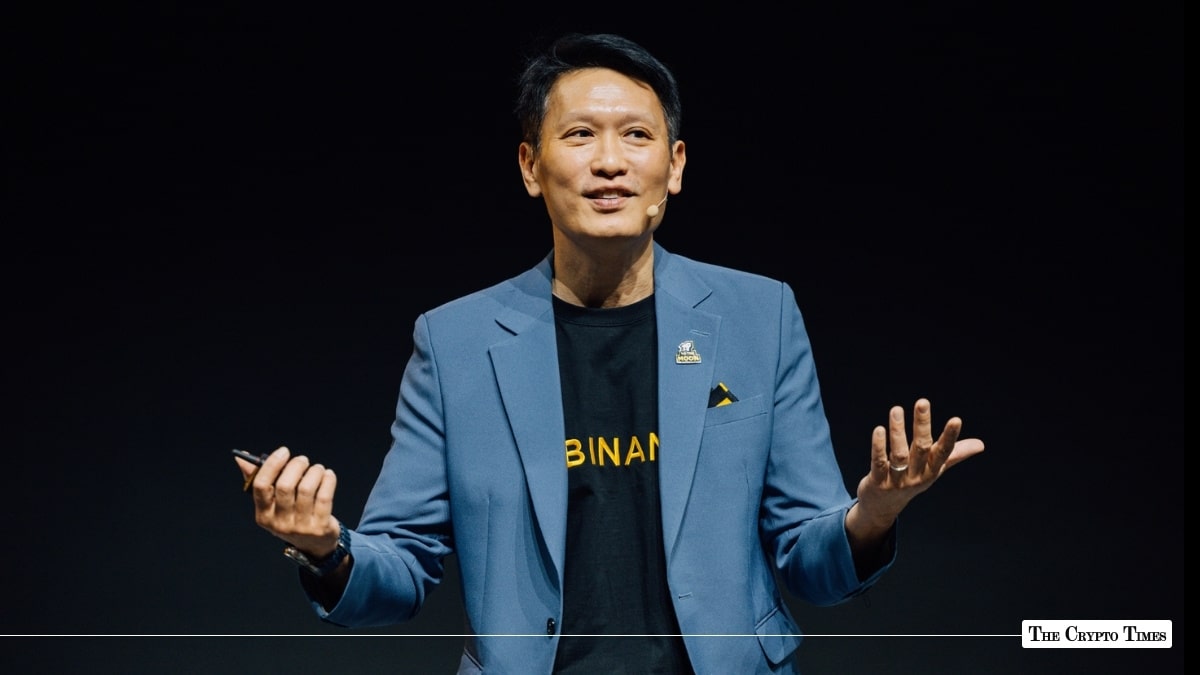
Binance co-CEO Richard Teng pushed back against claims that his exchange triggered the massive cryptocurrency market liquidation on October 10, insisting the event stemmed from global economic pressures rather than any internal issues at the platform.
Speaking at CoinDesk’s Consensus in Hong Kong conference, Teng described the day as a broad market rout, driven by China’s imposition of controls on rare earth metals and fresh U.S. tariffs. “Binance did not cause the crypto market liquidation event,” he said, noting that liquidations hit every exchange, centralized or decentralized.
In the October 10 crash, roughly 75% of the wipeouts occurred around 9:00 p.m. ET, coinciding with two separate glitches: a stablecoin briefly losing its peg and delays in asset transfers. Teng emphasized these were isolated and unrelated to the larger turmoil.
Teng also underscored the scale while comparing it to traditional markets. “The U.S. equity market plunged $1.5 trillion in value that day,” he said. “The U.S. equity market alone saw $150 billion of liquidation. The crypto market is much smaller. It was about $19 billion. And the liquidation of crypto happened across all the exchanges.”
Some Binance users felt the impact, but Teng highlighted the company’s response: it provided support to those affected, a step he claimed other platforms skipped.
Richard blames geopolitical factors for market crash
The co-CEO instead links the crypto dip to escalating geopolitical tensions and uncertainty over interest rates. “At the macro level, I think people are still uncertain about interest rate movements going forward,” he said. “And there’s always the trend of geopolitics, tension, etc. Those weigh on these assets, such as crypto.”
Yet Teng struck an optimistic note on the industry’s evolution over the past four to six years. Crypto prices follow cycles, he argued, and while retail interest has cooled compared to last year, institutional investors remain bullish. “At this point in time, retail demand is somewhat more muted compared to the past year, but the institutional deployment, the corporate deployment is still strong.”
The October 10 event underscores crypto’s growing ties to global events, but Teng’s remarks suggest resilience amid the noise. As regulators eye the space more closely, exchanges like Binance face ongoing scrutiny, but Teng’s defense positions the firm as a steady player in turbulent times.
Also read: Binance Completes $1B Bitcoin Acquisition for SAFU Fund