Key Highlights
- Russia is developing a standardized index methodology for Solana, XRP, and TRX to support regulated trading.
- New cash-settled futures contracts will allow qualified investors to gain price exposure to these altcoins without requiring a digital wallet.
- The 2026 expansion follows recent Russian regulatory shifts that permit the use of cryptocurrency exchange rates for settling financial derivatives.
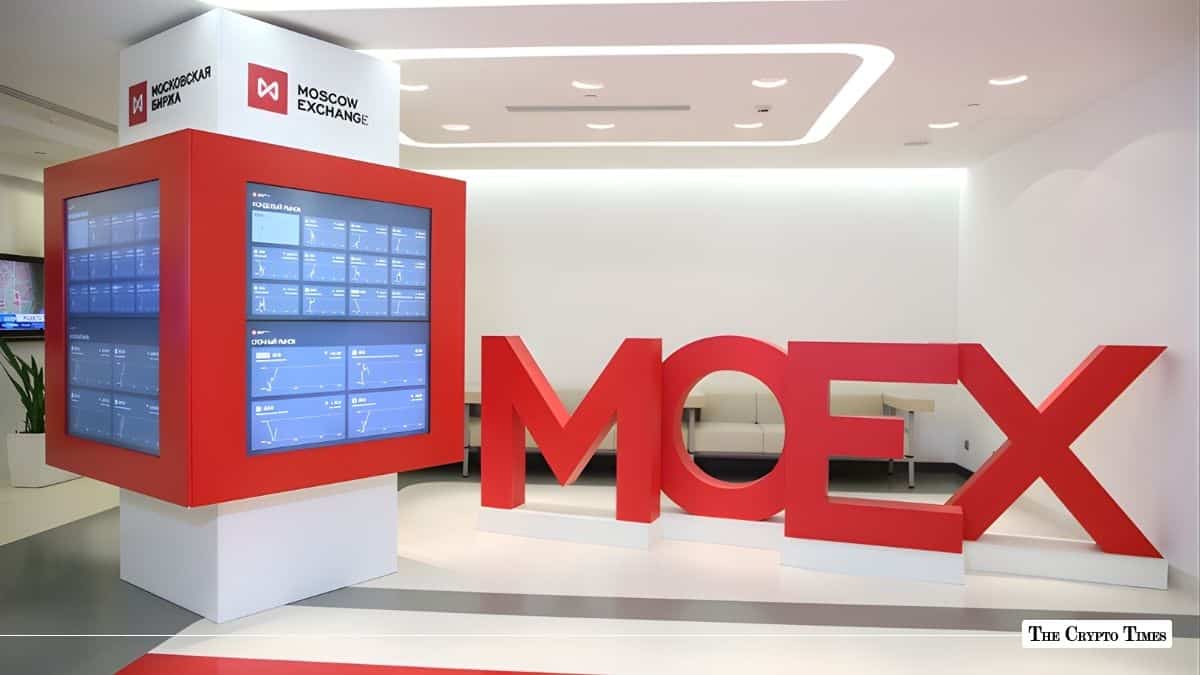
The Moscow Exchange (MOEX), Russia’s primary stock exchange, announced on Monday that it plans to expand its digital asset offerings by launching new price indices and futures contracts for Solana (SOL), Ripple (XRP), and Tron (TRX) in 2026. Maria Silkina, Chief Product Manager for the Derivatives Market Group, shared these plans during her appearance on RBC Radio’s Investment Hour.
According to a local report, the exchange seeks to give institutional and qualified investors regulated access to these altcoins, responding to the increasing demand for diverse crypto-derivative products in the Russian financial market.
Structured index framework
By introducing these benchmarks, the exchange is creating a structured framework where indices are calculated and published first. These indices will serve as the underlying assets for futures trading. The financial instruments will be settled only in cash, meaning there will be no physical delivery of the tokens. This ensures compliance with the current rules set by the Bank of Russia.
Silkina highlighted the need for a clear methodology. She noted that futures must be based on specific underlying assets; for the Russian futures market, these will be the corresponding indices.
“We are developing the Moscow Exchange cryptocurrency indices, calculating them according to the methodology disclosed on the website,” Silkina said. She further explained the sequence’s necessity, stating that futures cannot start without an underlying asset.
Regulatory shifts in Russia
This expansion follows the exchange’s earlier rollout of Bitcoin and Ethereum instruments, which reportedly generated over 400 million rubles in trading volume during their launch days. Recent changes in legislation have also supported this growth. Russia announced last month that it is preparing a bill to simplify crypto rules for daily use.
Russia has also unveiled its 2027 crypto roadmap, introducing a legal framework that allows both retail and institutional investors to trade assets like Bitcoin and Ethereum through licensed intermediaries. While qualified traders enjoy broader access, retail investors will face mandatory testing and an annual investment cap of 300,000 rubles to mitigate the risks associated with market volatility.
Starting from January 2, the Bank of Russia allowed market participants to use digital currency exchange rates for settling derivative financial instruments. This development has encouraged the exchange to explore more complex products, such as perpetual futures for major assets like Bitcoin and Ethereum. These are designed as one-day contracts with automatic rollover features.
Gradual pairing introduction
The exchange plans to introduce these pairings gradually. Silkina said that after the initial launch of Solana, Ripple, and Tron, the platform may look to add options and perpetual contracts. Currently, index futures expire monthly.
The remaining contracts, which will also be based on cryptocurrency indices, will follow the model already rolled out for BTC and ETH, Silkina noted. These tools are aimed at qualified investors who want to gain exposure to decentralized apps via Solana, cross-border transfer technology via XRP, and stablecoin systems via TRX without the complications of owning the tokens directly.
Integration of digital assets
The Moscow Exchange’s 2026 roadmap indicates an integration of popular altcoins into the domestic regulated market. By following central bank guidelines and focusing on cash-settled indices, the exchange is trying to connect traditional finance with the digital asset sector.
As the exchange expands its pairings throughout the year, it will maintain its focus on a transparent calculation methodology and strict eligibility criteria for investors in the derivatives market.
Also Read: Russia Declares WhiteBit ‘Undesirable’ for Ukraine Connection