Key Highlights
- President Lukashenko has signed Decree No. 19, formally creating “Cryptobanks”—joint-stock companies authorized to handle digital assets alongside fiat.
- These banks must reside in the High-Tech Park (HTP) and face “dual regulation” from the HTP Supervisory Board and the National Bank.
- This follows the December 2025 ban on foreign exchanges like OKX and Bybit, forcing domestic capital into this new, state-controlled system.
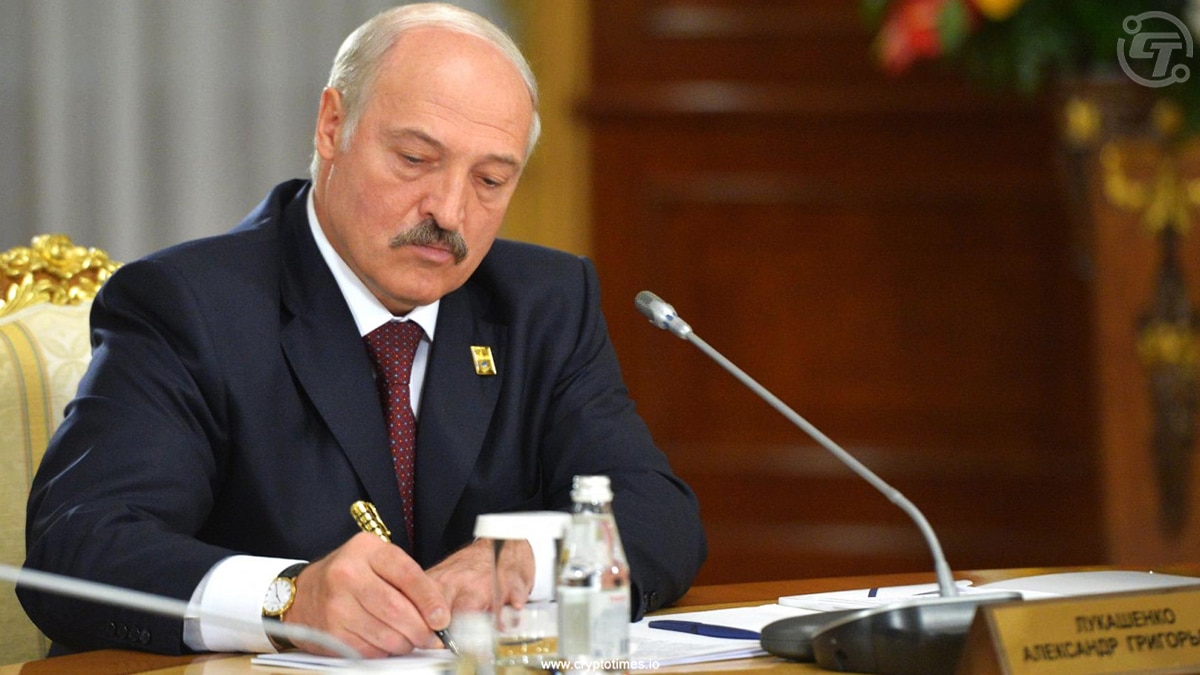
Belarus has taken a decisive step to become a regional leader in cryptocurrency banking. On January 16, 2026, President Alexander Lukashenko signed Decree No. 19, creating a formal framework for “cryptobanks” to operate alongside traditional financial institutions.
As per a local report, the decree lets certain banks offer services for cryptocurrencies alongside regular banking. This means people and businesses can handle digital money safely and more easily. The goal is to boost Belarus’s financial tech sector and give everyone clear, legal ways to manage crypto.
For a cryptobank to operate, it must possess residential status within the Belarus High-Tech Park and be on the National Bank register. Such cryptobanks are joint-stock companies having the power to control financial transactions and digital tokens. Moreover, these cryptobank operations will be regulated by legislation on non-bank credit institutions and must adhere to directions from the High-Tech Park Supervisory Board.
Bridging traditional banking and crypto services
The law in Belarus tackles some of the concerns for cryptocurrency businesses under the Digital Economy Development Ordinance introduced in 2017. The ordinance supported cryptocurrency businesses through tax advantages and attraction, but it does not provide banking assistance.
As a result, digital asset enterprises have had difficulty accessing conventional financial services. With the creation of cryptobanks, Belarus provides institutions that have the right to offer banking services to both companies and individuals who own cryptocurrencies.
Unlike other nations, Belarus does not base its system on the adoption of legal tender and the granting of crypto-friendly banking licenses. For example, Bitcoin is recognized as legal tender in El Salvador, and partially in Switzerland, the country provides crypto-friendly banking licenses. Belarus, on the other hand, develops institutions that connect the two realities.
Furthermore, the cryptobanks must also hold reserves, implement money laundering regulations, and have periodic audits, as is the case for regular banks. The two regulatory bodies together, namely the National Bank and the High-Tech Park, provide sound economic as well as technical regulation.
Localizing crypto exchange activity
This initiative follows recent moves to limit citizen access to foreign cryptocurrency exchanges. Since December 10, 2025, Belarus restricted platforms such as Bitget, ByBit, and OKX through the government-owned internet provider Beltelecom. The government agency BelGIE controls access to these blocked websites. This rule pushes people to trade on local platforms, making crypto safer and supporting Belarus’s own digital finance system.
President Lukashenko also pointed out that cryptocurrencies could help Belarus rely less on the U.S. dollar. Speaking in Minsk on November 14, he suggested using crypto mining as one way to diversify the economy, along with energy and infrastructure projects. He admitted that crypto can be unpredictable but stressed the potential gains, saying, “Some volatility… Well, there probably will be. But nothing ventured, nothing gained.”
International context
Belarus’s model contrasts with regional approaches. In Poland, President Karol Nawrocki vetoed a crypto regulatory bill, citing overregulation and the risk of blocking citizen access to digital assets. “If the government cuts off the page, citizens lose access to their digital funds overnight,” said spokesperson Rafał Leśkiewicz. Belarus, by contrast, balances innovation and control through localized exchanges and dual supervision of crypto banks.
Belarus’s new crypto banks show a smart approach to digital finance. By mixing traditional banking with cryptocurrency services, the country makes transactions safer, more regulated, and easier to use. This system could become a model for other countries wanting to bring crypto and regular banking together.
Also Read: Senate Crypto Bill Faces Setback as Yield Debate Continues