Key Highlights
- President Karol Nawrocki vetoed the crypto-assets market act, arguing it threatens citizens’ freedoms and property.
- He objected to the bill’s overregulation and powers allowing authorities to block company websites with ease.
- The veto stalls Poland’s implementation of the EU’s MiCA framework and draws strong criticism from the government regarding consumer protection.
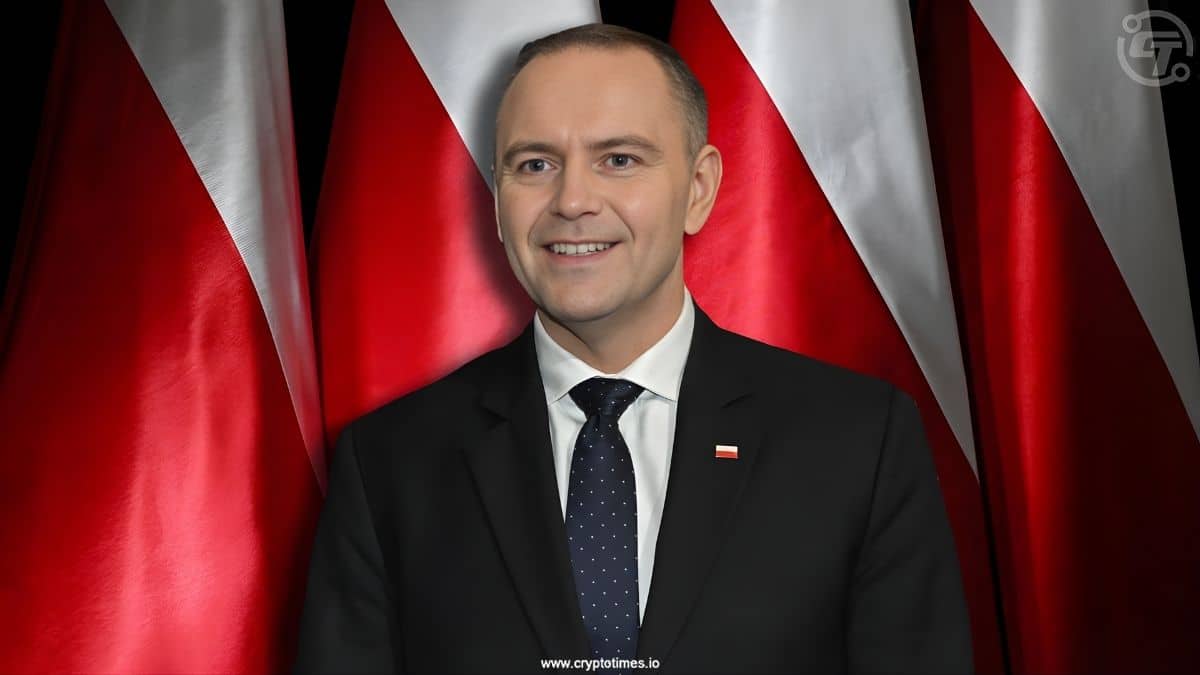
The President of the Republic of Poland, Karol Nawrocki, has vetoed the “Crypto-assets Market” law, which was designed to align Polish regulations with the European Union’s Markets in Crypto-Assets framework (MiCA).
The president’s reason for not signing the bill focused on three main areas that he felt would be harmful to Polish citizens and the domestic technology sector.
Reasons for the Presidential Veto
The primary objection was the proposed powers granted to authorities, which would allow them to block websites associated with the crypto market. According to presidential spokesman Rafał Leśkiewicz, the draft legislation provided the capability for the government to “turn off crypto-asset company websites with a single click.”
Mr. Leśkiewicz stressed that such a risk was unacceptable, noting that “if the government cuts off the page, citizens lose access to their digital funds overnight. We cannot agree to such a risk.”
The second concern was the perceived “overregulation” of the 100-page document. The president contrasted the Polish bill with regulatory approaches in neighboring countries, stating, “Overregulation is an easy way to drive companies to the Czech Republic, Lithuania, or Malta instead of creating conditions for them to operate and pay taxes in Poland.”
Finally, the veto highlighted high supervisory fees imposed on firms, which President Nawrocki asserted would hinder domestic innovation. He argued that the fees were set at a level that “will prevent the development of small companies and startups, and will favor foreign corporations and banks,” labeling the setup as “a perversion of logic, the killing of a competitive market, and a serious threat to innovation.”
The vetoed legislation had been developed by the Ministry of Finance to implement the European Union’s comprehensive MiCA regulation, which establishes a unified framework for crypto-asset markets across the bloc.
Political and economic fallout
Supporters of the bill, including the governing coalition, argued that the measures were necessary to protect consumers, citing data indicating that upwards of 18% of Poles have crypto investing experience and many have been victimized by fraud. The bill had cleared both the Sejm and Senate despite calls from some market participants and opposition figures to veto the bill because it would place an excessive burden on domestic firms.
The presidential veto means the law now returns to the Sejm, where it would require a three-fifths majority to be overturned—a threshold the current government coalition does not appear to possess.
This leaves the Polish crypto-asset market without a designated supervising authority ahead of the crucial July 1, 2026, deadline for MiCA compliance across the EU. Deputy Finance Minister Jurand Drop had previously warned that without the law, domestic firms would be unable to register in Poland and would be forced to seek registration in other EU jurisdictions.
This, he noted, would result in the loss of tax revenue and regulatory fees for Poland. Finance Minister Andrzej Domański reacted strongly to the veto, criticizing the president for choosing “chaos” and acting “against the clients and investors of the crypto-asset market,” stating that Polish citizens would now be left uniquely unprotected from scams in the EU.
The veto shows that there is a split in Polish economic policy, which pits the government’s declared ambition for investor protection and compliance with EU law against the president’s concerns about economic freedom, overreach, and the competition of Polish startups.
Also Read: KuCoin EU Secures MiCA License in Austria, Expands Across Europe