Key Highlights
- Reece Merrick said XRP is legally a non-security in the U.S., which gives it one of the few clear regulatory positions.
- Merrick noted the U.S. still lacks clear rules for the broader crypto market.
- XRP ETFs have recorded $58.92 million in trading value as of today, with no reported outflows since launch.
Ripple executives have once again spoken about the regulatory position of XRP in the United States amid questions on whether the cryptocurrency still needs support from U.S. law.
This conversation began on X, after Reece Merrick, Ripple’s Managing Director for the Middle East and Africa, responded to questions from the XRP community on whether XRP still needed new U.S. legislation, such as the Digital Asset Market Clarity Act, to succeed. In an X post on Wednesday, Merrick answered by stating that XRP already has legal clarity in the United States.
“To confirm, XRP has secured clear regulatory status as a non-security digital asset in the U.S., thanks to landmark court rulings,” Merrick wrote. He explained that this makes XRP one of the few cryptocurrencies with a definitive legal position in the country.
Despite this, Merrick said the broader crypto industry still has a problem with legal rules. “The US still lacks comprehensive regulatory clarity for the broader crypto ecosystem,” he said. He explained that the unclear regulations make it harder for the U.S.-based crypto companies to grow and build new products.
Because of this, Ripple continues to support laws like the Digital Asset Market Clarity Act. Merrick said the company is pushing for fair and clear rules that can help the whole industry move forward. He also shared hope that progress on these bills will bring better guidance soon.
Why clarity on crypto rules matters
The comments come after a long legal fight between Ripple and the U.S. Securities and Exchange Commission (SEC), which resulted in court decisions distinguishing XRP from securities under U.S. law.
This dispute started in 2020, when the SEC filed a lawsuit against Ripple, alleging that Ripple Labs and two of its executives conducted an unregistered securities offering by selling over $1.3 billion worth of XRP tokens to the public. However, Ripple had maintained that the token was a currency and not an investment contract subject to SEC regulation.
But as a result of the regulatory dispute, which lasted for years, major exchanges initially delisted XRP, which made investors doubt the token. The dispute concluded in August last year, and the newfound clarity led to renewed institutional interest and the prospect of spot XRP ETFs. The event was considered to be a defining moment for the crypto space.
Growing interest from institutions and ETFs
In a separate X post, Merrick highlighted how XRP is being used today. He said the token is working as a bridge asset to help move funds quickly and cheaply between different financial systems. According to Merrick, XRP is used for payments, stablecoin settlement, real-world assets, and institutional transfers. He pointed out that the interest in the token is expanding among exchange-traded funds and company treasuries.
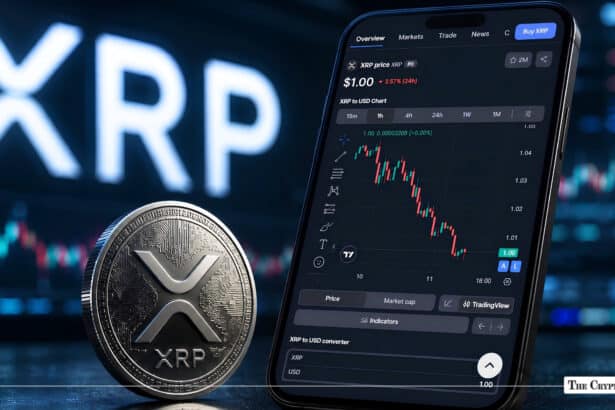
According to data from SosoValue, XRP ETFs recorded about $58.92 million in trading value as of January 6 and have not seen any outflows since launching in November 2025. Some ETFs also posted their highest daily trading activity during the week. Meanwhile, XRP is trading around $2.22, up 19.47% over the past week, after briefly climbing above $2.40 earlier in the year, according to CoinMarketCap.
Merrick also suggested that XRP’s next phase of growth may come from banks, funds, and financial infrastructure rather than speculation.
Also Read: XRP Breaks $2 Amid ETF Inflows and Shifting Regulatory Focus