In a rare convergence of crypto, politics, and gun rights, Circle, the issuer of the $30 billion stablecoin USDC, has reversed a policy that banned the use of its digital dollar for firearm purchases, a move now drawing applause from Republican lawmakers and the gun lobby.
Fox Business journalist Eleanor Terrett first reported the reversal, which U.S. senators and gun rights advocates have praised.
The reversal followed weeks of public pressure led by Americans for Tax Reform (ATR) and the National Shooting Sports Foundation (NSSF), which accused Circle of “ideological discrimination” after discovering a clause in its terms of service prohibiting transactions involving weapons, ammunition, or related accessories.
From crypto to culture war
The dispute began when ATR published an article titled “You can’t buy a gun with Dem donor’s stablecoin,” arguing that Circle’s restrictions amounted to financial censorship. The group also noted Circle CEO Jeremy Allaire’s political donations to Democratic lawmakers known for supporting gun control, fueling accusations that the ban reflected partisan bias rather than compliance necessity.
Soon after, Sen. Bill Hagerty (R-TN) and Sen. Cynthia Lummis (R-WY), both key architects of the GENIUS Act, which established a federal framework for stablecoins, praised Circle’s reversal as a victory against “Choke Point–style financial discrimination.” Lummis said Circle’s decision “defends constitutional rights and ensures financial systems cannot be weaponized against lawful industries.”
A policy rollback with political undertones
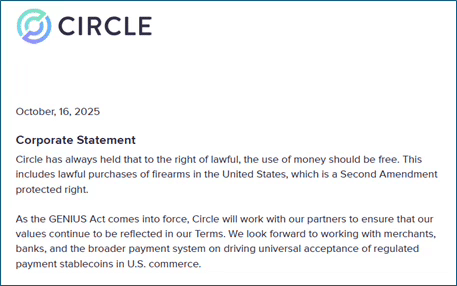
In an official statement to the NSSF, Circle confirmed that it had updated its terms to permit lawful gun transactions: “Circle has clarified our terms to reflect that USDC may be used for the lawful purchase and sale of firearms, as protected under the Second Amendment.”
The NSSF called the clarification “a significant gesture from an industry that once faced similar de-banking pressures.” The group compared crypto’s banking struggles to the gun industry’s own fight against Operation Choke Point, the Obama-era blacklist for politically inconvenient businesses.
Beyond Circle: stablecoins and financial control
The development comes as stablecoins grow increasingly central to the U.S. financial system, with total market capitalization surpassing $300 billion and private issuers now operating under new federal oversight. For critics, Circle’s previous policy served as a warning of how private financial infrastructure could one day mirror the political risks of central bank digital currencies (CBDCs).
ATR President Grover Norquist said the incident shows why “Americans must remain vigilant against both government and corporate attempts to control lawful economic behavior.”
Circle’s reversal may cool one fire but spark another. To progressives, it fuels gun sales; to conservatives, it corrects bias.
Also read: Circle Brings USDC, CCTP V2, Wallets, and Contracts to Monad