New data shows that U.S. inflation sped up in August, taking it further away from the Federal Reserve’s goal rate, while Bitcoin is still trading near $114,000. Although the asset reacted negative at first, it is holding steady. The asset’s resilience is being supported by a significant surge in investment flows into U.S. spot Bitcoin exchange-traded funds (ETFs), as the market now turns its full attention to the Federal Reserve’s upcoming policy meeting.
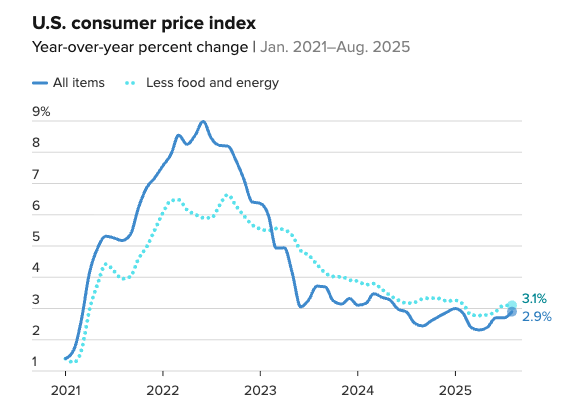
The latest Consumer Price Index (CPI) report from the U.S. Bureau of Labor Statistics, released on September 11, indicated a 0.4% increase for the month of August. This rise brought the 12-month inflation rate to 2.9%, an increase from July’s 0.2% monthly figure and above the central bank’s 2% target. Core inflation, which strips out volatile food and energy costs, rose 0.3% for the month and 3.1% annually.
In response to the data, investor expectations for a more aggressive 50 basis point interest rate cut by the Federal Open Market Committee (FOMC) next week have declined. According to the CME FedWatch Tool, the probability of such a cut fell from 12% to 9%.
However, some analysts believe the Fed’s decision will be influenced by other factors, such as a separate report showing weekly jobless claims have risen to their highest level since October 2021. “Today’s CPI report has been trumped by the jobless claims report “… it will not give the Fed a moment of hesitation when they announce a rate cut next week,” commented Seema Shah, Chief Global Strategist at Principal Asset Management.
ETF Inflows Counter Macro Pressure
While hotter inflation data typically poses a headwind for risk assets like cryptocurrencies, Bitcoin’s price remained firm. This stability has been largely credited to a powerful wave of institutional buying through spot Bitcoin ETFs. On Wednesday, these funds recorded $757.1 million in net inflows, the highest single-day figure in eight weeks, according to data from SoSoValue. The total inflows for September have now reached $1.39 billion.
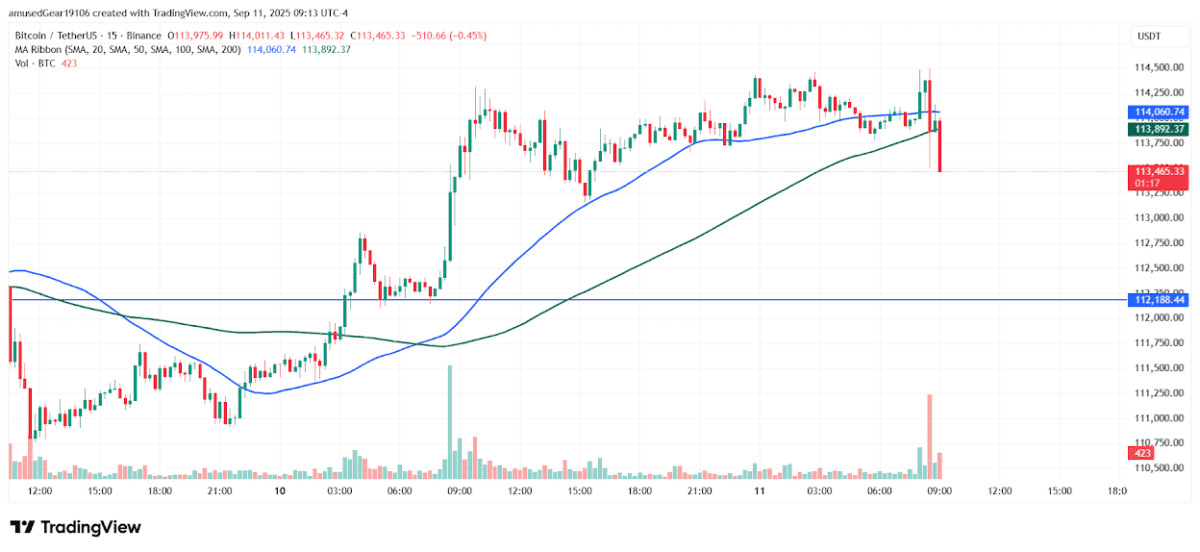
This high demand suggests that big investors are buying bitcoin in large amounts. They may see the current price as a good time to get in before the economy changes in the future. Market experts at the cryptocurrency exchange Bitunix say they are still worried that “rising tariff costs and food prices could continue to push inflation higher,” which could make people “reassess the scope for future rate cuts.”
The market’s muted reaction to the August CPI report highlights a growing divergence between short-term macroeconomic signals and strengthening structural demand for Bitcoin through regulated investment vehicles like ETFs.
While the inflation reading creates uncertainty, the crypto market’s focus is now squarely on the Federal Reserve’s upcoming policy meeting. As analysts at QCP Capital noted, “The more decisive event remains September’s FOMC, where the discussion on the pace of future rate cuts will likely be the key driver for asset classes”. What the group says in the future will have a big impact on how the market feels and on Bitcoin’s next big move.
Also Read: Federal Reserve to Host Payments Innovation Conference on Oct. 21